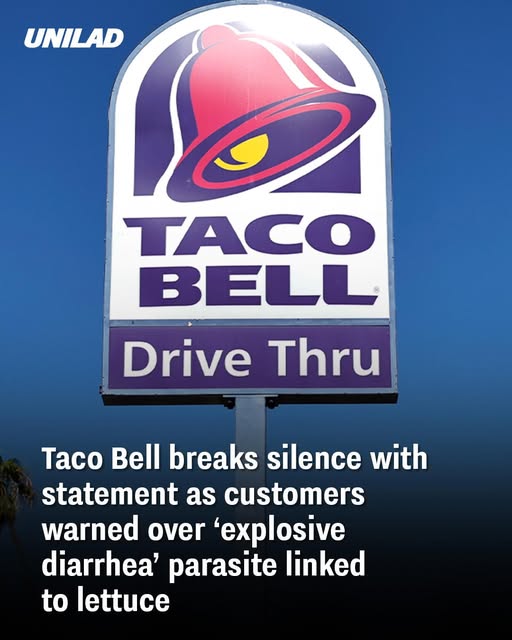
aco Bell has issued a public response after federal health officials connected a multistate outbreak of a parasite-caused illness to shredded iceberg lettuce served at some of the chain’s restaurants. The company says it has already taken action by removing the affected ingredient from its supply chain while health authorities continue investigating the outbreak.
The investigation has drawn nationwide attention after more than 1,600 confirmed illnesses were linked to Cyclospora, a microscopic parasite that causes cyclosporiasis, an infection known for severe digestive symptoms. Although the outbreak is associated with Taco Bell locations in five states, officials are continuing to determine whether contaminated lettuce reached other restaurants or retailers.
What Is Cyclospora?
Cyclospora is a parasite that spreads when people consume contaminated food or water. Fresh produce, particularly leafy vegetables, has been linked to previous outbreaks because the parasite can be difficult to remove once contamination occurs.
People infected with Cyclospora often experience prolonged watery diarrhea, stomach cramps, nausea, loss of appetite, bloating, fatigue, and weight loss. Symptoms typically begin several days after consuming contaminated food and can last for weeks if left untreated. While many healthy adults recover with proper medical treatment, the illness can be especially difficult for young children, older adults, and people with weakened immune systems.
The Investigation
According to the U.S. Centers for Disease Control and Prevention (CDC) and the Food and Drug Administration (FDA), investigators traced the illnesses to shredded iceberg lettuce supplied to Taco Bell restaurants in Indiana, Kentucky, Michigan, Ohio, and West Virginia. Officials say at least 1,644 laboratory-confirmed cases have been linked to this portion of the outbreak, with dozens of hospitalizations reported. No deaths have been confirmed. The FDA’s traceback investigation identified a single supplier of shredded iceberg lettuce imported from central Mexico as the common source.
Taco Bell’s Response
In a public statement, Taco Bell said customer safety remains its highest priority and confirmed it has stopped using lettuce supplied by the company identified during the federal investigation. The restaurant chain also said it has removed the potentially affected ingredient from restaurants and is working closely with federal health officials as the investigation continues. Company representatives emphasized that they are cooperating fully with the FDA and CDC while replacement products are introduced into the supply chain.
Recall Expands Beyond Restaurants
As investigators continued tracing the contaminated lettuce, supplier Taylor Farms announced a voluntary recall covering iceberg lettuce sourced from central Mexico. The recall includes products distributed to restaurants, retailers, and food service companies across numerous states. Health officials advise consumers not to eat recalled lettuce and to discard any affected products immediately. Anyone unsure about the source of lettuce served at a restaurant should ask before ordering until the investigation is complete.
What Should You Do?
Anyone who recently ate shredded iceberg lettuce and develops severe diarrhea, stomach pain, nausea, or prolonged digestive symptoms should contact a healthcare provider. Cyclosporiasis is treatable with prescription antibiotics, and early diagnosis can help shorten the illness and reduce complications. The FDA also recommends thoroughly cleaning refrigerators, cutting boards, and kitchen surfaces that may have come into contact with recalled lettuce to prevent cross-contamination. Washing hands before preparing food and rinsing fresh produce under running water remain important food safety practices, although washing alone may not completely remove Cyclospora if produce is contaminated.
Investigation Continues
Federal officials stress that the investigation remains active and additional information may emerge as testing continues. More restaurants, retailers, or distribution channels could be identified if evidence shows they received the same contaminated product.
For now, Taco Bell says it has removed the implicated lettuce from its restaurants and will continue following guidance from health authorities. While outbreaks involving major restaurant chains are uncommon, this incident highlights how quickly contaminated produce can affect thousands of people across multiple states and why rapid action from public health