Few American foods can start an argument as quickly as a skillet of cornbread.
One cook wants it soft, moist and slightly sweet. Another believes real cornbread should be savory, crumbly and baked in a blazing-hot cast-iron skillet.
Then someone asks the dangerous question:
Did you put sugar in it?
For many families, the answer is about much more than flavor. It is connected to geography, childhood memories and recipes passed down through generations.
So, does sugar belong in cornbread?
It depends on which kind of cornbread you are trying to make.
Two Different Expectations
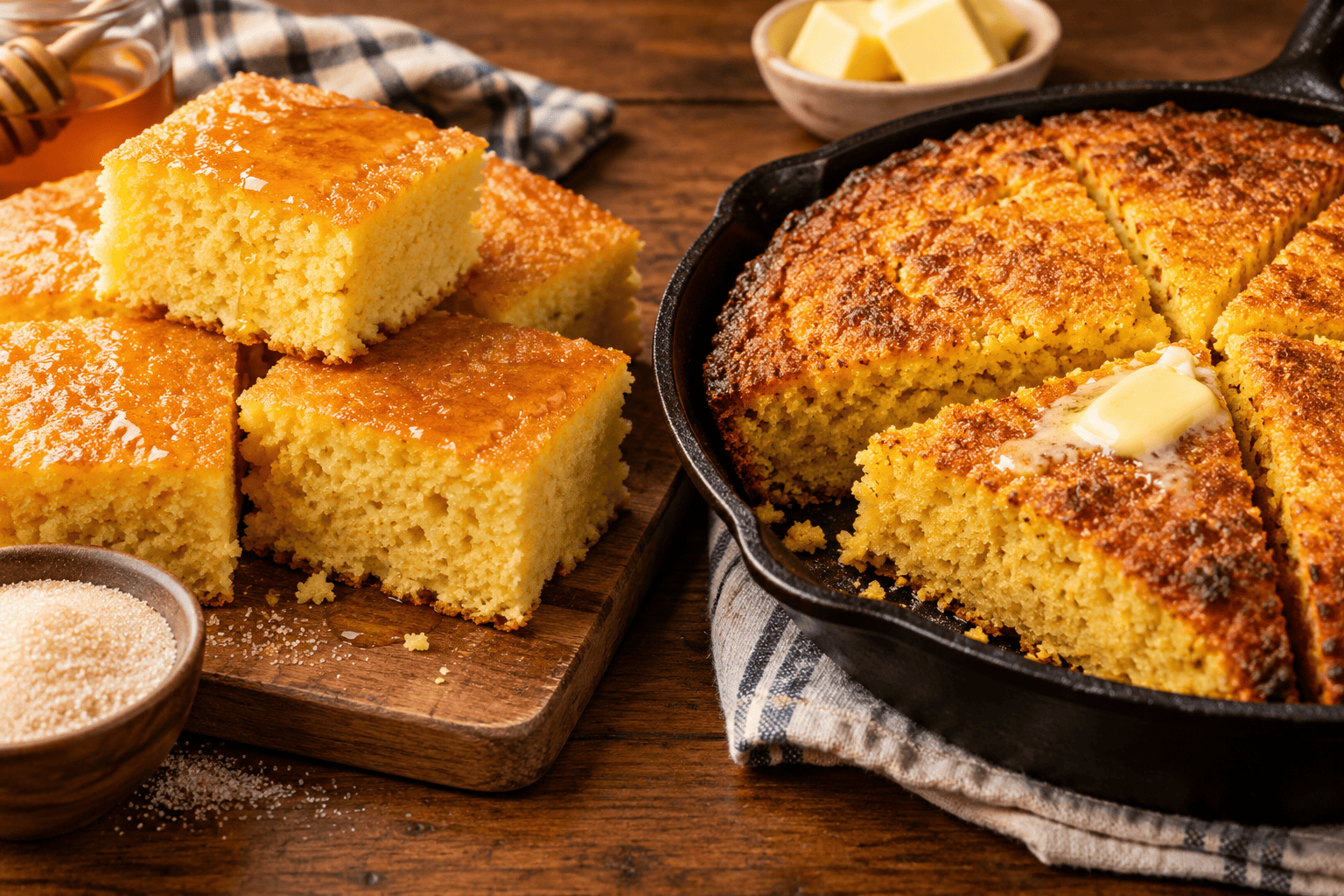
Sweet cornbread is generally softer and more cake-like. It commonly contains sugar, more wheat flour and enough fat to create a tender crumb.
It may be served with honey or butter, eaten alongside barbecue or enjoyed almost like a snack.
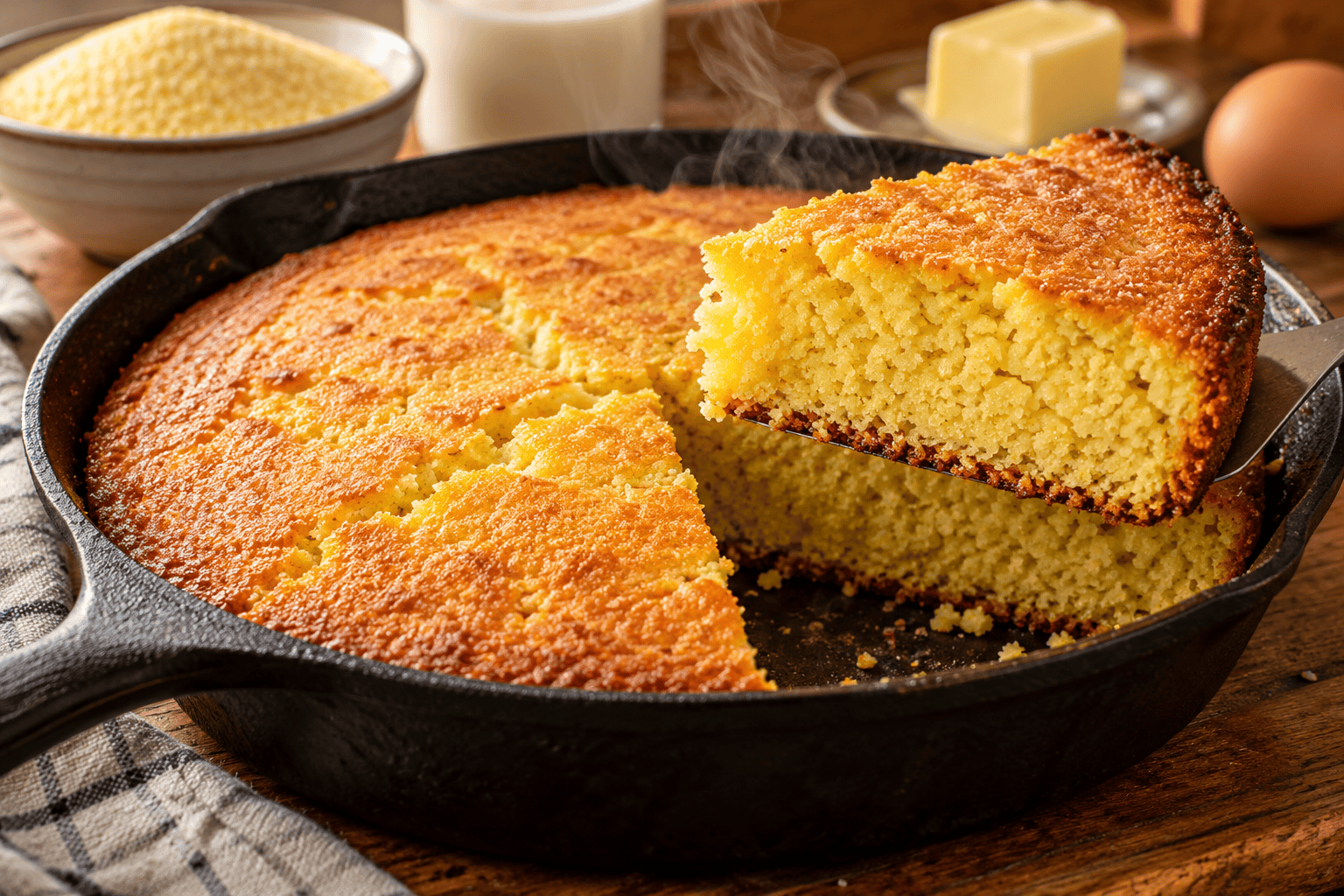
Traditional savory Southern cornbread places greater emphasis on the flavor of the cornmeal. It frequently contains little or no sugar and may use less flour—or no wheat flour at all.
It is often baked in a preheated cast-iron skillet, producing a dark, crisp crust and a more crumbly interior.
Neither version is simply the other recipe with sugar added or removed. The ingredient ratios and intended textures are different.
Why Many Southern Cooks Reject Sugar
Cornbread has long been a practical staple across the American South.
Traditional versions were made to accompany savory foods such as beans, greens, stews and fried meats. The bread was expected to absorb flavorful cooking liquid, balance rich dishes and provide substance at the table.
A noticeably sweet bread did not always fit that role.
For some families, adding sugar changes cornbread into something closer to corn cake. That distinction may sound dramatic, but it explains why the subject produces such passionate reactions.
The preference is also tied to the cornmeal itself.
Freshly milled and stone-ground cornmeal can have a stronger corn flavor and a subtle natural sweetness. Modern shelf-stable cornmeal may taste milder, leading some cooks to add sugar to create the flavor and browning they expect.
What Sugar Actually Changes
Sugar does more than make cornbread sweet.
It can also:
- Encourage deeper browning
- Help retain moisture
- Produce a softer crumb
- Balance the bitterness of some cornmeal
- Make the bread more appealing as a standalone snack
A small amount may enhance the corn flavor without making the finished bread taste like dessert.
A larger amount creates a distinctly sweet, cake-like result.
That means the debate is not always a simple choice between sugar and no sugar. The amount matters.
One tablespoon in an entire skillet is very different from one-third cup.
Why the Skillet Matters
For traditional savory cornbread, the cast-iron skillet may matter more than the sugar.
The skillet should be placed in the oven while it preheats. A spoonful of bacon drippings, butter or oil is then added to the hot pan immediately before the batter.
When the batter touches the hot fat, it should sizzle.
That instant heat begins forming the crisp bottom and deeply browned edges associated with skillet cornbread.
Pouring batter into a cold pan creates a softer, paler crust, even when the recipe itself is correct.
A Simple Savory Southern-Style Cornbread
You will need:
- 2 cups cornmeal
- 1 tablespoon baking powder
- ½ teaspoon baking soda
- 1 teaspoon salt
- 2 large eggs
- 2 cups buttermilk
- ¼ cup melted butter or bacon drippings
- Additional fat for the skillet
Preheat the oven to 425°F with a 10-inch cast-iron skillet inside.
Mix the cornmeal, baking powder, baking soda and salt in one bowl. Whisk the eggs, buttermilk and melted fat in another.
Combine the wet and dry ingredients only until no dry pockets remain.
Carefully remove the hot skillet, add a little fat and swirl it around the bottom. Pour in the batter while the pan is still hot.
Bake for approximately 20 to 25 minutes, or until the top is golden and the edges pull slightly away from the skillet.
This version is savory, corn-forward and built for beans, greens and chili.
A Softer, Sweeter Cornbread
For a sweeter version, use:
- 1 cup cornmeal
- 1 cup all-purpose flour
- ⅓ cup sugar
- 1 tablespoon baking powder
- ½ teaspoon salt
- 2 large eggs
- 1 cup milk
- ⅓ cup melted butter
Heat the oven to 400°F and grease an 8-inch baking dish or skillet.
Combine the dry ingredients in one bowl and the wet ingredients in another. Gently mix them together, pour the batter into the prepared pan and bake for approximately 20 to 25 minutes.
The finished bread will be softer, sweeter and less crumbly than the traditional savory version.
The Best Compromise
If you want a traditional skillet texture but find completely unsweetened cornbread too sharp, add one or two tablespoons of sugar rather than one-third cup.
That amount can soften the edges of the cornmeal flavor and help with browning without turning the bread into dessert.
Using better cornmeal may also reduce the need for additional sweetness. Stone-ground cornmeal generally delivers a fuller corn flavor and more interesting texture than finely processed alternatives.
So, Who Is Right?
Both sides are right about the cornbread they want to eat.
If you expect a crisp, savory bread beside collard greens or beans, a sweet and cake-like square may feel completely wrong.
If you grew up eating soft cornbread with honey and butter, the unsweetened version may feel dry or unfinished.
Food traditions are rarely governed by one universal recipe. They change from one region, town and family kitchen to another.
Sugar may not belong in every skillet of cornbread.
But the argument certainly does.