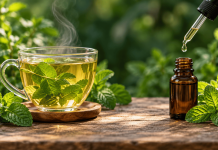
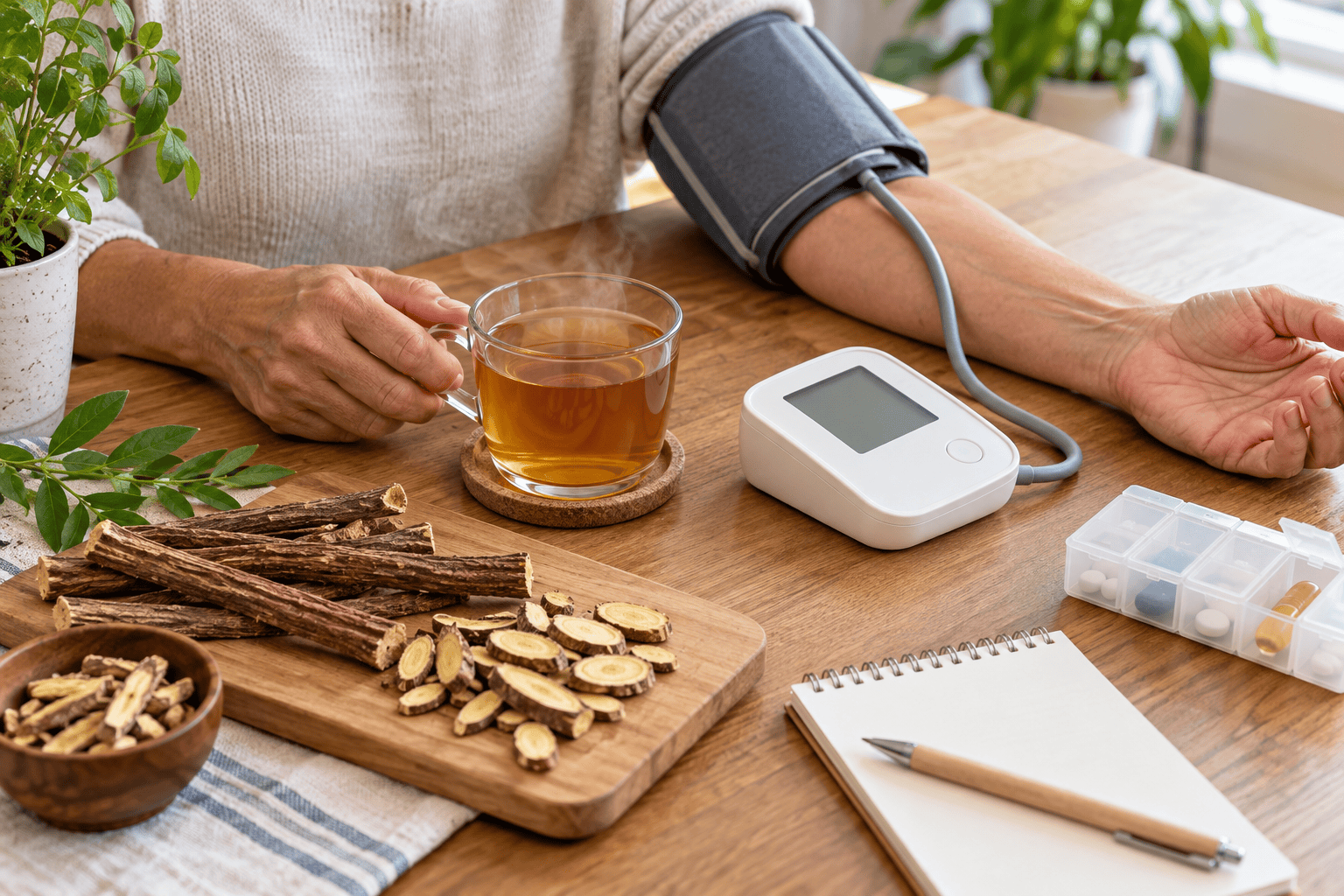
A warm cup of licorice root tea does not look dangerous.
It is caffeine-free, naturally sweet and frequently marketed for digestion, respiratory comfort or a soothing evening routine. Because it comes from a plant and is consumed as tea, many people assume it can be enjoyed every day without much thought.
But licorice root is not simply a flavor.
It contains an active compound that can affect blood pressure, potassium levels, fluid balance and heart rhythm—especially when consumed regularly or in concentrated amounts.
The Important Compound Is Glycyrrhizin
Traditional licorice root contains glycyrrhizin, also known as glycyrrhizic acid.
This compound contributes to licorice’s intense sweetness, but it can also interfere with the body’s regulation of salt, water and potassium.
In susceptible people, repeated exposure may cause the body to retain sodium and water while losing potassium.
Possible consequences include:
- Increased blood pressure
- Swelling or fluid retention
- Muscle weakness
- Abnormal heart rhythm
- Headache or fatigue
Serious reactions appear to be more likely with large amounts or prolonged use, but sensitivity differs between individuals.
A quantity tolerated by one person may create problems for someone with an existing medical condition or another source of risk.
Why Low Potassium Matters
Potassium helps muscles and nerves function normally, including the muscle of the heart.
When potassium becomes too low, a person may experience weakness, cramping, unusual fatigue or changes in heart rhythm.
These symptoms are not specific to licorice and can have many causes. However, someone consuming licorice root regularly should not ignore them.
Attempting to correct the problem independently with potassium supplements is not a safe substitute for medical evaluation. The underlying cause and the person’s medications must be considered.
Who May Face Greater Risk?
Licorice root deserves particular caution for people with:
- High blood pressure
- Heart disease
- Kidney disease
- A history of low potassium
- Conditions associated with fluid retention
People taking medication should also have the combination reviewed by a doctor or pharmacist.
Interactions between licorice and corticosteroid medicines have been reported. Other treatments that influence blood pressure, potassium or fluid balance may also require careful review.
The safest approach is to bring the actual tea package or complete ingredient list to a healthcare professional.
Tea Strength Is Difficult to Judge
A supplement capsule usually states an amount on its label. Tea can be harder to evaluate.
The strength of a cup depends on:
- How much root was used
- Whether it was cut, powdered or extracted
- How long it was steeped
- The number of cups consumed
- Whether licorice appears in a blend with other herbs
- The concentration of glycyrrhizin in the starting material
A tea described as “gentle,” “detoxifying” or “soothing” may still contain pharmacologically active compounds.
Drinking it occasionally is also different from consuming several strong cups every day for weeks.
What Does DGL Mean?
Some products are labeled DGL, meaning deglycyrrhizinated licorice.
Most of the glycyrrhizin has been removed from these products to reduce certain risks associated with traditional licorice root.
However, DGL and ordinary licorice root are not interchangeable.
They may be sold in different forms and marketed for different purposes. A package that says “licorice” does not necessarily tell you whether glycyrrhizin has been removed.
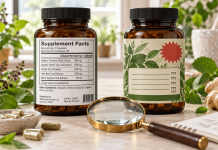
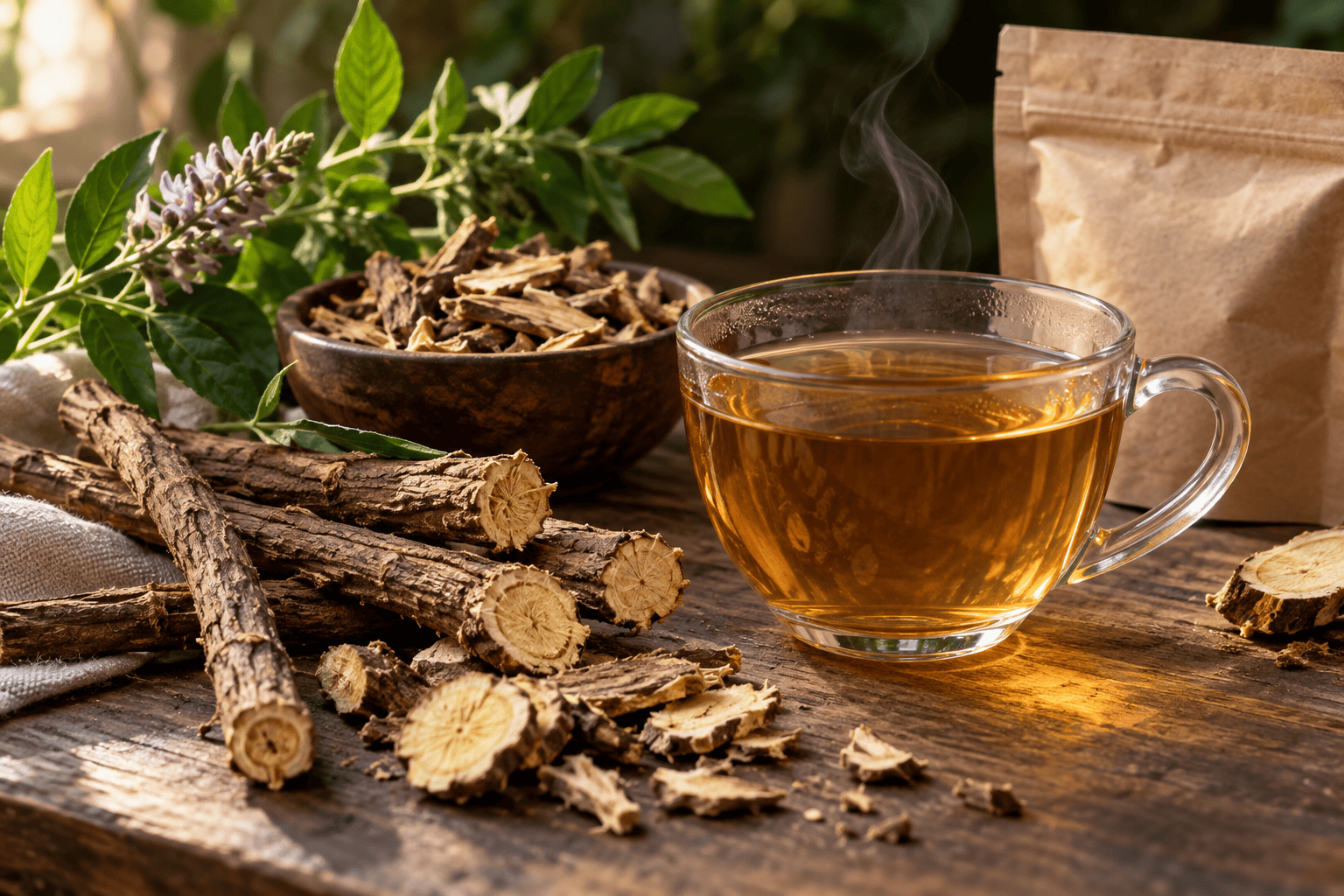
Look for the complete product name and ingredient information rather than relying on imagery on the front of the package.
DGL should not automatically be assumed safe for every person or every medical condition.
Pregnancy and Breastfeeding
Large amounts of oral licorice extract during pregnancy are considered unsafe and have been associated with an increased risk of early delivery.
Information about safety during breastfeeding is limited.
Pregnant or breastfeeding individuals should not treat licorice root tea as an ordinary caffeine-free beverage without consulting an appropriate healthcare professional.
Licorice Flavor Is Not Always Licorice Root
Not every product with a licorice-like taste contains actual licorice root.
Some candies and teas use anise or other flavoring ingredients.
Conversely, licorice root can appear inside herbal blends whose names do not prominently mention it. It may be included to make another bitter herb taste sweeter.
Always check the ingredient list.
The relevant question is not whether the product tastes like licorice, but whether it contains Glycyrrhiza species or licorice root extract.
What Should Regular Tea Drinkers Do?
Someone who occasionally drank a cup does not need to panic.
The concern is greater with frequent, long-term or concentrated consumption and in people with additional risk factors.
If licorice root tea is part of a daily routine:
- Check whether the product contains traditional licorice root or DGL.
- Review the serving instructions.
- Count licorice from every tea, supplement or herbal blend being used.
- Discuss regular use with a doctor or pharmacist.
- Do not use the tea as a replacement for prescribed treatment.
- Seek medical advice if unusual weakness, swelling, palpitations or a significant blood-pressure change occurs.
Do not stop prescribed medication or attempt to adjust its dose based on an article or supplement label.
The Bottom Line
Licorice root tea can feel gentler than a capsule or extract, but the body responds to active compounds—not to the appearance of the product.
Traditional licorice contains glycyrrhizin, which can influence blood pressure, potassium, fluid balance and heart rhythm.
That does not mean every cup will cause harm. It means that daily use deserves more consideration than its comforting presentation suggests.
A relaxing herbal ritual should not quietly become a long-term experiment with your cardiovascular system.
Editorial note: This article is intended for general education. It does not diagnose a condition or replace individualized advice from a healthcare professional.