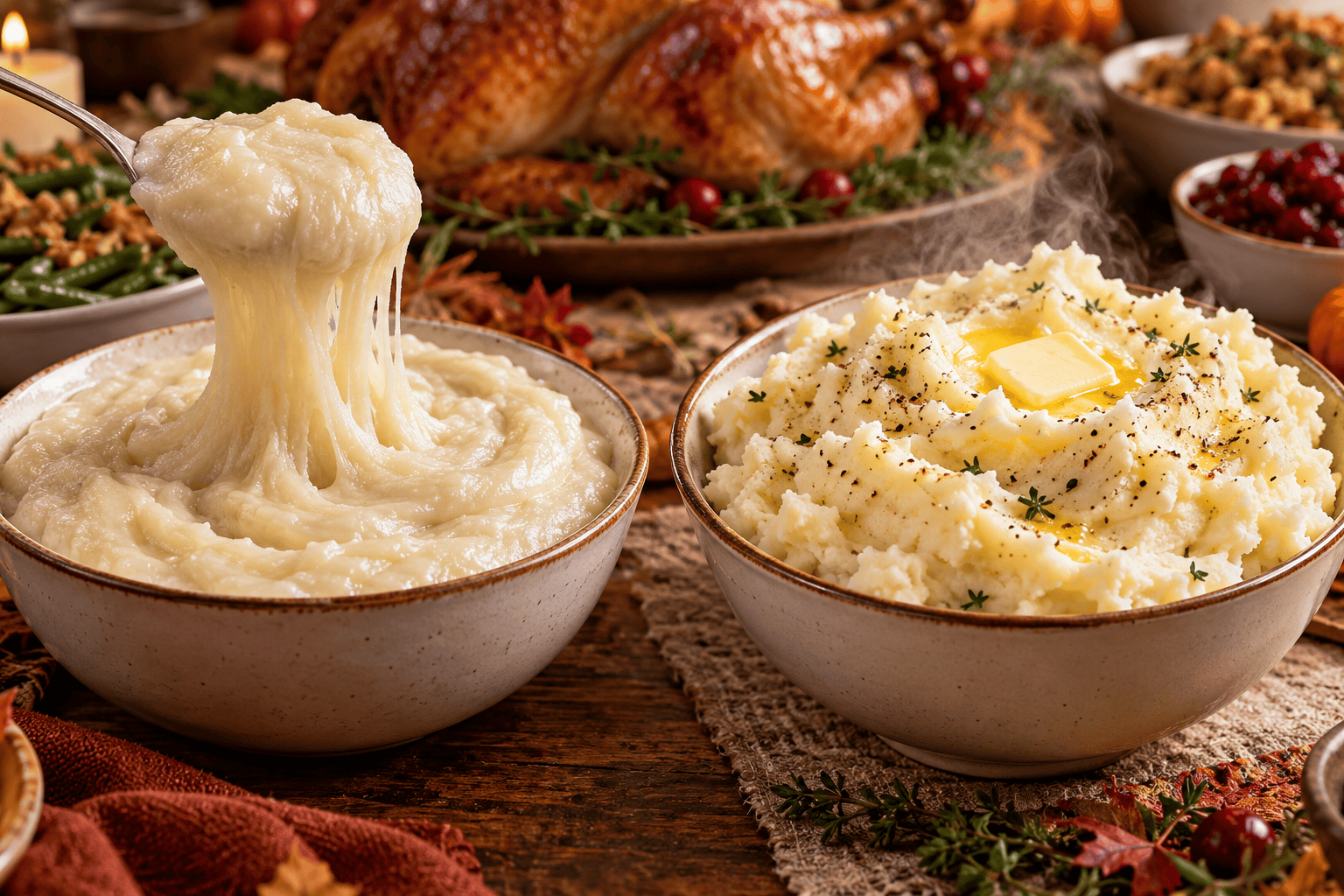
Mashed potatoes are supposed to be soft, buttery and light enough to hold a pool of gravy. Yet sometimes a perfectly normal pot of cooked potatoes turns into something sticky, stretchy and strangely similar to paste.
When that happens, many cooks blame the potatoes, the milk or even the amount of butter.
But the real problem may be sitting on the kitchen counter.
A food processor can turn fluffy potatoes into glue in a matter of seconds.
Why Potatoes Become Gluey
Potatoes contain starch. When they are cooked, their cells soften and the starch inside becomes easier to release.
Some starch is helpful. It gives mashed potatoes their body and helps them absorb butter and warm dairy.
Too much released starch creates an entirely different texture.
Aggressive mixing breaks open more potato cells, releasing large amounts of starch into the mixture. As that starch combines with moisture, the potatoes become sticky, elastic and heavy.
The longer they are processed, the worse the texture becomes.
That is why potatoes prepared in a food processor can look normal for the first few seconds before suddenly transforming into a thick, glue-like mass.
The Kitchen Tools Most Likely to Cause the Problem
A food processor is the biggest offender because its blades move extremely quickly. A blender creates the same problem and should also be avoided.
An electric hand mixer is less aggressive, but it can still overwork potatoes when used at high speed or for too long.
The safest tools are:
- A potato ricer
- A food mill
- A traditional handheld masher
- A sturdy fork for smaller portions
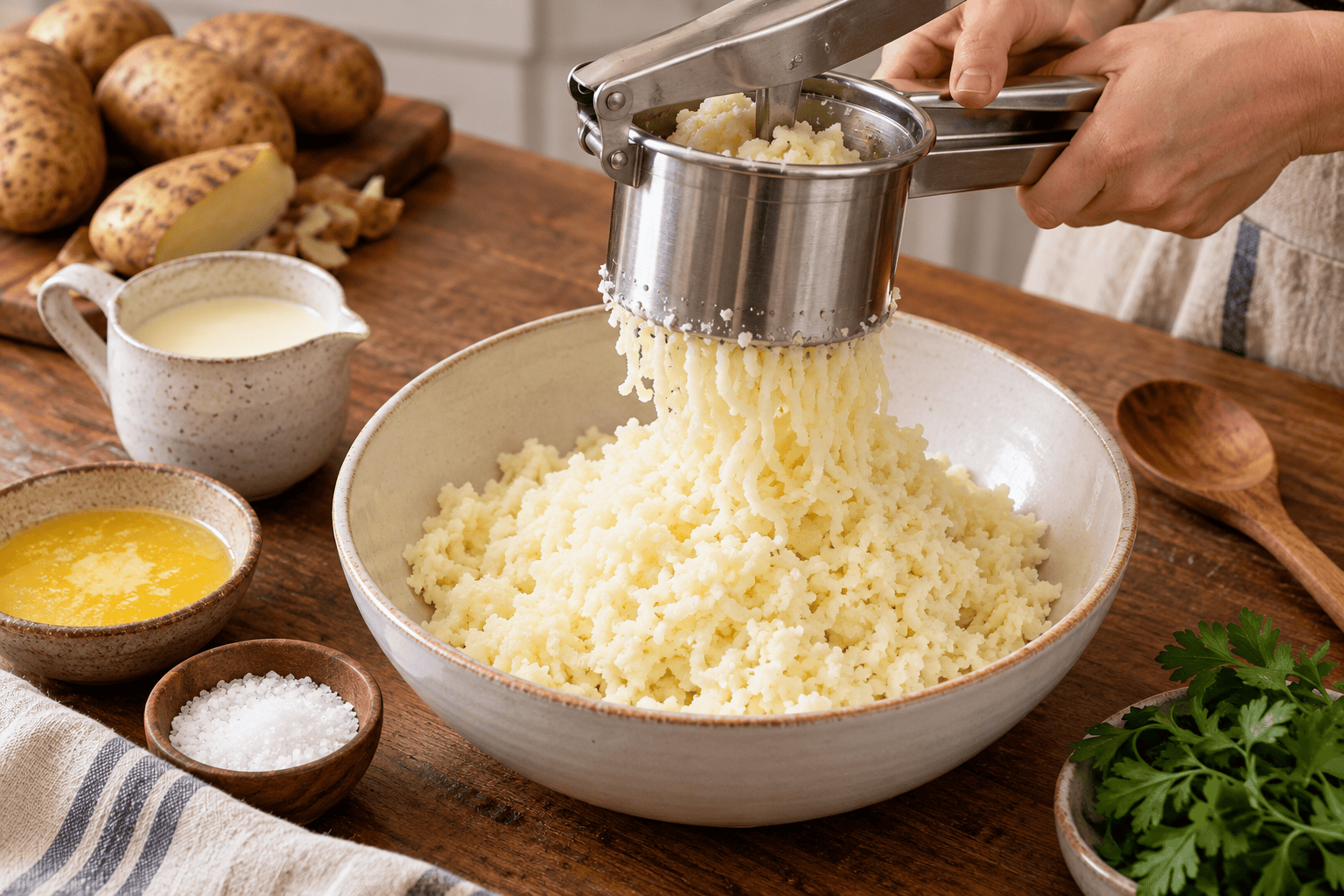
A ricer or food mill separates the cooked potato without repeatedly beating it. This produces a more delicate texture and makes it easier to fold in butter and cream without excessive stirring.
A handheld masher also works well, especially if you do not mind a few small lumps.
Choosing the Right Potato Matters
The tool is important, but the variety of potato also affects the final texture.
Russet potatoes are high in starch and relatively low in moisture. They break apart easily and can produce exceptionally light, fluffy mashed potatoes.
Yukon Gold potatoes have a naturally buttery flavor and create a denser, creamier mash. They are an excellent choice when you want richness rather than maximum fluffiness.
Waxy varieties, such as many red-skinned potatoes, hold their shape well when boiled. That makes them excellent for potato salad, but they usually require more work to mash smoothly. Additional mixing can increase the risk of a gluey result.
Some cooks combine Russets and Yukon Golds to balance lightness, creaminess and flavor.
Start the Potatoes in Cold Water
Placing potatoes directly into boiling water can cook the outside before the center becomes tender.
By the time the middle is ready, the exterior may be overcooked and waterlogged.
Instead, cut the potatoes into evenly sized pieces, place them in a pot and cover them with cold water. Season the water generously with salt, then bring everything to a gentle boil.
Reduce the heat and simmer until the potatoes can be easily pierced with a knife.
Avoid cutting them into tiny pieces. More exposed surface area allows the potatoes to absorb additional water, leaving less room for flavorful butter and cream later.
Dry Them Before Mashing
Once the potatoes are tender, drain them thoroughly.
Then return them to the warm pot over low heat for approximately one minute, gently moving them so the remaining moisture can evaporate.
This small step makes a noticeable difference.
Waterlogged potatoes dilute the flavor and may require additional mixing to reach the desired consistency. Drier potatoes absorb butter and dairy more effectively.
Add Butter Before the Milk
After passing the potatoes through a ricer or gently mashing them, add melted or softened butter first.
The fat helps coat the potato starch. Once the butter has been incorporated, gradually fold in warm milk or cream until the potatoes reach the desired consistency.
Cold dairy cools the potatoes and does not incorporate as easily, which may encourage unnecessary mixing.
The key word is gently. Fold the ingredients together only until combined.
A Reliable Formula for Fluffy Mashed Potatoes
For a generous family-size portion, use:
- 3 pounds Russet or Yukon Gold potatoes
- 8 tablespoons unsalted butter
- ¾ to 1 cup warm whole milk or cream
- Salt to taste
- Black pepper, if desired
Peel and cut the potatoes into similar-sized pieces. Place them in cold, salted water and simmer until tender.
Drain them well and return them briefly to the warm pot to remove excess moisture.
Pass the potatoes through a ricer or mash them gently. Fold in the butter, followed by the warm milk or cream in small additions.
Stop mixing as soon as the texture is smooth and creamy.
Taste and adjust the seasoning before serving.
Can Gluey Mashed Potatoes Be Saved?
Unfortunately, once too much starch has been released, it cannot be removed. Adding more milk or butter may make the potatoes softer, but it will not restore their original fluffy structure.
That does not mean they have to be thrown away.
Spread gluey potatoes in a baking dish, cover them with shredded cheese and breadcrumbs, and bake until the surface is crisp and golden.
They can also be chilled and transformed into potato cakes, croquettes or a cheesy potato casserole.
They may no longer be perfect mashed potatoes, but they can still become a delicious second dish.
The Bottom Line
Fluffy mashed potatoes do not require expensive ingredients or complicated techniques.
They require restraint.
Choose the right potato, cook it evenly, remove excess water and use a tool that breaks it down without aggressively releasing starch.
Most importantly, stop mixing as soon as the butter and warm dairy have been incorporated.
The difference between a bowl of fluffy mashed potatoes and a pot of glue may be only a few seconds with the wrong kitchen tool.