
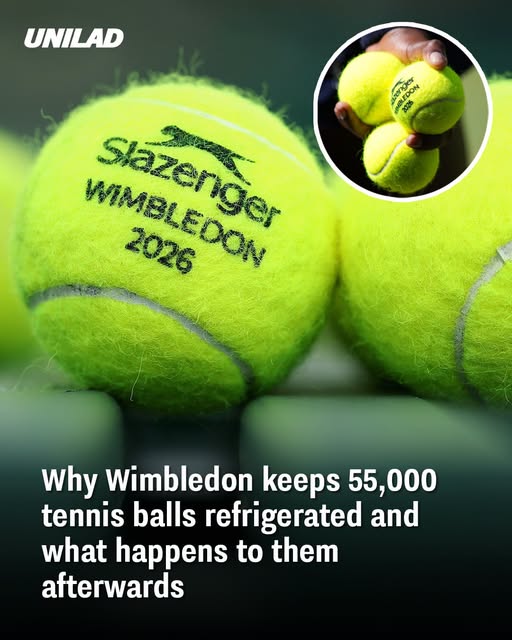
Every year, Wimbledon captures the attention of millions of tennis fans with thrilling matches, famous spectators, and long-standing traditions. Yet one of the tournament’s most surprising practices happens far away from Centre Court, where thousands of tennis balls are carefully stored inside refrigerated rooms before they are ever used in a match.
During the Championships, more than 54,000 to 55,000 tennis balls are used across the tournament. While it may sound unusual to keep sports equipment in a refrigerator, there is a scientific reason behind the process. Officials maintain the balls at a constant temperature of around 20°C (68°F), helping preserve their internal pressure and ensuring they bounce consistently once they reach the court.
Why Temperature Matters
A tennis ball may seem simple, but its performance depends heavily on the air pressure sealed inside its rubber core. Changes in temperature can affect that pressure, altering how high the ball bounces and how fast it travels through the air. By storing every ball under carefully controlled conditions, Wimbledon ensures that players receive equipment with identical playing characteristics. This consistency is particularly important in professional tennis, where even the smallest variation can influence rallies and match outcomes. Players rely on predictable bounce and speed throughout a match, making careful ball storage an essential part of maintaining fairness at one of the sport’s most prestigious tournaments.
Fresh Balls Throughout Every Match
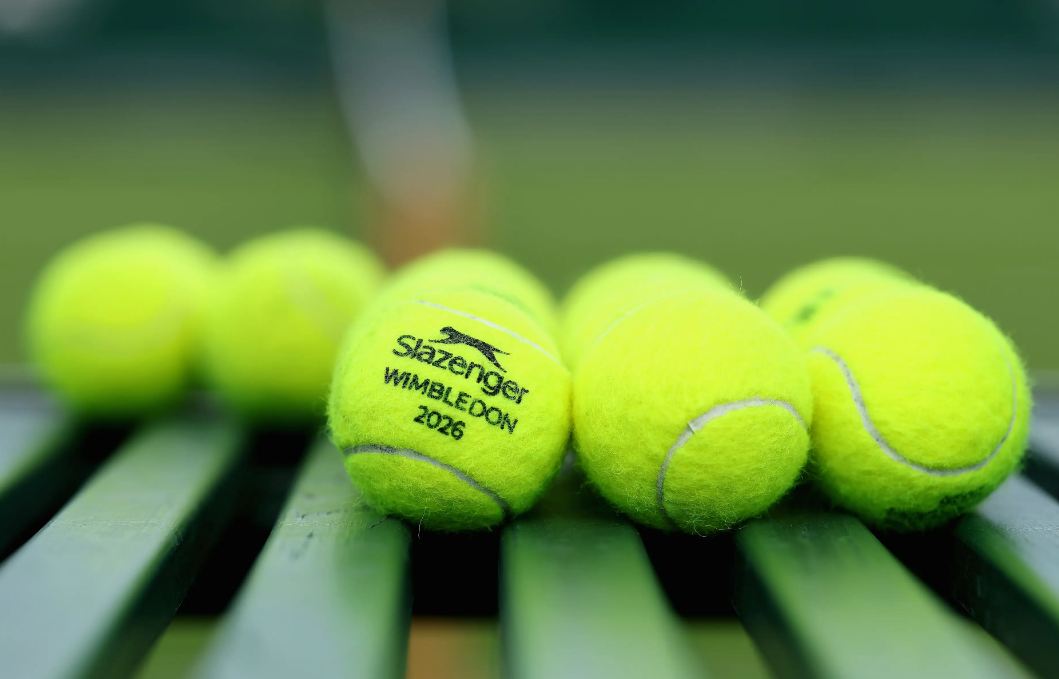
The tournament also follows strict rules regarding when balls are replaced. A new set is introduced after the opening seven games of a match and then changed every nine games after that. This system prevents the balls from becoming too soft or fluffy, both of which can affect speed and control. Officials inspect and organize thousands of balls every day. Those that still meet quality standards may be kept as reserve balls in case one is lost during play, while older balls are removed from professional competition once they no longer perform consistently enough for elite athletes.
What Happens After They’re Retired?
A tennis ball’s journey doesn’t end when it leaves Centre Court. Many of the used balls are sold to spectators as affordable souvenirs during the tournament. Visitors can purchase cans containing previously used match balls, with proceeds supporting charitable projects through the Wimbledon Foundation. Balls that are not sold often find a second life through donations or recycling programs. In previous years, some have been provided to wildlife organizations, where modified tennis balls have been used as protective nesting shelters for small animals such as harvest mice. Others are recycled into sports surfaces, reused by local tennis clubs, or repurposed for community projects instead of ending up in landfill. These initiatives help reduce waste while extending the life of equipment that has already served on one of tennis’s biggest stages.
A Small Detail That Makes a Big Difference
While fans naturally focus on the world’s best players competing for the famous Wimbledon trophies, the tournament’s attention to detail extends far beyond the athletes themselves. Everything from grass maintenance to ball storage is carefully managed to create the fairest possible playing conditions. Refrigerating thousands of tennis balls may seem like an unusual tradition, but it reflects Wimbledon’s commitment to precision and consistency. Combined with its recycling and charity initiatives, the practice also demonstrates how even the smallest pieces of the tournament are managed with long-term planning in mind. The next time viewers watch a powerful serve or a dramatic rally on Centre Court, they may never think about where the tennis balls spent their days beforehand—but those refrigerated rooms play an important role in helping every match unfold as intended.