
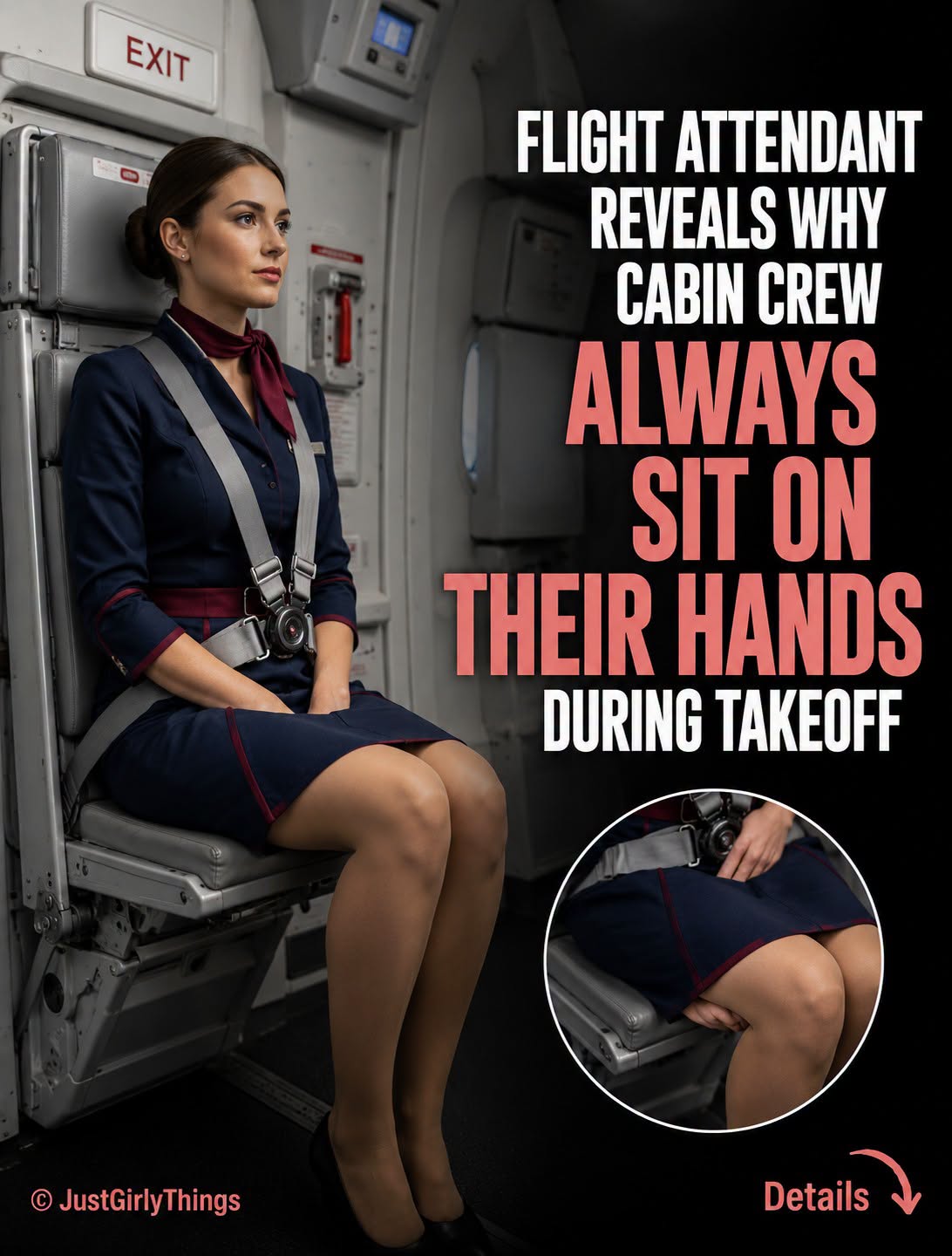
Many airline passengers have noticed flight attendants sitting in their jump seats with their hands tucked underneath their thighs or resting firmly on their hands during takeoff and landing. While the position may look unusual, it serves an important safety purpose.
The practice is part of a standardized safety procedure used by many airlines around the world during what are considered the most critical phases of a flight. Aviation experts say the position helps cabin crew prepare for unexpected emergencies while reducing the risk of injury if sudden forces occur.
The Most Critical Moments of a Flight
According to aviation safety data, takeoff and landing are the phases during which the majority of serious aviation incidents occur. Although commercial air travel remains one of the safest forms of transportation, cabin crew are trained to remain especially alert during these periods. Unlike passengers, who are encouraged to relax once seated, flight attendants are actively monitoring conditions inside the cabin, listening for unusual sounds, watching for potential hazards, and preparing to respond immediately if a problem develops. Their seating posture forms part of this preparation process.
What Is the Brace Position for Cabin Crew?
The hand-under-thigh posture is commonly associated with a safety technique known as the cabin crew brace position. When seated in their jump seats, flight attendants fasten their harnesses securely and place their hands in a specific position designed to limit unnecessary body movement. By sitting on their hands or placing them flat against their thighs, they reduce the chance of their arms flailing during sudden turbulence, a hard landing, or an emergency impact. The goal is to keep the body stable and protected while maintaining the ability to react quickly once the aircraft comes to a stop.
Why Stability Matters
In the event of an unexpected impact, loose arms and legs can be thrown violently, increasing the risk of injury. Keeping the hands secured helps cabin crew maintain proper posture and minimizes movement during high-force situations. This position also encourages a straight back, firm head placement, and overall body alignment, which can help reduce injuries if an emergency occurs. Airlines train cabin crew extensively on these procedures because flight attendants are expected to assist passengers immediately after an incident. Remaining as injury-free as possible is therefore essential to passenger safety as well.
Mental Preparation Is Also Important
The brace position is not only about physical protection. It also serves as a mental preparation technique. During takeoff and landing, many flight attendants silently review emergency procedures, evacuation commands, and potential response scenarios. This process, sometimes called a “silent review,” helps ensure that safety procedures remain fresh in their minds if a rapid response becomes necessary. By adopting a standardized posture and focusing on emergency preparedness, cabin crew can enter a heightened state of readiness during critical moments of the flight.
Different Airlines May Use Slight Variations
Although the overall purpose is the same, exact brace positions can vary slightly between airlines and aircraft types. Some airlines instruct crew members to place their hands underneath their thighs, while others require hands flat on top of the legs or in another fixed position. The specific technique depends on the airline’s safety procedures and aircraft configuration. Regardless of the variation, the objective remains identical: reducing injury risk and ensuring cabin crew are prepared to assist passengers during an emergency.
A Reminder of Cabin Crew’s Safety Role
Passengers often associate flight attendants with customer service, food and beverage service, and helping travelers during flights. However, their primary responsibility is safety. Cabin crew undergo extensive training in emergency evacuations, firefighting, first aid, security procedures, and crisis management. The hand-under-thigh posture seen during takeoff and landing is just one small example of the detailed safety practices that form part of their daily work.
More Than Just a Habit
What appears to be a simple or even odd sitting position is actually the result of years of aviation safety research and crew training. The next time you notice a flight attendant sitting on their hands during takeoff or landing, you’ll know it isn’t a matter of comfort or habit. It is a carefully designed safety procedure intended to protect crew members, keep them prepared for emergencies, and ultimately help ensure the safety of everyone on board.