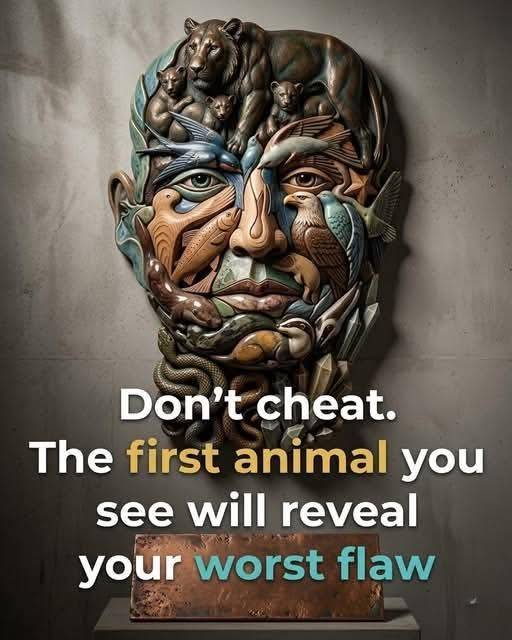
Online personality quizzes that claim the first animal a person notices reveals their “biggest flaw” have become extremely popular on social media. These images usually contain multiple hidden animals blended into a single illustration, and viewers are asked to quickly identify the first one they see. While they are entertaining, they are not scientifically reliable personality assessments. Instead, they are based on optical illusions and psychological tendencies in perception rather than measurable personality traits.
How These Tests Work
These visual puzzles rely on a psychological phenomenon known as pareidolia, where the brain recognizes familiar patterns or shapes in random or complex visuals. Because the image is designed with overlapping animal forms, different people may notice different animals first depending on focus, attention, and visual processing style. The instructions are usually simple: look at the image quickly and note the first animal you see. That animal is then assigned a symbolic “flaw” such as overthinking, stubbornness, or impulsiveness. However, these interpretations are created for entertainment and storytelling purposes rather than scientific analysis.
Common Interpretations of Animals
Different versions of these tests assign different meanings, but the patterns are often similar:
Lion – Often linked to pride or difficulty admitting mistakes
Elephant – Associated with stubbornness or strong memory
Owl – Connected to overthinking or emotional distance
Wolf – Linked to intensity or protectiveness
Butterfly – Seen as impulsive or easily distracted
Turtle – Interpreted as cautiousness or resistance to change
These interpretations are not fixed or universal. They are symbolic and intentionally exaggerated to make the quiz more engaging and shareable.
Why People Enjoy These Tests
Part of the appeal comes from curiosity and self-reflection. Even though the results are not scientifically valid, people often enjoy comparing answers with friends and seeing whether the descriptions feel relatable. Psychologically, humans are naturally drawn to meaning-making. When presented with vague but suggestive descriptions, people tend to connect them to their own experiences, even if the statements are broad or general. This is one reason these tests feel “accurate” to many participants.

The Reality Behind the “Flaws”
Despite being labeled as personality flaws, the traits described in these tests are usually neutral or even positive characteristics framed in a negative way. For example, “overthinking” can also mean being thoughtful and careful, while “stubbornness” can reflect persistence and determination. Because of this, the results should be viewed as playful interpretations rather than psychological evaluations.
Conclusion
The “first animal you see” personality tests are best understood as entertainment rather than science. They rely on optical illusions and broad psychological tendencies to create engaging but non-diagnostic results. While they can be fun for self-reflection or social sharing, they do not accurately measure personality traits or reveal hidden flaws. Instead, they highlight how differently people perceive the same image—and how easily the human mind searches for meaning, even in simple visual puzzles.