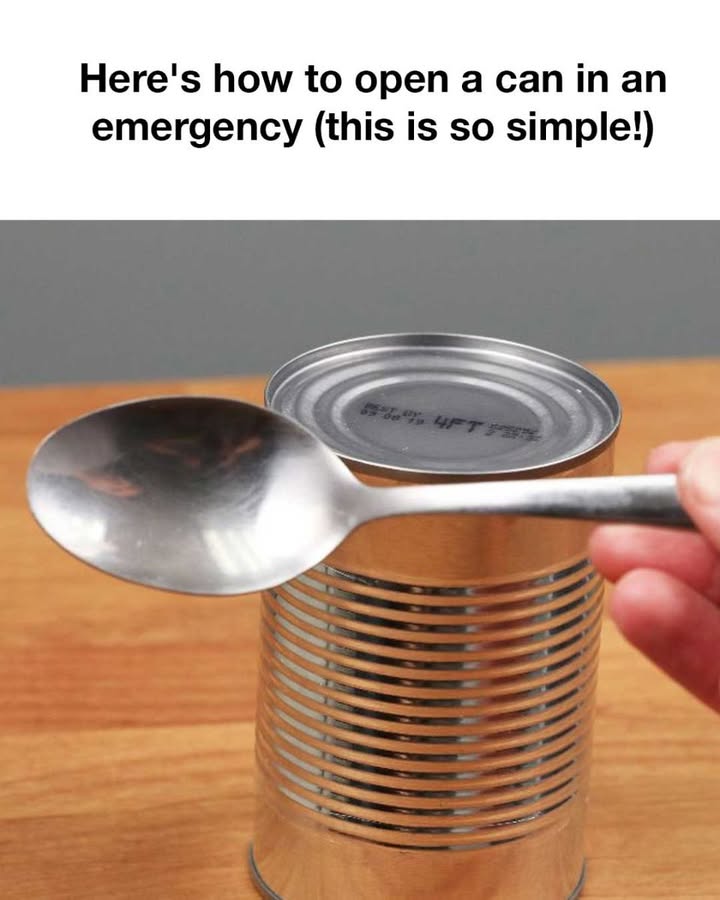
In emergency situations whether during camping, a power outage, or simply being unprepared it is still possible to open a canned food container without a proper can opener. While it requires caution, several practical methods can help access the contents using common tools or even rough surfaces. The key is understanding that can lids are made of relatively thin metal, which can be weakened through friction or puncturing.
Using a Spoon to Wear Down the Lid
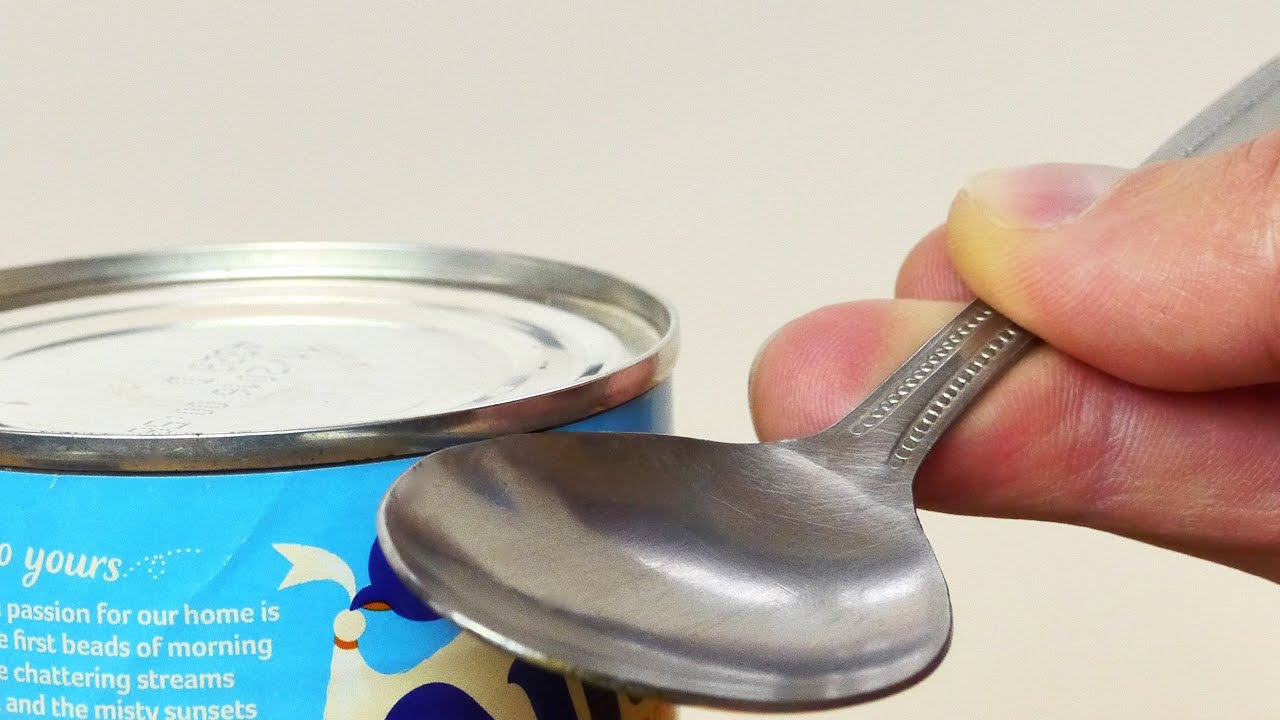
One of the safest and most commonly recommended methods involves using a sturdy metal spoon. The technique works by repeatedly rubbing the spoon against the inner rim of the can lid until the metal begins to thin and eventually breaks through. Once a small hole forms, the spoon can be used to gradually widen the opening until the lid can be lifted. This method is often preferred because it reduces the risk of deep cuts compared to sharper tools, although the edges can still become very sharp once opened.
Using a Knife or Sharp Tool
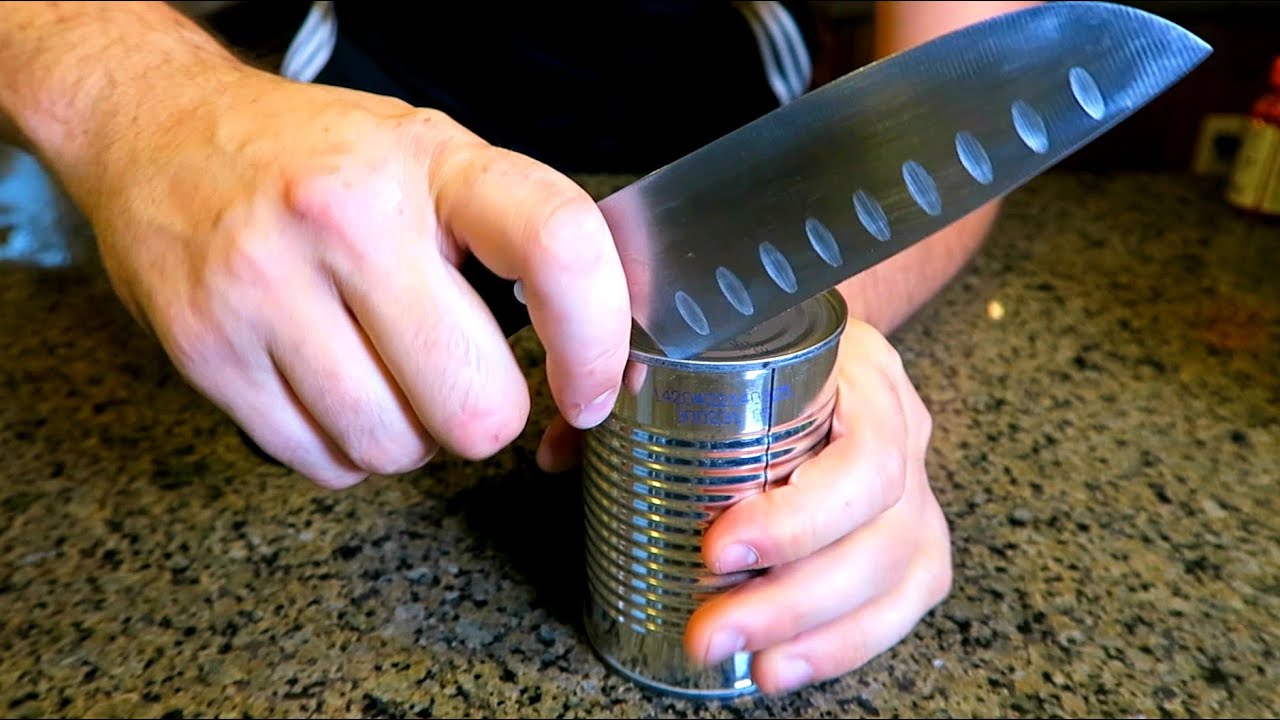
A knife can also be used in emergencies, but it requires significantly more care. The tip or heel of a strong knife is pressed into the lid near the rim to create a puncture. This process is repeated around the edge of the can until the lid becomes loose enough to remove. Although effective, this method is considered riskier because slipping can lead to injury, and metal fragments may fall into the food if done carelessly. For this reason, it is typically recommended only when no safer option is available.
The Concrete or Rock Method
When outdoors and without tools, a rough surface such as concrete, stone, or asphalt can be used. The can is turned upside down and rubbed firmly against the rough surface. Over time, the friction wears down the seal of the lid. Once moisture begins to appear on the surface, it is a sign that the seal has weakened enough. At that point, a small tool such as a spoon or knife can be used to finish opening the lid.
Using Puncture and Leverage Techniques
In more urgent situations, any strong object with a pointed edge—such as a screwdriver or similar tool—can be used to puncture the lid repeatedly around its edge. Once enough weak points are created, the lid can be pried open. This method is effective but increases the risk of jagged metal edges, so it should be done slowly and carefully.
Safety Considerations
Regardless of the method used, safety is extremely important. Can lids often become razor-sharp once opened, and improper handling can easily cause injury. It is recommended to:
Keep hands away from cutting edges
Use cloth or gloves if available
Stabilize the can on a firm surface
Work slowly and carefully
Many guides emphasize that while these techniques are useful in emergencies, they should never replace proper tools when available.
Conclusion
Opening a can without a can opener is entirely possible using simple household objects or natural surfaces, but it requires patience and caution. Methods such as using a spoon, knife, or rough surface all rely on weakening the metal seal until it breaks. While these techniques can be lifesaving in unexpected situations, they also highlight the importance of preparation—because the safest and easiest solution is always a proper can opener.