For decades, M&M’s have been one of the most recognizable chocolate candies in the world. Their colorful candy shells, memorable advertising campaigns, and famous slogan have helped make them a favorite treat for generations. Despite their popularity, many people are surprised to learn that the name M&M’s is not just a catchy brand name—it actually has a fascinating historical origin. Recently, discussions online have reignited curiosity about the beloved candy, with many chocolate lovers expressing shock after discovering what the two letters truly stand for.
The Story Behind the Famous Name
The name M&M’s comes from the surnames of the two men who played key roles in creating the candy: Forrest Mars Sr. and Bruce Murrie. Forrest Mars was the son of Frank Mars, founder of the Mars candy company. During the late 1930s, Mars became interested in developing a chocolate product that could withstand warm temperatures without melting easily in consumers’ hands. Bruce Murrie was the son of William Murrie, a prominent executive associated with the Hershey chocolate company. The partnership between Mars and Murrie helped secure a reliable chocolate supply during a time when resources were becoming increasingly valuable. The first “M” represented Mars, while the second “M” stood for Murrie, creating the now-famous M&M’s brand name.

Inspired by a Wartime Observation
The idea for M&M’s reportedly originated after Forrest Mars observed soldiers eating chocolate pellets covered with a hard sugar shell. The coating prevented the chocolate from melting quickly, making it easier to transport and consume in warm conditions. Inspired by this concept, Mars worked to create a similar product for the American market. The result was a small chocolate candy encased in a colorful sugar shell that offered both convenience and durability. The product quickly gained popularity, especially during World War II, when it became a practical treat for military personnel because of its resistance to heat. This early success helped establish M&M’s as one of the most recognizable candy products in the United States.
The Evolution of a Candy Icon
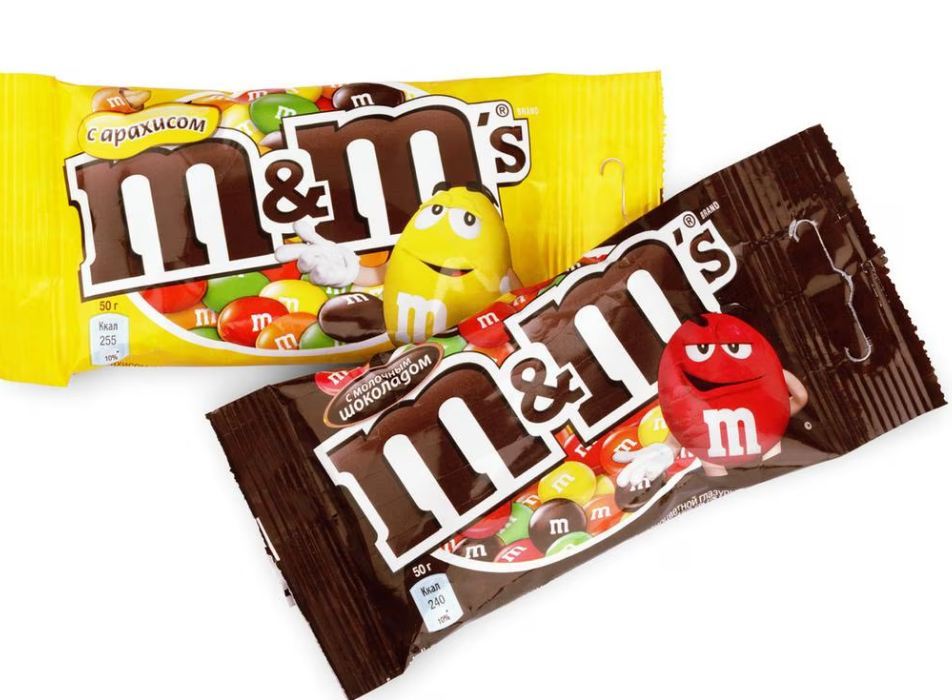
Since their introduction, M&M’s have expanded far beyond the original chocolate version. Over the years, consumers have been offered numerous varieties, including peanut, crispy, peanut butter, caramel, almond, and limited-edition flavors. The colorful candy-coated chocolates have also become famous for their distinctive mascots, television advertisements, and seasonal promotions. One of the brand’s most memorable marketing phrases, “Melts in your mouth, not in your hands,” directly highlights the feature that originally helped distinguish the candy from many competitors. Today, M&M’s are sold in countries around the world and remain one of the best-selling chocolate products ever created.
Why the Discovery Surprised So Many People
Many consumers assume brand names are simply invented for marketing purposes. As a result, countless people have enjoyed M&M’s for years without ever questioning the meaning behind the letters. The revelation that the name is based on the surnames of two real individuals often comes as a surprise because the connection is not immediately obvious. Social media users have frequently described learning the truth as one of those facts that seems simple once explained but is rarely considered beforehand. The discovery has also sparked renewed interest in the history of other famous food brands and the stories behind their names.
A Sweet Piece of History
The story behind M&M’s serves as a reminder that some of the world’s most recognizable products have origins rooted in real partnerships, business decisions, and historical events. What began as a practical solution for keeping chocolate from melting evolved into a global candy phenomenon enjoyed by millions of people every year. The simple combination of two surnames created one of the most successful food brands in history. For many chocolate fans, learning the meaning behind M&M’s adds an extra layer of appreciation to a candy they have known their entire lives. It is a small but fascinating piece of history hidden behind one of the world’s most famous sweet treats.