
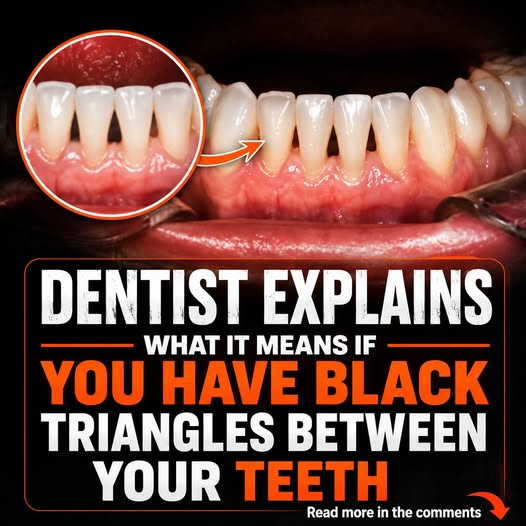
Many people notice tiny dark gaps forming between their teeth as they get older, but few know what causes them. These spaces, often called “black triangles,” have recently become a major topic online after dentists explained why they appear and what they could reveal about oral health.
Black triangles are the small triangular gaps that form near the gumline between two teeth. Instead of gums completely filling the space, a dark opening becomes visible, especially when smiling or speaking. While they may seem like a simple cosmetic issue, dental experts say they can sometimes point to deeper problems involving the gums and bone structure supporting the teeth.
Why Black Triangles Appear
According to dental professionals, one of the most common causes of black triangles is gum recession. As gums slowly pull away from the teeth, empty spaces can appear between them. This process may happen naturally with aging, but it can also be linked to gum disease, aggressive brushing, smoking, or poor oral hygiene. Dentists explain that healthy gums normally fill the space between teeth with tissue called the interdental papilla. When that tissue shrinks or becomes damaged, the dark gap becomes visible. The problem is especially noticeable in the front teeth because the spaces are easier to see while talking or smiling. Orthodontic treatment can also contribute to black triangles in some cases. Braces or aligners may straighten crowded teeth, revealing spaces that were previously hidden. This does not necessarily mean the treatment failed, but rather that the underlying shape of the teeth or gums has changed.
Tooth Shape Can Play A Role
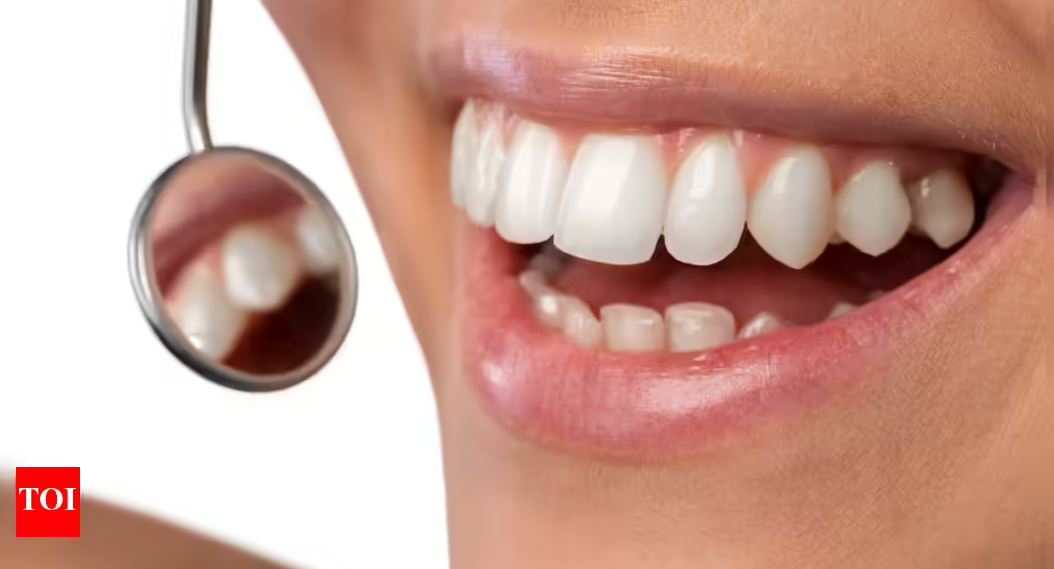
The natural shape of a person’s teeth is another important factor. Teeth that are more triangular rather than square-shaped are more likely to develop black triangles because there is less surface area touching between neighboring teeth. When teeth only touch near the top instead of closer to the gumline, more open space remains underneath. This can create the dark appearance many people notice in photos or mirrors. Some individuals are genetically more prone to this issue than others. Dental experts say that even people with excellent oral hygiene can develop black triangles because anatomy and aging also influence how gums and teeth change over time.
More Than Just A Cosmetic Concern
Although many people mainly worry about appearance, dentists warn that black triangles can sometimes create practical oral health problems too. Food particles may become trapped more easily inside the gaps, increasing the risk of plaque buildup and gum irritation. Some people also notice speech changes or slight whistling sounds while talking due to air passing through the spaces differently. In more advanced cases, black triangles may signal underlying periodontal disease that requires professional treatment. Because of this, dentists encourage patients not to ignore sudden or worsening gaps between teeth. Regular dental checkups can help identify whether the issue is harmless or connected to gum health problems.
Treatments Dentists Use
Fortunately, several treatment options may help reduce or improve black triangles depending on the cause. Dentists sometimes use bonding procedures, where tooth-colored material is carefully added to reshape teeth and close the spaces. This is one of the fastest cosmetic solutions. Orthodontic treatment may also help in certain situations by adjusting tooth positioning and contact points. In more severe cases involving gum loss, specialized gum grafting procedures may be recommended to restore tissue near the teeth. Some dentists also advise using gentler brushing techniques and improving flossing habits to protect the gums from further recession. Smoking cessation and proper periodontal care can play a major role in preventing the spaces from worsening over time.
Why More People Are Talking About Them
Social media and cosmetic dentistry trends have made people increasingly aware of details in their smiles that they may never have noticed before. High-definition photos, videos, and close-up selfies often make black triangles appear more obvious than they once did. As a result, many patients are now seeking cosmetic dental advice specifically for these small gaps. Dentists say the condition is extremely common and often manageable, especially when addressed early. While black triangles can sometimes affect confidence, dental professionals stress that they are not always a sign of serious disease. Still, understanding the causes and maintaining healthy gums remain important for both oral health and appearance.