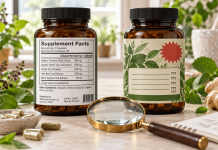

A bottle of herbal capsules can look harmless beside a prescription medication. One came from a plant, the other from a pharmacy, so many people assume they belong to completely separate worlds.
Inside the body, that distinction disappears.
Herbal products contain active compounds, and some of them can change how medications are absorbed, processed or removed from the body. One of the clearest examples is St. John’s wort.
This yellow-flowering herb is commonly marketed for mood and emotional well-being. Research suggests that certain St. John’s wort preparations may help some people with mild or moderate depression.
However, the same herb can interact with a surprisingly large number of medications. In some cases, it can make an important medicine less effective. In others, combining the two may increase the risk of serious side effects.
How Can an Herb Make Medicine Stop Working?
The liver and intestines contain enzymes and transport systems that help the body process medications.
St. John’s wort can increase the activity of some of these systems. As a result, the body may break down and remove certain medications faster than expected.
That means a person may continue taking the correct prescribed dose while the amount of medication available in the body becomes lower than intended.
The interaction may not produce an immediate or obvious symptom. The first sign could be that the medication no longer appears to work as well as it once did.
This is why simply separating the herb and medication by a few hours may not solve the problem. St. John’s wort can affect the way the body processes medication over time.

Which Medications May Interact?
St. John’s wort has been shown to interact with many categories of medication.
Examples include:
- Some antidepressants
- Birth control pills
- Warfarin and other medicines used to prevent blood clots
- Certain heart medications
- Some seizure medications
- Medicines that prevent organ rejection after transplantation
- Certain HIV medications
- Some cancer treatments
- Particular cholesterol-lowering medications
This is not a complete list.
A medication does not need to be new or unusually strong to interact with an herbal supplement. Prescription medicines, over-the-counter products and other supplements should all be included when reviewing possible interactions.
The Antidepressant Concern Is Different
With many medicines, St. John’s wort may lower the amount of medication available in the body.
When combined with certain antidepressants or other products that affect serotonin, the concern can move in the opposite direction.
The combination may produce excessive serotonin-related effects. These can become serious and require medical attention.
A person already taking an antidepressant should not add St. John’s wort or switch between the two without professional guidance.
Depression itself can also be a serious condition. An herbal product should not be used to delay appropriate evaluation or replace prescribed treatment without speaking to a qualified healthcare professional.
Other Possible Side Effects
Even when no medication interaction is involved, St. John’s wort can cause side effects.
Reported effects include:
- Digestive discomfort or diarrhea
- Dizziness
- Restlessness
- Difficulty sleeping
- Tingling sensations
- Increased sensitivity to sunlight
Larger oral doses and some topical uses may increase the risk of significant skin reactions following sun exposure.
The herb may also be unsafe during pregnancy. Babies breastfed by people using St. John’s wort have reportedly experienced symptoms including drowsiness and colic.
Not Every Product Is Identical
“St. John’s wort” on the front of a package does not guarantee that every product contains an identical preparation.
Supplements can differ in:
- Plant parts used
- Extraction method
- Concentration
- Suggested serving size
- Additional ingredients
- Quality-control standards
Research involving one standardized preparation does not automatically prove that every capsule, tincture or tea will produce the same benefits or risks.
Taking a larger serving does not guarantee a stronger benefit, but it may increase side effects or interactions.
What Should You Do Before Taking It?
Start by making a complete list of everything you use regularly:
- Prescription medications
- Nonprescription medicines
- Vitamins and minerals
- Herbal supplements
- Teas, tinctures and extracts
Show the list to a doctor or pharmacist and ask specifically about St. John’s wort.
Do not stop taking a prescribed medication because you have discovered a possible interaction. Suddenly discontinuing certain medicines can create additional risks.
A healthcare professional can determine whether the combination is appropriate and whether a medication or supplement needs to be changed safely.
The same rule applies if you have already been combining St. John’s wort with medication. Do not assume that feeling well means no interaction is occurring.
The Bottom Line
St. John’s wort demonstrates why “natural” and “inactive” are not the same thing.
The herb contains biologically active compounds. That activity may explain its potential effect on mood, but it also explains why it can alter the effects of medications.
For someone who takes no medication, the risk profile may be different. For someone using prescription or over-the-counter products, checking for interactions should come before taking the first capsule—not after a problem appears.
Editorial note: This article is for general education and does not replace individualized medical advice. Do not start or discontinue medication or treatment based solely on this information.