
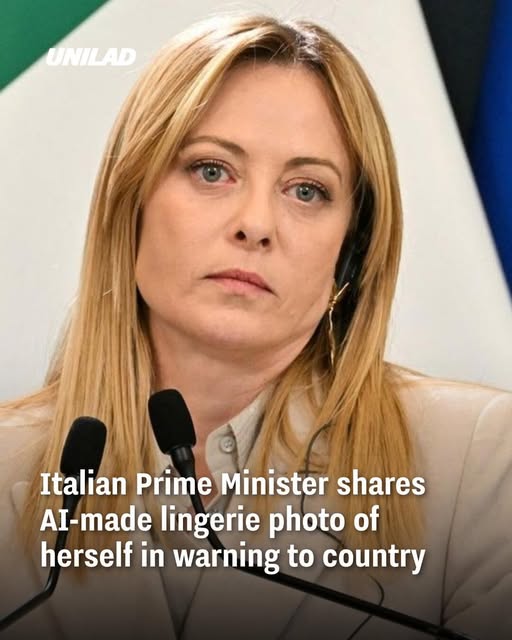
Italian Prime Minister Giorgia Meloni shares AI lingerie photo in warning to country
Italian Prime Minister Giorgia Meloni has spoken out after fake AI-generated images of her began circulating online, reigniting global concerns about the dangers of deepfake technology.
The manipulated images, which appeared to show Meloni posing in lingerie, quickly spread across social media platforms. According to reports, the images were shared by critics and online users attempting to embarrass or attack the Italian leader politically.
Rather than ignoring the situation, Meloni decided to publicly address the fake images herself. She shared one of the manipulated pictures online while clearly labeling it as AI-generated, warning people about how convincing deepfake technology has become.
What Are Deepfakes?
Deepfakes are images, videos, or audio clips created using artificial intelligence to make it appear as though someone said or did something they never actually did.
The technology has advanced rapidly in recent years, making fake content increasingly realistic and harder to detect. Experts say deepfakes can now imitate facial expressions, voices, and movements with shocking accuracy.
While some AI-generated media is created for entertainment purposes, critics warn the technology can also be used for misinformation, scams, political manipulation, harassment, and revenge content.
Public figures, celebrities, and politicians have become frequent targets because their images and videos are widely available online, making it easier for AI systems to imitate them.
Meloni’s Warning to the Public
Meloni used the incident to urge people to think carefully before sharing content online.
She warned that deepfakes are dangerous because they can deceive people and damage reputations, especially when users assume fake material is real without checking its authenticity first.
According to reports, the Italian prime minister said that while she may be able to defend herself publicly, many ordinary people cannot. She stressed that anyone could become a victim of AI manipulation.
Her comments have sparked broader conversations across Europe about how governments and technology companies should respond to the growing threat of AI-generated misinformation.
Deepfake Concerns Are Growing Worldwide
The incident involving Meloni is part of a much larger global problem. Deepfake technology has increasingly been used to create fake celebrity videos, manipulated political speeches, and explicit images shared without consent.
Several countries have already started introducing laws targeting harmful AI-generated content. In the UK, for example, creating sexually explicit AI images without consent has become illegal.
Italy has also taken steps to address AI misuse. Reports indicate the country previously introduced regulations connected to harmful uses of artificial intelligence and digital manipulation.
Technology researchers continue working on systems designed to identify manipulated media before it spreads online. However, experts admit detection tools still struggle to keep pace with rapidly improving AI systems.
Social Media’s Role in Spreading Fake Content
One major issue surrounding deepfakes is how quickly they can spread online.
A single manipulated image or video can reach millions of people within hours through reposts, memes, and viral discussions. Even after content is proven false, the damage to reputations can remain.
Social media platforms have faced increasing pressure to improve moderation systems and label manipulated content more effectively. Critics argue many platforms still react too slowly once fake material begins trending.
The rise of generative AI tools has also made deepfake creation more accessible than ever before. What once required advanced technical skills can now sometimes be produced using simple consumer software.
A Warning About the Future of AI
Meloni’s response highlights growing fears about the future of artificial intelligence and misinformation.
As AI technology becomes more powerful, experts believe society may soon face even greater challenges distinguishing real content from fabricated media. Political leaders, celebrities, and ordinary citizens alike could all become vulnerable targets.
The controversy has become another reminder that in the digital age, seeing an image online no longer guarantees that it is real.