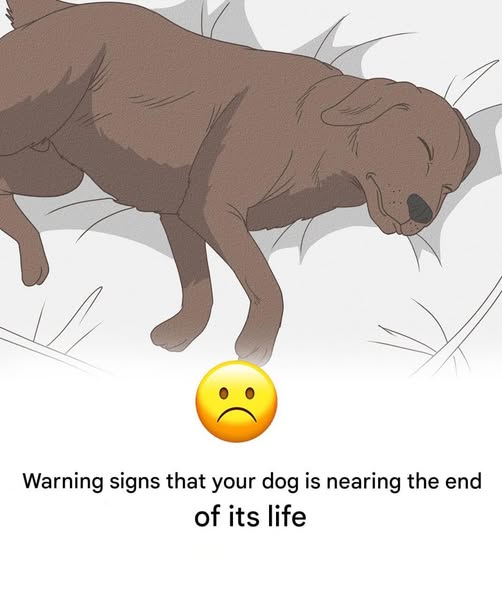
Watching a beloved dog grow old or become ill is incredibly difficult. While every dog’s journey is different, veterinarians agree there are common signs that may indicate a dog is approaching the final stage of life. Recognizing these changes can help you provide comfort, seek proper care, and make compassionate decisions.
1. Extreme Tiredness and Withdrawal
One of the earliest and most noticeable signs is lethargy. Dogs may sleep much more than usual, show little energy, and lose interest in activities they once loved. They might also withdraw from family members or seek quiet, isolated spaces.

2. Loss of Appetite and Thirst
A declining appetite is very common. Dogs nearing the end of life may refuse food—even treats—and drink less water, leading to dehydration. This often happens as organs begin to shut down.
3. Difficulty Moving or Standing
Mobility issues tend to worsen over time. Your dog may struggle to stand, walk, or climb stairs. Weakness, joint pain, or muscle loss can make even simple movements exhausting.
4. Weight Loss and Physical Changes
Significant weight loss and visible muscle wasting are common in the final stages. You might also notice a dull coat, poor grooming, or overall frailty.
5. Changes in Breathing
Irregular or labored breathing is a serious sign. Dogs may pant heavily even at rest, breathe shallowly, or have long pauses between breaths. These changes can indicate heart or lung problems.
6. Loss of Bladder or Bowel Control
Incontinence is another common symptom. Dogs may urinate or defecate unintentionally, often because they are too weak to move or control their muscles.
7. Behavioral Changes
Dogs may act very differently as they decline. Some become anxious, restless, or confused, while others grow unusually clingy or distant. These shifts often reflect discomfort or neurological changes.
8. Lack of Interest in Life
A dog nearing the end may stop engaging with toys, walks, or even human interaction. This loss of interest is often a sign that their quality of life is declining.
9. Temperature and Circulation Changes
You may notice cold paws or ears, or gums that appear pale or bluish. These are signs that circulation is weakening and the body is struggling to maintain normal function.
10. Pain or Discomfort
Whining, trembling, or difficulty settling can indicate pain. Some dogs may resist being touched or show signs of distress, especially if underlying illness is present.
11. More Bad Days Than Good
Perhaps the most telling sign is an overall decline in quality of life. When discomfort, weakness, and illness outweigh moments of happiness, it may indicate that your dog is nearing the end.
What You Should Do
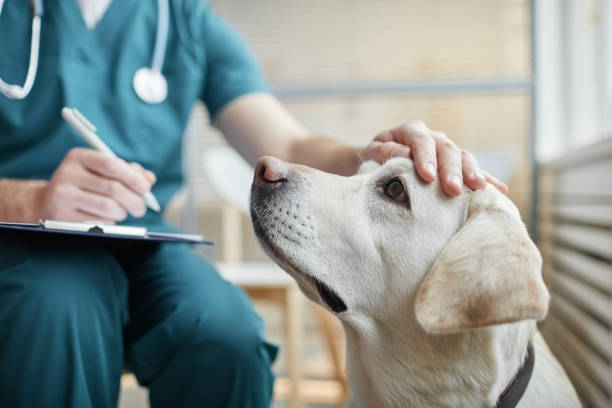
If you notice several of these signs, it’s important to consult a veterinarian. Some symptoms may still be treatable, while others may require supportive or palliative care. In certain cases, humane euthanasia may be recommended to prevent unnecessary suffering.
Final Thoughts
Saying goodbye to a dog is never easy, but understanding these signs can help you act with compassion and care. Your presence, comfort, and love matter most during this time. Even small acts—like sitting beside them or keeping them warm—can make a meaningful difference in their final days.