
Safety pins are one of those everyday household items that many people use without giving them a second thought. Whether securing a loose button, holding fabric together, or helping with quick clothing repairs, they have remained largely unchanged for well over a century. Yet if you take a closer look at a typical safety pin, you may notice a tiny hole near the clasp. While many assume it is simply part of the manufacturing process or has no real purpose, that small opening actually plays an important role in how the safety pin functions.
Its clever design is an example of how even the simplest objects often include carefully engineered features that improve performance and durability.
How a Safety Pin Works
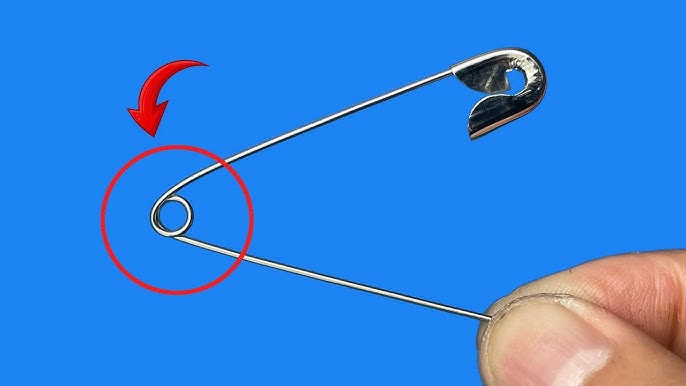
A safety pin may look simple, but it is designed to perform two important tasks at once. It must remain sharp enough to pierce fabric while also locking securely to prevent accidental opening. The pin is made from a single piece of spring wire that is bent into shape. The coiled section stores tension, allowing the pointed end to snap firmly into the protective clasp. This design keeps the sharp tip covered when the pin is closed, reducing the risk of accidental injuries. Because of this spring mechanism, the pin can be opened and closed thousands of times while maintaining its strength.

The Purpose of the Tiny Hole
The small hole located in the clasp is not decorative. It serves as a guide that helps keep the pointed end of the pin properly aligned every time it is closed. When the pin slides into the clasp, the tiny opening helps position the tip securely so it stays locked in place. This reduces unnecessary movement and helps prevent the pin from slipping out accidentally during everyday use. The opening also allows the tip to seat more precisely inside the clasp, making the safety pin easier to close while improving its overall reliability. Although the feature is easy to overlook, it contributes significantly to the safety pin’s effectiveness.
Why Good Design Matters
Many everyday products contain hidden design features that people rarely notice. Engineers often focus on making products safer, stronger, and easier to use without changing their familiar appearance. The safety pin is an excellent example of this philosophy. Its basic design has remained largely unchanged because it works exceptionally well. Small details like the hole in the clasp demonstrate how thoughtful engineering can improve a product without making it more complicated. Sometimes the most successful inventions are those that require very little modification over time.
Other Surprising Everyday Design Features
The safety pin is far from the only household object with hidden functions. Many common items include features that most users never fully appreciate. For example, the small hole in many pot handles can hold a cooking spoon, preventing spills on countertops. The extra hole near the top of some tape measures allows them to hook securely onto nails or screws during measuring projects. Even the tiny hole found in many pen caps is designed with safety in mind, allowing airflow if the cap is accidentally swallowed. These seemingly minor details often result from years of product testing and practical problem-solving.
A Design That Has Stood the Test of Time
Invented in the 19th century, the modern safety pin remains one of the most practical fastening devices ever created. Its simple construction makes it inexpensive to manufacture while providing reliable performance for countless everyday tasks. From sewing kits and first-aid supplies to camping gear and emergency repairs, safety pins continue to be useful in homes around the world. Their durability and versatility explain why they have changed very little despite advances in technology.
Looking More Closely at Everyday Objects
The next time you pick up a safety pin, take a moment to notice the small details built into its design. That tiny hole in the clasp is a reminder that even ordinary objects often contain clever engineering solutions hidden in plain sight. Many of the products people use every day have been refined through years of innovation, with each feature serving a specific purpose. By paying closer attention to these details, we gain a greater appreciation for the creativity and practical thinking behind the simplest inventions. Sometimes, the smallest design elements make the biggest difference, proving that good engineering is often invisible until someone points it out.