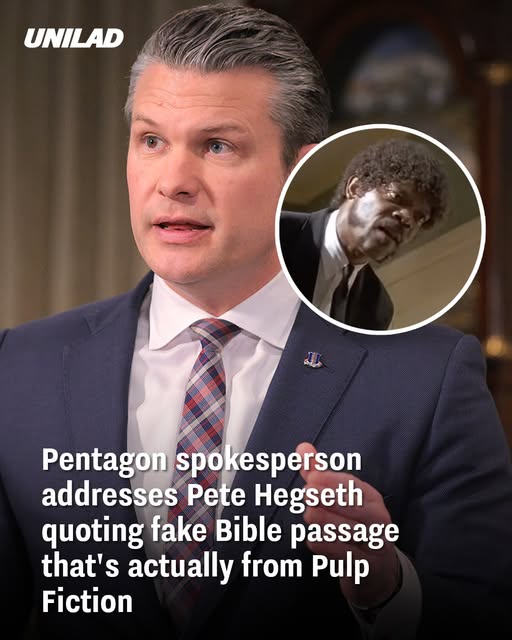
A recent moment involving a Pentagon spokesperson has stirred widespread discussion online and in political circles. The official, speaking during a press interaction, made an unusual reference that combined a well-known religious text with a line reminiscent of a famous movie. The unexpected pairing quickly caught public attention, with many questioning the intent and appropriateness of such a comparison in a formal government setting.
The Controversial Remark
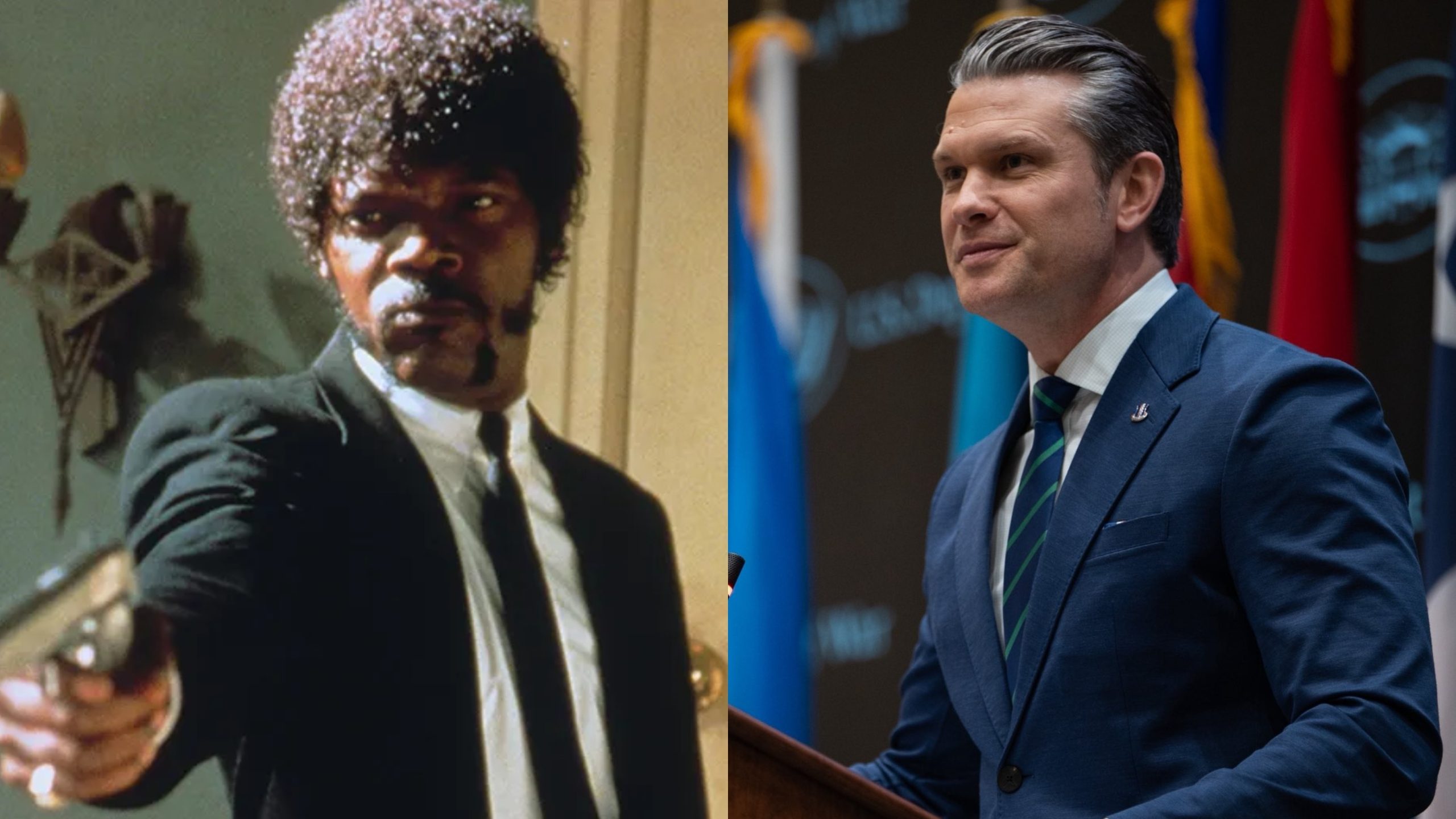
During the briefing, the spokesperson appeared to quote a passage that blended elements associated with the Bible and a pop culture reference often linked to a well-known crime film. While it was not a direct or clearly cited quotation, the phrasing was familiar enough for audiences to recognize similarities. This sparked immediate reactions across social media platforms, where users began debating whether the comment was deliberate, symbolic, or simply a misstep. Some viewers interpreted the remark as an attempt to convey strength or moral conviction, drawing on the authority of religious language. Others, however, felt that mixing sacred text with cinematic dialogue blurred important boundaries, especially in a professional and governmental context.
Public Reaction and Online Discussion
As clips of the exchange circulated, reactions ranged from amusement to criticism. Supporters of the spokesperson argued that the line was meant to resonate emotionally and was taken out of context. They suggested that public figures often use familiar phrases to connect with audiences and emphasize their message. Critics, on the other hand, expressed concern about the blending of religious and entertainment references in official communications. For some, it raised questions about professionalism and the role of personal expression in government statements. Others highlighted the importance of clarity and accuracy, particularly when referencing texts that hold deep significance for many people.
Broader Implications
The incident has also prompted a wider conversation about communication styles among public officials. In an era where speeches and briefings are instantly shared and analyzed online, even small remarks can carry significant weight. The use of metaphor, humor, or cultural references can help messages feel more relatable, but it can also lead to misunderstandings or unintended controversy. Experts in communication note that public figures walk a fine line between authenticity and formality. While connecting with audiences is important, maintaining credibility and respect for diverse perspectives remains essential. This is especially true in environments like the Pentagon, where statements are often viewed through both political and global lenses.
The Role of Media Amplification
Another factor contributing to the rapid spread of the story is the role of digital media. Platforms amplify moments that might once have gone unnoticed, turning brief comments into viral discussions. As a result, public figures must be increasingly mindful of how their words may be interpreted beyond the immediate context. Media coverage has further fueled the debate, with headlines emphasizing the unusual nature of the remark. This has encouraged more people to engage with the story, adding layers of interpretation and opinion.
Conclusion
The Pentagon spokesperson’s comment serves as a reminder of how powerful words can be, particularly when spoken in official settings. Whether the remark was intentional or not, it has sparked meaningful discussion about communication, professionalism, and the blending of cultural references. In a world where every statement can quickly become global news, clarity and awareness are more important than ever.