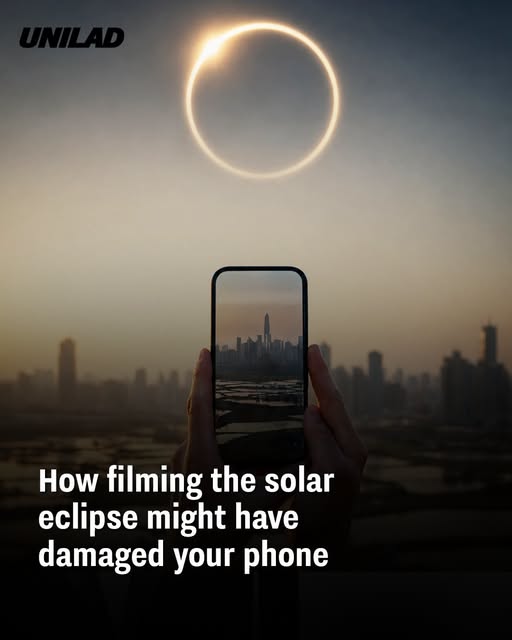
The total solar eclipse on August 12, 2026, gave millions of people across Europe the chance to witness an extraordinary celestial event. With smartphones always close at hand, many spectators naturally tried to capture photographs and videos of the Moon passing across the Sun.
However, experts warned that trying to photograph the eclipse without proper protection could potentially damage a phone’s camera. The danger is not simply a myth: intense sunlight can be concentrated by a camera’s optics onto the tiny image sensor, potentially causing permanent damage.
Why Your Phone Camera Can Be at Risk
A smartphone camera is designed to control the amount of light reaching its sensor, but direct sunlight is exceptionally intense. When the camera is pointed toward the Sun for an extended period, concentrated light can heat the sensor and potentially damage its photodiodes. In severe cases, this can leave permanent dead pixels or other visible defects in photographs. The problem can affect smartphones as well as conventional digital cameras and other optical equipment. Experts have therefore advised people not to assume that a phone is automatically protected simply because the eclipse makes the sky appear darker. During the partial phases, the Sun remains extremely bright even when much of its surface is hidden by the Moon.
The Safest Way to Photograph an Eclipse
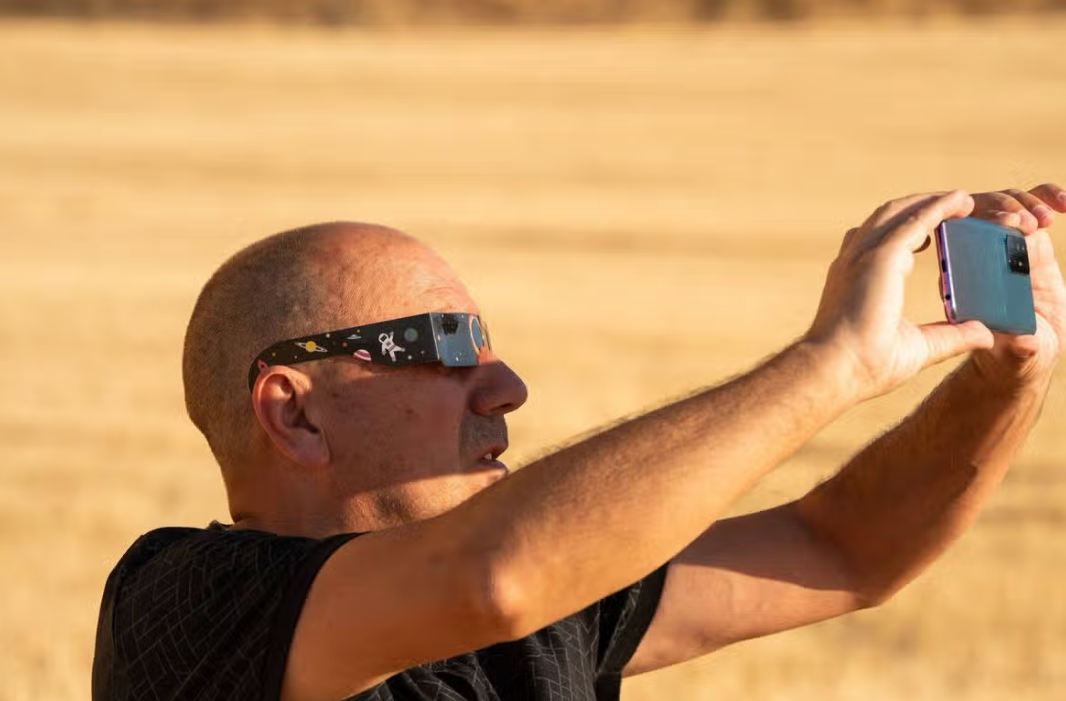
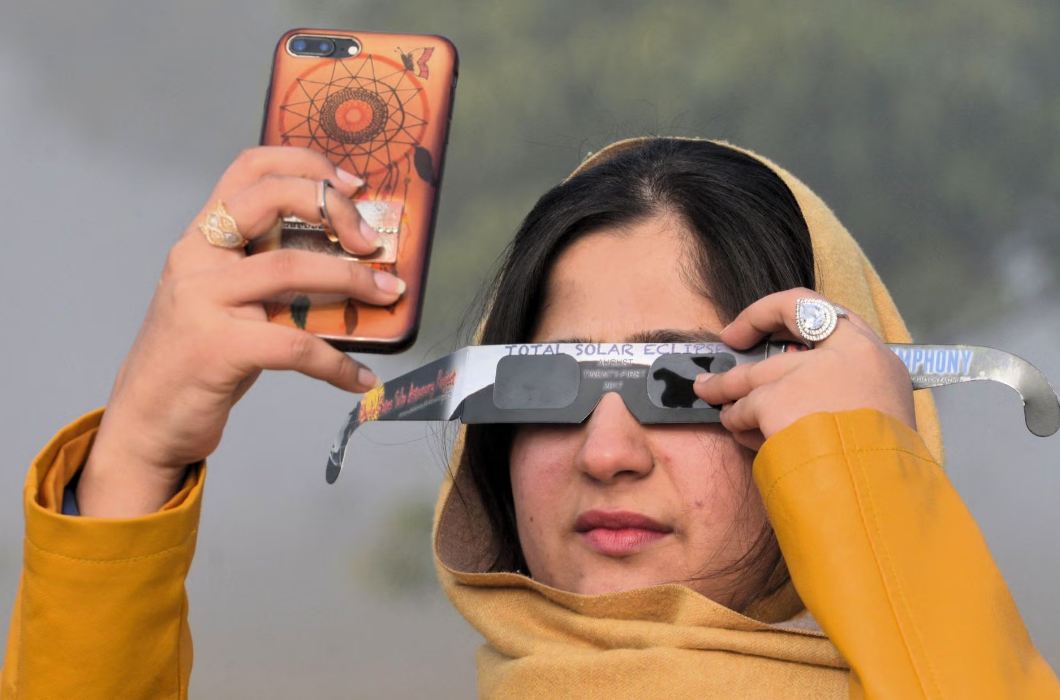
There is a relatively simple way to reduce the risk. NASA recommends placing a properly designed solar filter over the camera lens when photographing the Sun during the partial phases of an eclipse. Certified eclipse glasses can also be held in front of a phone’s camera lens for basic photography, although this is not the same as using a dedicated photographic solar filter. The filter must cover the lens properly and remain securely positioned throughout the shot. Regular sunglasses should never be used as a substitute. They do not block the harmful radiation sufficiently to make direct solar viewing safe.
Your Eyes Are an Even Bigger Concern
While a damaged camera can be expensive and frustrating, protecting your eyesight is far more important. NASA warns against looking directly at the Sun through a camera lens, telescope, binoculars or another optical device. Optical equipment can concentrate sunlight and cause serious eye injury. Wearing ordinary eclipse glasses while looking through such equipment does not make it safe. For direct viewing of a partial eclipse, viewers should use eclipse glasses or a handheld solar viewer that meets the appropriate safety standard. Another option is an indirect viewing method, such as a pinhole projector.
What Happens During Totality?
There is one important exception during a total solar eclipse. When the Moon completely covers the bright face of the Sun, observers located within the path of totality can briefly look directly at the eclipse without eye protection. However, this is only safe during the short period when the Sun is completely obscured. As soon as even a small portion of the bright solar surface becomes visible again, eclipse glasses must immediately be put back on. The same principle applies to photography. Unfiltered equipment should not be pointed at the Sun during the partial phases before or after totality.
A Lesson for Future Eclipses
The August 2026 eclipse may have been a spectacular opportunity for photography, but it also provided an important reminder: smartphones are not designed to safely stare at the Sun for prolonged periods. Anyone hoping to photograph future eclipses should prepare appropriate solar protection before the event begins. A proper filter can help protect the camera, while certified eclipse glasses protect the viewer’s eyes. The next major total solar eclipse will arrive on August 2, 2027, giving skywatchers another opportunity to experience totality. For anyone planning to capture it on a phone or camera, protecting the equipment—and especially their eyesight—should be part of the preparation from the beginning.