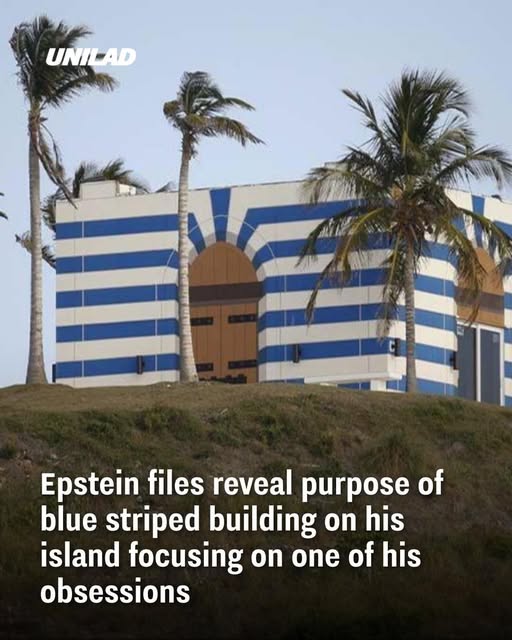
In recent years, renewed attention has been drawn to the private island once owned by Jeffrey Epstein, particularly a striking blue-and-white structure perched prominently on the landscape. Often referred to as the “blue building,” this unusual construction has sparked widespread curiosity and speculation due to its distinctive appearance and unclear purpose.
A Structure That Stands Out
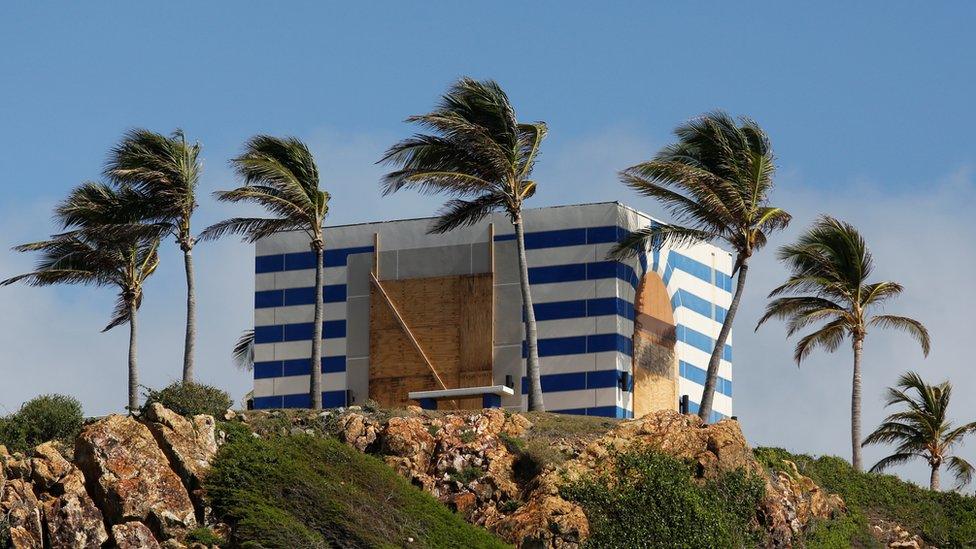
The building’s design immediately sets it apart from the rest of the island. With its bright blue dome and geometric shape, it resembles a small temple or shrine more than a typical residential or utility structure. Its elevated position only adds to its visibility, making it one of the most recognizable features of the island from aerial photographs and satellite imagery. Observers have noted that the building does not appear to match the style or function of the other properties on the island, which include villas, guest houses, and service facilities. This contrast has led many to question why it was constructed in such a unique manner.
Speculation and Theories
Because there has been little official information released about the building’s intended use, various theories have emerged. Some believe it may have been designed as a place of meditation or reflection, given its temple-like aesthetic. Others suggest it could have been purely decorative, built to create a visually striking landmark. More controversial claims have circulated online, with some individuals proposing that the structure served a more secretive or symbolic role. However, there is no verified evidence to support these assertions, and many of these theories remain speculative.
Architectural Influences
Experts who have examined images of the building suggest that its design may draw inspiration from Middle Eastern or Mediterranean architecture. The dome, in particular, is a common feature in religious and cultural buildings in those regions. This stylistic choice may have been intentional, aimed at creating an exotic or visually intriguing environment on the island. At the same time, the building’s relatively small size raises questions about its practicality. It does not appear large enough to serve as a primary residence or major facility, which further deepens the mystery surrounding its purpose.
Lack of Official Explanation
One of the main reasons the blue building continues to fascinate people is the absence of clear, confirmed details. Despite extensive media coverage of the island and its history, very little concrete information has been provided about this specific structure. Without official documentation or firsthand accounts explaining its use, the building remains open to interpretation. This lack of clarity has allowed speculation to flourish, with each new image or report fueling further debate.

Why It Captures Public Attention
The intrigue surrounding the blue building is not just about architecture—it is also tied to the broader story of the island itself. Given the controversies and investigations associated with its former owner, every aspect of the property has come under intense scrutiny. In this context, even a single unusual structure can become a focal point for public curiosity. The blue building, with its unique design and mysterious origins, perfectly fits that role.
Conclusion
The blue building on Little St. James remains one of the island’s most puzzling features. Its striking appearance, combined with the lack of confirmed information about its purpose, has made it a subject of ongoing speculation and interest. While many theories attempt to explain its existence, the truth behind its construction may remain unknown for the foreseeable future.