For generations, many home cooks have rinsed raw chicken before seasoning or cooking it.
The habit feels logical. We wash produce, dishes and our hands to make them cleaner, so washing chicken may seem like another sensible step.
Some cooks rinse it with water. Others use salt, vinegar or lemon juice. Many learned the practice from parents or grandparents and have never questioned it.
However, food-safety experts recommend something different.
According to the U.S. Department of Agriculture, washing raw chicken is not necessary—and it may increase the risk of cross-contamination around the kitchen.
Why Washing Does Not Make Chicken Safer
Raw poultry may carry bacteria capable of causing foodborne illness.
Running water over the chicken does not reliably remove or destroy those bacteria. Some may remain attached to the surface, while others can travel with splashing water.
The step that makes chicken safe is proper cooking.
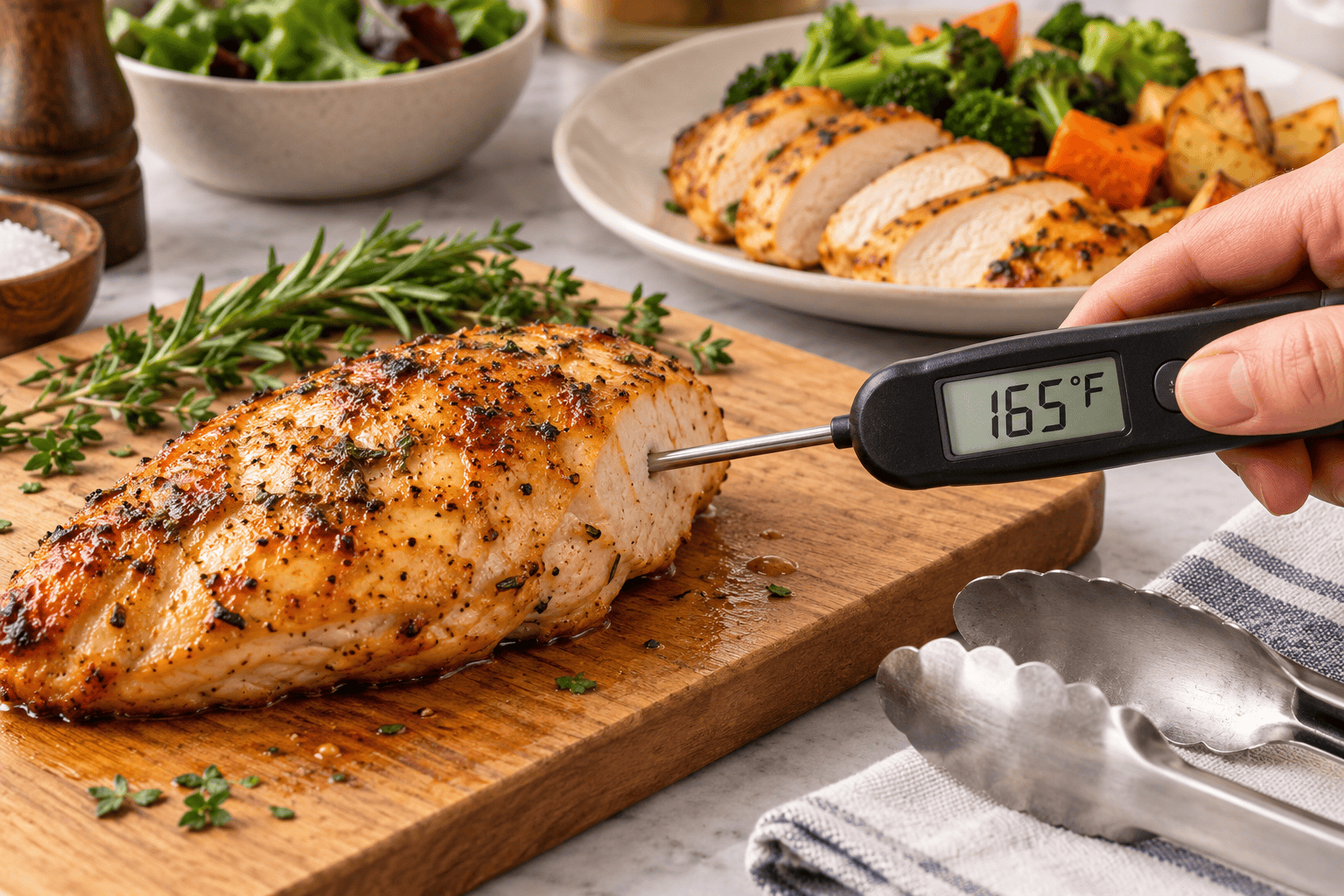
Chicken should reach a minimum internal temperature of 165°F in its thickest part. At that temperature, harmful bacteria are destroyed.
Washing adds another handling step without replacing the need for correct cooking.
The Problem You Cannot See
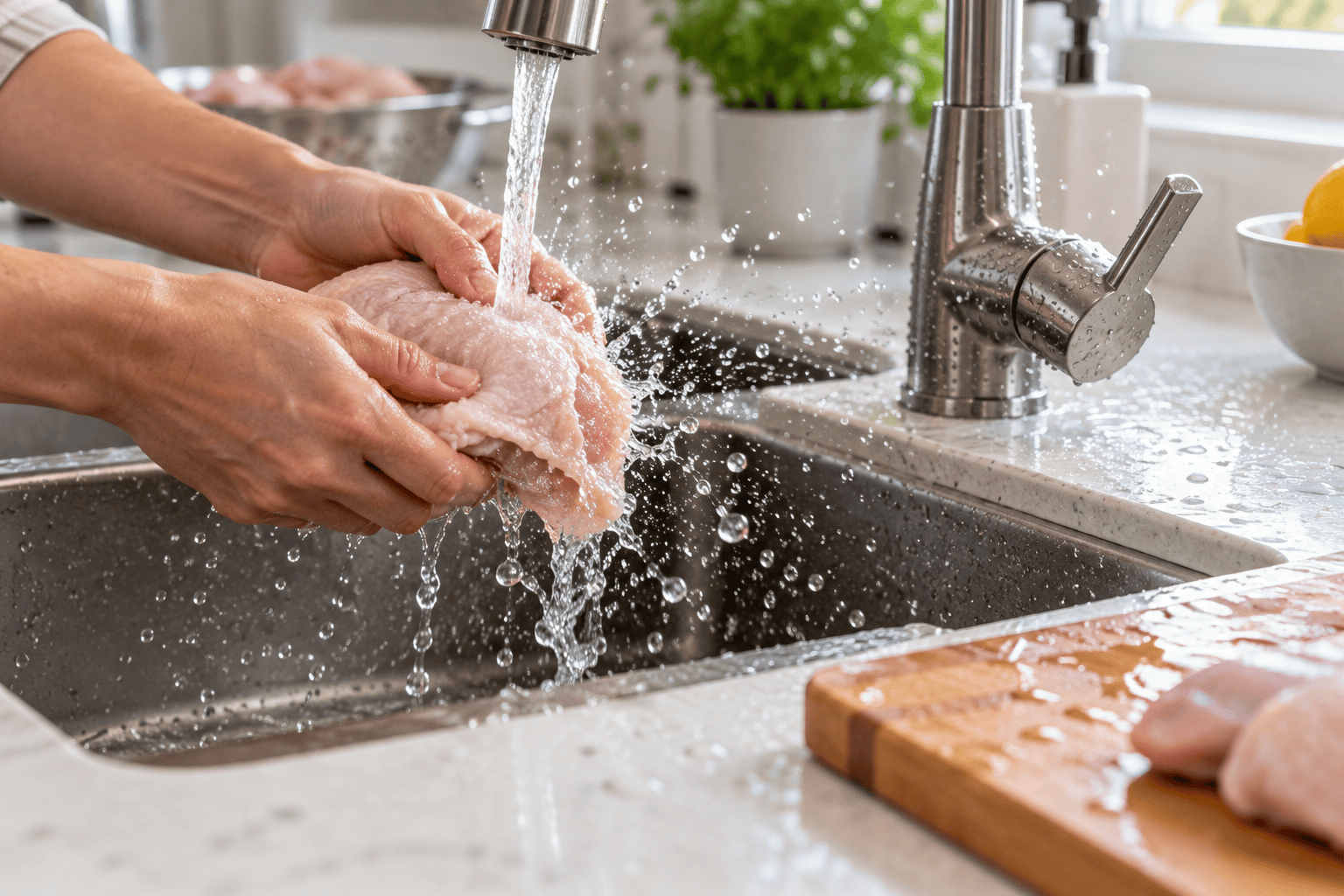
When chicken is placed under a running faucet, droplets can bounce from its surface onto the sink, counter, faucet handle, cutting board, utensils or nearby food.
The splash may be obvious, but it can also be extremely fine and difficult to notice.
A kitchen may appear clean while raw poultry juices have reached surfaces that will later be touched by hands, dishes or ready-to-eat ingredients.
This transfer of bacteria from one food or surface to another is known as cross-contamination.
The chicken itself will eventually be cooked. The salad, faucet handle or plate touched by contaminated droplets may not be.
That is why the surrounding splash zone can present a greater concern than the chicken sitting in the sink.
What About Vinegar, Lemon Juice or Salt Water?
Some cooks believe acidic ingredients or salt make raw chicken safer.
They may change the surface flavor, smell or texture, but they should not be treated as a reliable method for destroying harmful bacteria.
A marinade is for flavor and tenderness. A brine is for seasoning and moisture retention.
Neither replaces cooking chicken to a safe internal temperature.
Chicken should never be washed with soap or detergent. These products are not intended for use on food and may leave unsafe chemical residue.
What to Do Instead
Remove the chicken from its packaging carefully and keep it away from produce, cooked foods and clean utensils.
If excessive surface moisture would interfere with browning, pat the chicken gently with disposable paper towels. Immediately discard the towels and wash your hands.
Season or marinate the chicken in a clean container.
If marinating or brining, keep it covered in the refrigerator rather than on the kitchen counter.
After handling raw chicken:
- Wash your hands with soap and warm water.
- Clean cutting boards, knives, dishes and utensils with hot, soapy water.
- Clean and sanitize any surface touched by raw chicken or its juices.
- Keep raw poultry separate from foods that are ready to eat.
- Wash reusable kitchen towels promptly if they become contaminated.
Do not place cooked chicken back onto the plate that previously held it raw unless the plate has been thoroughly washed.
Use a Thermometer, Not Color Alone
Chicken can look fully cooked before its center has reached a safe temperature. It can also retain a slight pink color even after reaching the correct temperature.
Color and clear juices are not as reliable as a food thermometer.
For chicken breasts, insert the thermometer into the thickest section from the side, making sure the tip reaches the center.
For a whole chicken, check the thickest part of the breast and the innermost area of the thigh without touching bone.
The thermometer should read at least 165°F.
After taking the measurement, clean the thermometer probe according to the manufacturer’s instructions.
If You Already Washed the Chicken
There is no reason to panic, but the area should be cleaned carefully.
Remove dishes, produce and utensils from around the sink. Wash the sink, faucet, handles and surrounding counter with hot, soapy water.
Then use a kitchen-safe sanitizer or disinfectant approved for those surfaces, following its instructions.
Wash your hands before touching clean objects.
Avoid wiping the entire area with the same damp cloth, as that may move contamination from one surface to another.
Brining Is Different From Washing
Brining chicken in a measured solution under refrigeration is a recipe technique, not a cleaning method.
A brine can season the meat and help it retain moisture during cooking. The chicken must still be handled as raw poultry, and the used brine should be discarded.
Do not reuse raw-poultry marinade as a sauce unless it has been boiled or otherwise cooked safely.
Any container that held raw chicken should be washed before being used again.
Breaking a Family Habit
Food traditions carry emotional weight. Being told not to wash chicken can feel like being told that a trusted parent or grandparent prepared food incorrectly.
That is not the point.
Many kitchen habits were developed before modern research could demonstrate how easily microscopic contamination moves through a sink and across nearby surfaces.
Changing the practice does not reject the person who taught it. It simply applies better information.
The Bottom Line
Washing raw chicken may feel like an extra layer of cleanliness, but it does not replace the only step that reliably makes poultry safe: cooking it to the correct internal temperature.
Skip the sink.
Handle the chicken carefully, separate it from other foods, clean everything it touches and use a food thermometer to confirm that the thickest part has reached 165°F.
The safest chicken is not the one that was rinsed.
It is the one that was handled carefully and cooked correctly.