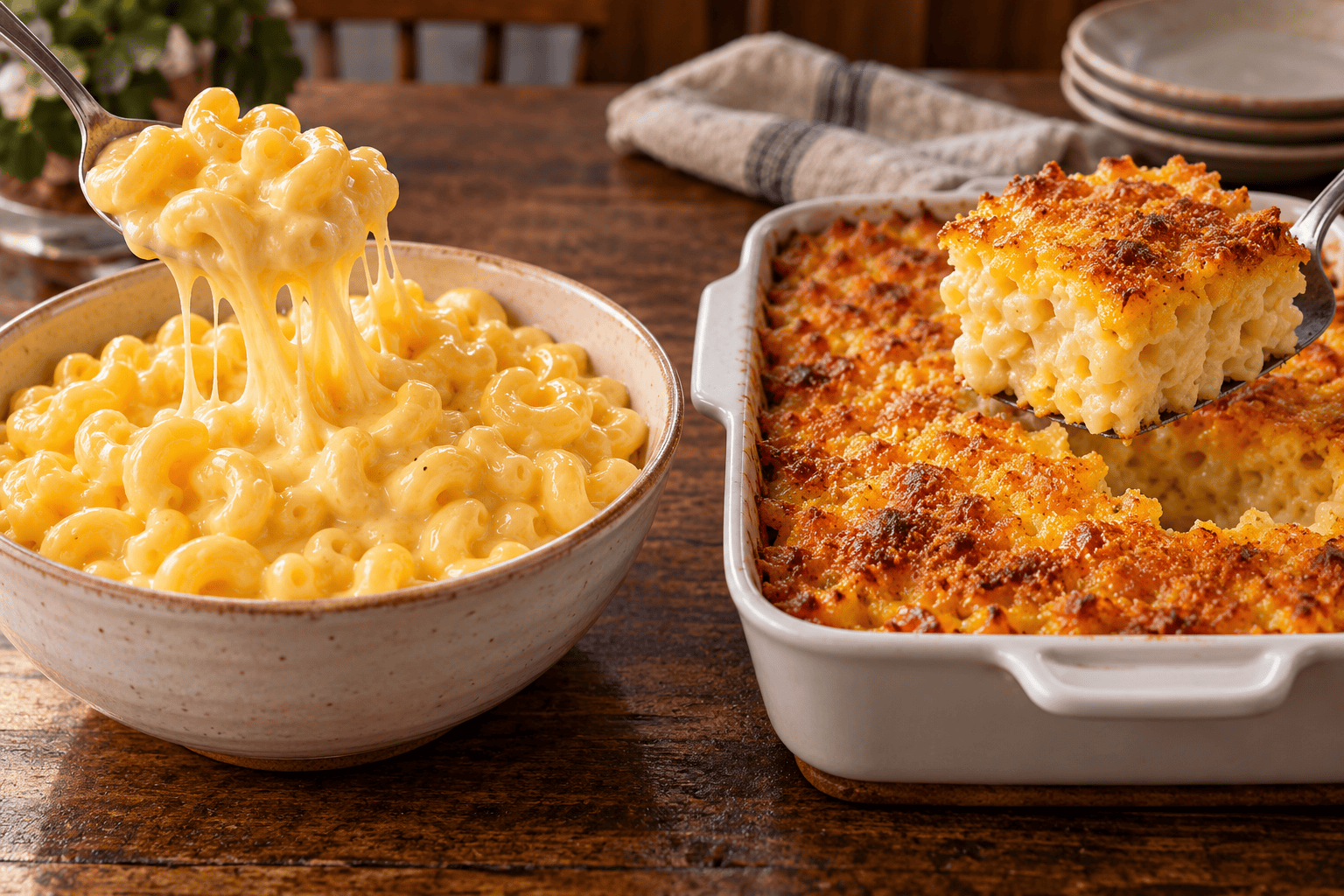
Ask five cooks how to make macaroni and cheese, and you may get five completely different answers. Some insist that the sauce should be so creamy it pools around every piece of pasta. Others want neat, cheesy squares with a deeply golden top and enough structure to hold their shape on a plate.
Then comes the question that can divide an entire dinner table:
Should mac and cheese have eggs?
The short answer is yes—if you are making a certain style of baked mac and cheese. If you want a loose, creamy stovetop version, however, eggs will probably move the dish in the opposite direction.
Eggs are not automatically a secret ingredient or a recipe mistake. They are a tool. What matters is understanding what they do before adding them.
What Eggs Actually Do in Mac and Cheese
Eggs act as a binder.
As the macaroni bakes, the proteins in the eggs set and help hold the pasta, cheese and dairy together. The result is a firmer, more structured dish that can be cut or served in defined portions.
This texture is especially common in traditional Southern baked mac and cheese. Depending on the family recipe, eggs may be combined with milk, evaporated milk or a seasoned cheese mixture before being poured over the macaroni.
The finished dish is still moist and cheesy, but it does not behave like a bowl of cheese sauce. It is closer to a rich, tender casserole with a lightly custardy interior.
That difference is exactly why some cooks consider eggs essential—and others believe they do not belong anywhere near mac and cheese.
When You Should Skip the Eggs
If your ideal mac and cheese is silky, spoonable and extremely creamy, leave the eggs out.
Classic stovetop mac and cheese gets its texture from a smooth cheese sauce. That sauce may begin with butter and flour, or it may use evaporated milk, cream cheese or another method to help the cheese melt evenly.
The goal is movement. The sauce should flow around the pasta and remain soft when served.
Adding whole eggs changes that texture. Once heated, the eggs begin to firm the mixture. Instead of creating more creaminess, they can make the dish feel heavier, tighter or slightly custardy.
For stovetop mac and cheese, focus instead on:
- Undercooking the pasta slightly so it does not become soft
- Using freshly shredded cheese
- Melting cheese over low heat
- Keeping enough warm milk or reserved pasta water to loosen the sauce
- Serving the dish soon after it is prepared
If you want a creamy baked mac and cheese that still behaves like stovetop mac and cheese, you can also bake it briefly without eggs. Transfer the sauced pasta to a baking dish, add cheese or breadcrumbs on top and bake only long enough to brown the surface.
Why Eggs Appear in Southern Baked Mac and Cheese
Southern baked mac and cheese is often designed to sit proudly beside fried chicken, greens, cornbread and other holiday or Sunday dinner favorites.
It needs enough structure to survive serving, resting and returning for seconds.
Eggs help create that structure.
They bind the dairy and cheese around the pasta while the casserole bakes. After a short resting period, the dish can be scooped or sliced without collapsing into a pool of sauce.
That does not mean every Southern cook uses eggs. Recipes vary by family, region and generation. Some rely on a roux-based cheese sauce. Others layer pasta and shredded cheese before pouring a mixture of eggs and milk over the top. Many cooks combine elements of both methods.
There is no single recipe that represents every Southern kitchen.
The more useful question is not whether eggs are universally “authentic.” It is whether they produce the texture you want.
How Many Eggs Should You Use?
For one pound of dry macaroni, one or two large eggs are usually enough to add structure without turning the casserole into something that tastes noticeably eggy.
One egg produces a softer set. Two eggs create a firmer, more defined interior.
Recipes using three or more eggs may produce a much tighter, more custard-like result. Some families love that texture, but it can surprise anyone expecting a creamy cheese sauce.
When trying a recipe for the first time, it is safer to begin with fewer eggs. You can always adjust the amount the next time you make it.
How to Add Eggs Without Scrambling Them
The biggest danger is combining cold eggs directly with a very hot cheese sauce.
If the sauce is hot enough, parts of the egg can cook immediately, leaving small scrambled pieces in the mixture.
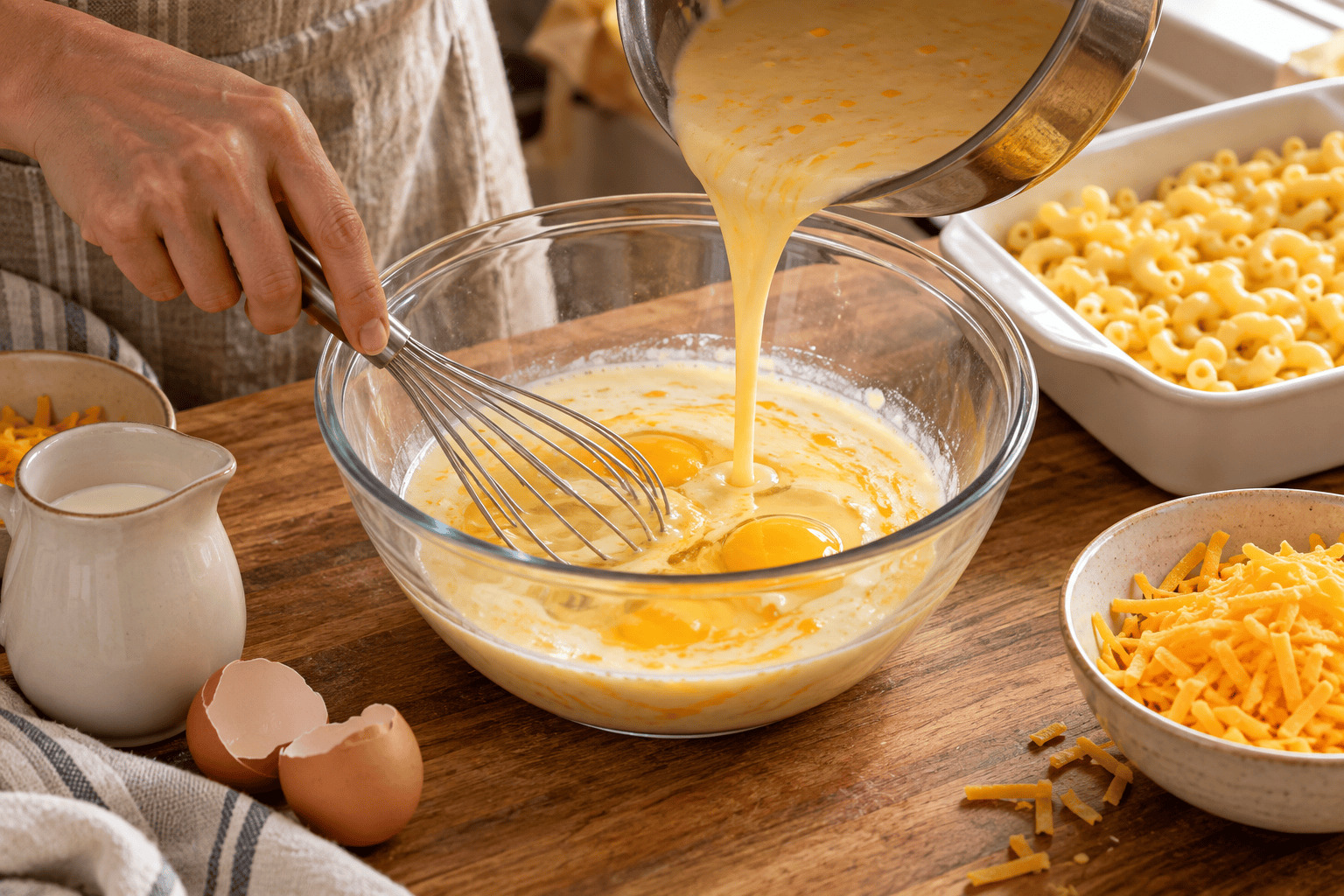
To avoid this, allow the cheese mixture to cool slightly before adding the eggs. You can also temper them:
- Crack the eggs into a separate bowl and whisk until smooth.
- Slowly add a small amount of the warm milk or cheese mixture while whisking continuously.
- Add another small amount and continue whisking.
- Once the eggs are gradually warmed, stir them into the remaining mixture.
- Pour the mixture over the prepared macaroni and cheese.
If the eggs are being whisked into cool or room-temperature milk before the mixture is poured over the pasta, tempering may not be necessary. The important point is to prevent cold eggs from meeting extremely hot liquid all at once.
A Simple Southern-Style Formula
For a rich baked mac and cheese, begin with:
- 1 pound elbow macaroni
- 2 large eggs
- 2 cups whole milk or evaporated milk
- 4 to 5 cups freshly shredded cheese
- 4 tablespoons butter
- Salt, black pepper and your preferred seasonings
Cook the macaroni until it is just short of al dente. It should still have a little firmness because it will continue cooking in the oven.
Whisk the eggs and milk together in a separate bowl. Season the mixture well.
Combine the warm macaroni with butter and most of the cheese. Transfer it to a buttered baking dish, then slowly pour the egg and milk mixture over the pasta. Gently move the macaroni with a spoon so the liquid can reach the bottom of the dish.
Finish with the remaining cheese and bake at 350°F until the center is set and the top is bubbling and golden, usually about 30 to 40 minutes.
Let it rest for at least 10 to 15 minutes before serving. This resting period allows the egg mixture and melted cheese to settle, giving the casserole its characteristic structure.
Three Common Mistakes
Using Too Much Egg
More egg does not necessarily mean a better casserole. Too much can overpower the cheese and create a rubbery or overly firm texture.
Overbaking the Dish
Eggs continue to set as the casserole rests. If you wait until the center looks completely dry in the oven, the finished dish may become tough.
Remove it when the center is set but still looks moist.
Using Pre-Shredded Cheese
Bagged shredded cheese is convenient, but it is often coated with ingredients that prevent the pieces from sticking together. Those coatings can also make the cheese melt less smoothly.
Freshly shredded cheese generally produces a better texture and flavor.
So, Do Eggs Belong in Mac and Cheese?
If you are making creamy stovetop mac and cheese, the answer is usually no. A well-made cheese sauce already provides all the richness and body the dish needs.
If you are making a traditional baked version and want a firm, cohesive casserole, the answer may be yes. Eggs can provide exactly the structure that style requires.
Neither version is automatically better.
One belongs in a bowl and invites you to chase the last spoonful of sauce. The other arrives at the table with a golden crust and can hold its own beside an entire Sunday dinner.
The real mistake is not choosing the “wrong” side. It is using eggs without realizing how dramatically they can change the dish.