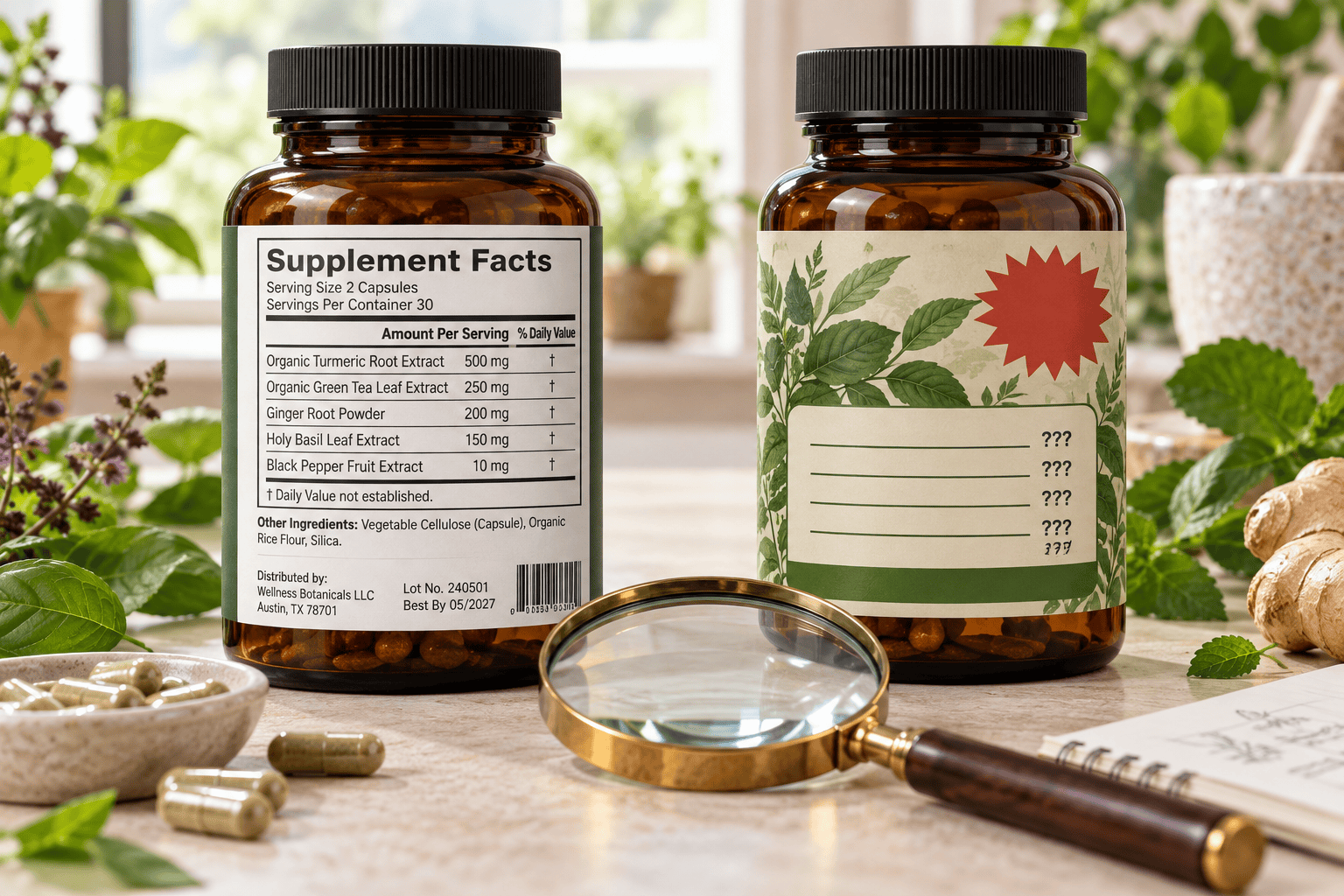
A bottle covered in leaves can look wholesome before you read a single word. Add phrases such as natural, ancient formula or premium botanical blend, and the product may feel trustworthy even when the label gives you very little useful information. That is exactly why the front of the bottle should never be the end of your evaluation.
Dietary supplements are regulated differently from prescription and over-the-counter drugs in the United States. The U.S. Food and Drug Administration generally does not approve a dietary supplement or its claims before the product reaches the market. Manufacturers and distributors are responsible for making sure their products are properly labeled and meet applicable requirements.
A red flag does not automatically prove that a supplement is unsafe or fraudulent. It means the product deserves a closer look before you swallow it, combine it with medicine or recommend it to someone else. Here are seven warning signs worth checking.
1 The label says FDA approved
This is one of the clearest reasons to pause. Dietary supplements are not approved by the FDA in the same way as drugs before they are sold. A company may be required to follow FDA regulations, and its facility may be inspected, but wording such as FDA approved supplement or made in an FDA approved facility can create a misleading impression of government endorsement.
Do not confuse registration, compliance language or a facility number with approval of the finished product. If a bottle relies heavily on an official-looking badge, verify what that badge actually represents.
2 It promises to cure or treat a disease
Supplements may carry certain statements about supporting normal body structure or function, but they cannot legally claim to diagnose, treat, cure or prevent a disease as if they were approved drugs. Claims such as reverses diabetes, eliminates arthritis or replaces blood pressure medication should immediately raise concern.
Miracle language is another warning sign. Be skeptical of phrases such as works instantly, secret cure, guaranteed results or one product for dozens of unrelated conditions. Personal testimonials and dramatic before-and-after stories are not substitutes for reliable evidence.
3 The Supplement Facts panel is missing or unclear
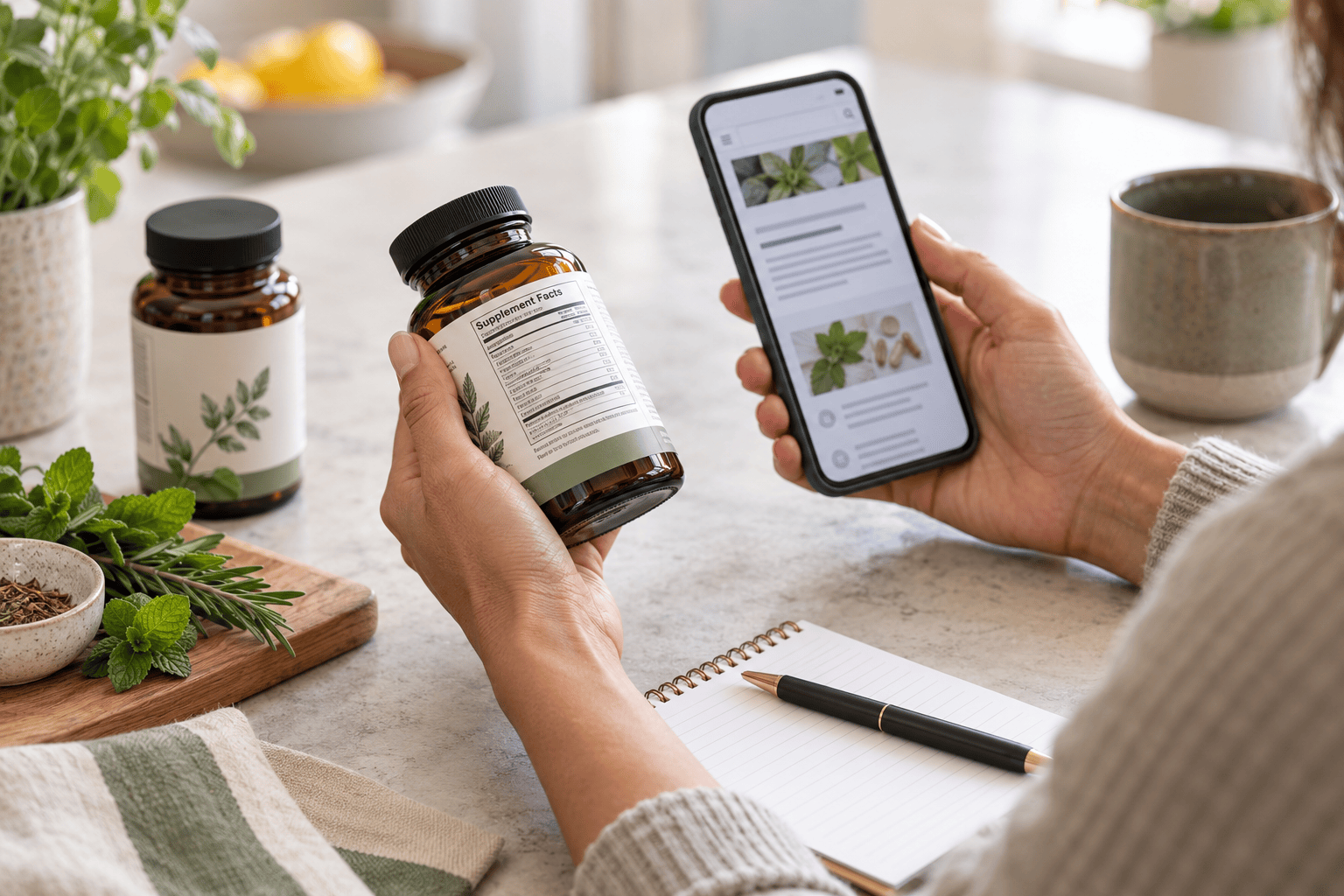
A dietary supplement should carry a Supplement Facts panel. It should identify the serving size, list dietary ingredients and provide the amount per serving when required. Other ingredients, such as capsule materials, colors, fillers or flavorings, should appear separately.
A decorative front label is not enough. Pause if the back panel is missing, difficult to read, cut off in online product photos or inconsistent with the marketing claims. A seller who shows every side of the bottle except the facts panel is withholding the part shoppers need most.
4 A proprietary blend hides the individual amounts
Proprietary blends are legal, but they can make meaningful comparison difficult. The label may list the total weight of the blend and name the ingredients in descending order by weight without revealing how much of each ingredient is present.
That matters when research, side effects or interactions depend on a particular amount. A blend containing ten herbs may sound impressive while providing only a small quantity of several key ingredients. If individual amounts are hidden, you may not know whether you are getting a studied quantity, a token amount or more than you intended.
5 The exact plant identity is vague
The herb name alone may not tell the whole story. Different species can share similar common names, and different plant parts may contain different compounds. Root, leaf, flower, bark and seed are not automatically interchangeable. A powder is also different from a concentrated extract.
A transparent herbal label gives enough detail to understand what is in the product. Look for the common name, botanical identity when provided, plant part and preparation type. The absence of one detail does not automatically make a product illegal, but vague wording such as herbal complex or ancient plant matrix makes informed comparison much harder.
6 The biggest number on the front hides the serving math
A large milligram number can be technically accurate and still create the wrong impression. The amount may refer to a serving of three or four capsules rather than one. It may represent an herb-equivalent calculation for a concentrated extract instead of the actual weight inside the capsule. It may also refer to the total blend rather than the ingredient featured most prominently.
Always compare the front claim with the serving size and ingredient amounts in the Supplement Facts panel. Ask three simple questions: How many capsules make one serving? Is the listed amount for the whole herb or an extract? Does the number describe one ingredient or the entire blend?
7 You cannot verify the company or the seal
The label should identify the manufacturer, packer or distributor and provide a place of business. A lot or batch code can also improve traceability if a recall or complaint occurs. If the only contact is a social-media account, a disappearing marketplace seller or a website with no business information, proceed cautiously.
Certification seals also deserve scrutiny. Independent testing can provide useful information about identity, purity or manufacturing quality, but a seal does not prove that a supplement works or is appropriate for you. Search the certifying organization independently and confirm that the exact product appears in its database. Do not trust a symbol simply because it looks official.
A one minute label check
Turn the bottle around. Read the Supplement Facts and Other Ingredients panels before the marketing copy.
Check the serving. Confirm how many capsules, drops or scoops equal one serving.
Identify the herb. Look for the plant part, preparation type and species information when available.
Question dramatic claims. Disease cures, instant results and official-looking approval language deserve skepticism.
Research the company. Verify the business, contact information and any certification through an independent source.
Review medicines and conditions. Ask a pharmacist or qualified health professional about interactions and individual risks.
The bottom line
A polished bottle can make an herbal supplement look safer, stronger and more proven than the available information supports. The goal is not to fear every supplement. It is to separate useful label information from packaging designed mainly to create confidence.
If a company clearly identifies its ingredients, serving size, plant preparation and business information, you have a better starting point for an informed decision. If the label hides amounts, promises cures, imitates government approval or makes the company difficult to trace, leave the bottle on the shelf until you can verify more.
Most importantly, remember that a clean label is not a guarantee of effectiveness or personal safety. Herbal supplements can cause side effects and interact with medicines. Bring the exact bottle or a clear photo of the full label when asking a pharmacist or clinician for guidance.
Important: This article is for general educational purposes and is not a substitute for medical advice, diagnosis or treatment.