Mateo Alvarez was closing his family’s food truck when his eight-year-old daughter, Sofia, asked if she could help.
Laughing, he lifted her high enough to reach the serving-window handle. It was a quiet moment at the end of another exhausting day—until an unmarked gray van stopped beside them.
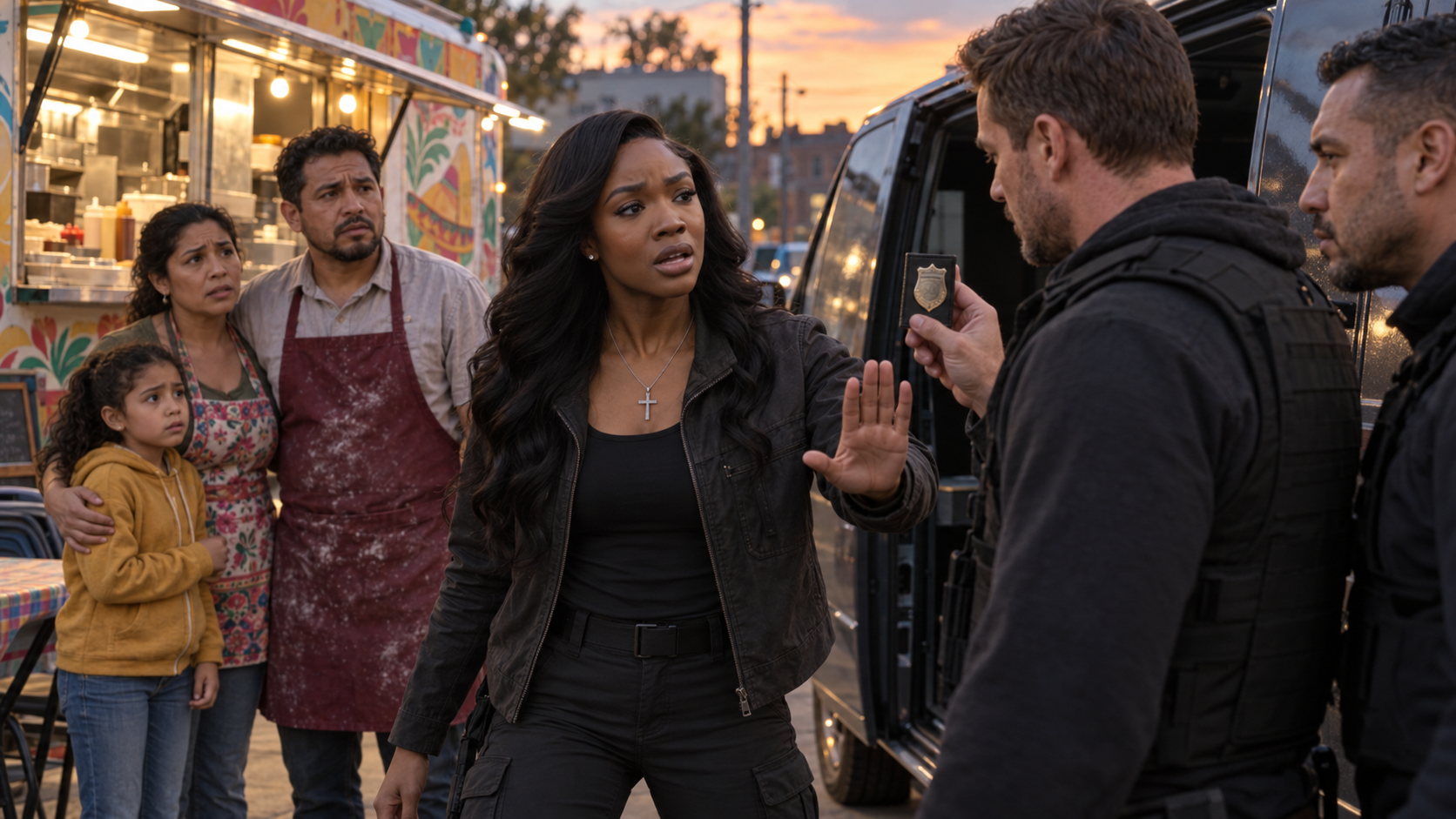
Two men in tactical vests stepped out.
One briefly flashed a badge.
“Federal immigration. Step away.”
Mateo lowered his daughter and moved between her and the strangers.
“What did I do?”
They never answered.
One man grabbed Mateo’s arm while the other opened the van. Within seconds, they were dragging him away from his wife and daughter.
“My daughter is right there!” Mateo shouted.
Sofia ran after him, screaming for her father, but her mother caught her before she reached the vehicle.
Sienna had been standing nearby when she noticed something the terrified family had missed. The men’s badges were different shapes. One had a cheap plastic backing, while the other was attached upside down.
They were not federal agents.
As the sliding door began to close, Sienna planted her boot beside the track and pulled it open. She dragged Mateo out, but one of the men attacked her from behind.
The struggle was fast and violent. Sienna trapped the first man’s tactical vest against the van door, then ducked a punch from his masked partner. She pulled off his face covering, forced him to his knees and locked his own handcuffs around his wrists.
Mateo ran back to Sofia, who wrapped both arms around him and refused to let go.
But the most disturbing discovery was still inside the van.
Sienna found passport booklets, disposable phones and photographs of families taken outside schools, homes and workplaces. Each photograph had a dollar amount written beneath it.
Mateo’s family had been marked for $40,000.
This had never been an immigration operation. The criminals were targeting families they believed would be too frightened to contact the authorities. After abducting a parent, they threatened to separate the family permanently—or expose undocumented relatives—unless someone paid the ransom.
Investigators would later connect the van to seven disappearances across three cities.
Sienna found Mateo’s entire routine inside one folder: when he opened the food truck, when Sofia left school and which nights the family carried the most cash.
The kidnappers knew everything.
Then she discovered a message on one of their phones:
“Family confirmed. Father leaves at 8:40. Child will be present. Use federal cover.”
The sender was listed only as ROOK.
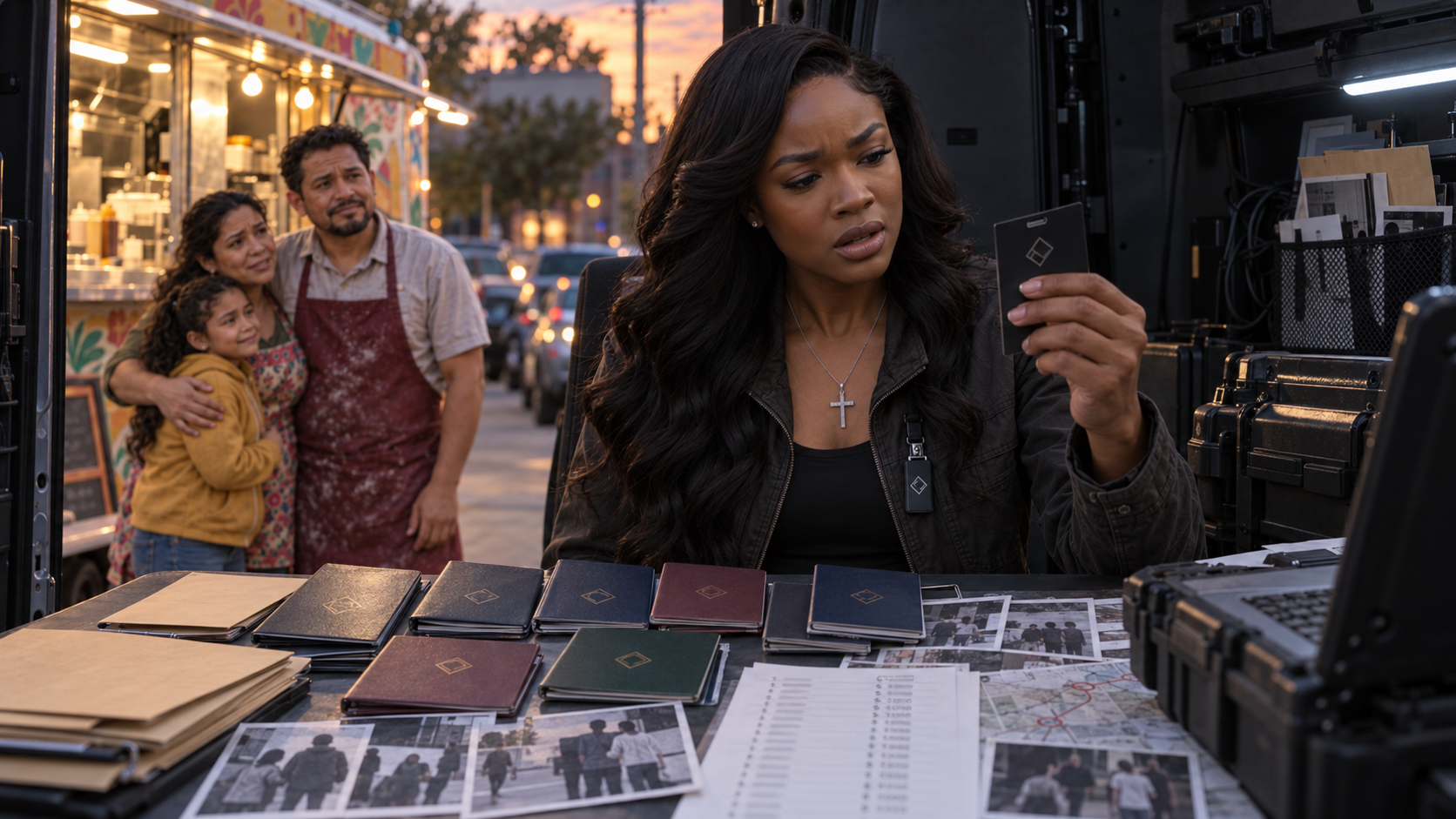
Beneath the surveillance photographs, Sienna found a restricted-access document containing a security pattern she immediately recognized. The same pattern appeared on the credential inside her own jacket.
Someone with access to her agency’s protected files had supplied the criminals with family addresses, photographs and personal records.
The access logs led investigators to Owen Kessler, a senior administrator responsible for coordinating information between several federal task forces. For nearly two years, Kessler had quietly sold confidential information to the kidnapping network.
He selected families he believed were vulnerable, isolated and unlikely to report an abduction. In return, he received a percentage of every ransom payment.
But Kessler had made one final move before disappearing.
The code on the document did not lead back to his credential.
It led back to Sienna’s.
Someone had copied her access profile and planted it inside the van, making it appear that she had supplied the information herself.
The kidnappers were not only using stolen federal data to target families.
They were preparing to make Sienna take the blame for the entire operation.