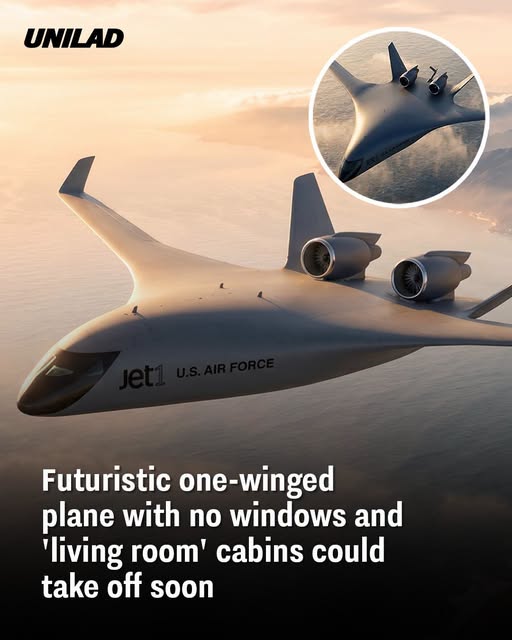
The future of passenger aviation could look very different from the airplanes people are used to seeing at airports. One of the most unusual concepts currently being developed is the JetZero Z4, an aircraft with a blended-wing design that makes the traditional distinction between the fuselage and wings almost disappear.
Instead of having a long cylindrical body with two wings attached to its sides, the Z4 has a broad, flattened shape that resembles a flying wing or even a stingray. Engineers believe this unusual configuration could significantly improve aerodynamic efficiency and reduce the amount of fuel required to operate the aircraft.
No Traditional Passenger Windows
Perhaps the strangest feature for future passengers would be the absence of conventional windows. The proposed design would replace the familiar rows of small airplane windows with a much more open interior layout. While some passengers may initially find the idea unsettling, removing traditional windows can provide engineers with greater freedom when designing the aircraft’s structure and cabin. The interior could also use advanced screens and digital technology to provide passengers with views of the outside world. Instead of looking through a small window, travelers could potentially experience a much wider digital view of the sky and landscape surrounding the aircraft. This could create an entirely different feeling compared with sitting beside a conventional airplane window.
More Space Inside
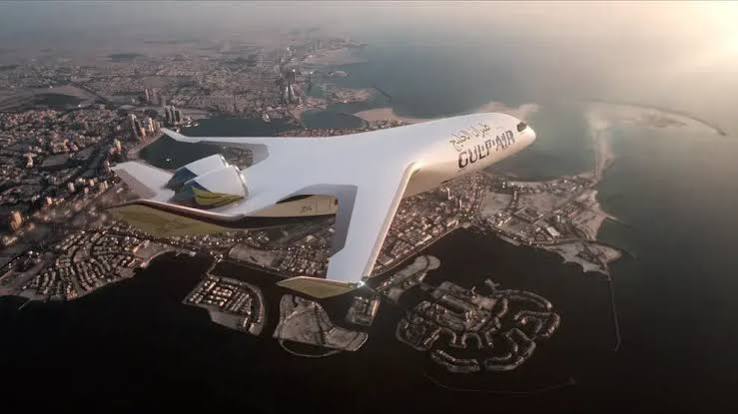
The blended-wing configuration is not only intended to improve efficiency. It could also dramatically change the amount of usable space inside the aircraft. JetZero’s concept is expected to accommodate approximately 250 passengers, while offering wider aisles, larger seats and additional luggage space compared with many conventional passenger aircraft. The broader shape could allow designers to distribute passengers across a much larger cabin rather than concentrating everyone inside a narrow central fuselage. The company has even envisioned cabins that feel more like a comfortable living room than a traditional airplane interior. Larger entrances could also make boarding and leaving the aircraft easier and less congested.
Designed to Reduce Fuel Consumption
One of the major reasons engineers are interested in the blended-wing configuration is efficiency. Because the aircraft’s body contributes to producing lift, the overall design can reduce aerodynamic drag. JetZero has suggested that its aircraft could eventually cut fuel consumption and emissions by around 50 percent compared with similarly sized conventional aircraft. If that target can be achieved in commercial service, the technology could represent a major step toward reducing aviation’s environmental impact. The engines are planned for the rear of the aircraft, another feature that could help reduce noise for passengers and communities located near airports.
When Could It Take Flight?
Despite the futuristic appearance, the Z4 is not yet a passenger aircraft that travelers can book. It remains under development, although JetZero has ambitious plans for flight testing. The company has indicated that a prototype could fly as early as 2027, with the larger passenger version potentially entering service around 2030 if development, testing and certification proceed successfully. The project has also attracted financial and commercial interest, including a proposed $3 billion financing arrangement involving the U.S. Export-Import Bank. Several major airlines have reportedly shown interest in the concept, suggesting that the aviation industry is paying close attention to whether the technology can become commercially viable.
Could This Be the Future of Flying?
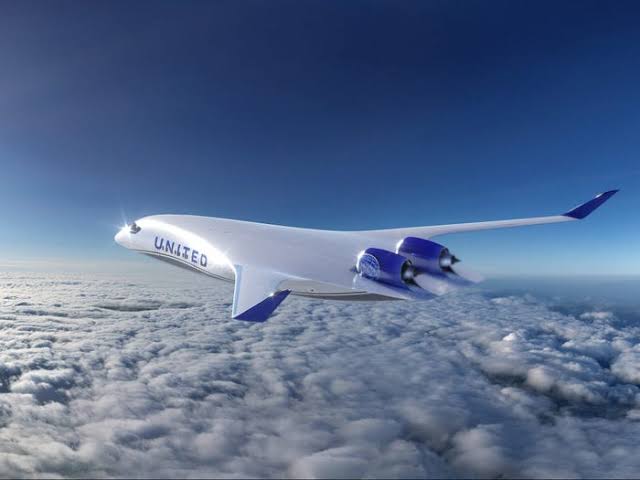
The JetZero Z4 represents a dramatic departure from the passenger airplanes people have known for decades. Its wide blended body, windowless cabin, spacious interior and potential fuel savings could completely change the flying experience. However, turning an impressive concept into a safe, certified commercial aircraft is an enormous engineering challenge. The aircraft must undergo extensive testing before passengers can ever board it. If JetZero succeeds, future travelers could eventually step onto an airplane that looks nothing like today’s jets. What initially seems strange—a plane without traditional windows and with a body that functions almost like one enormous wing—could become one of aviation’s most important design changes in generations.