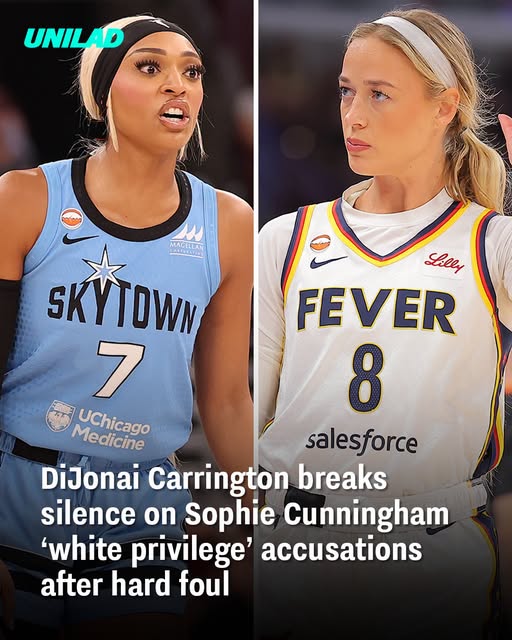
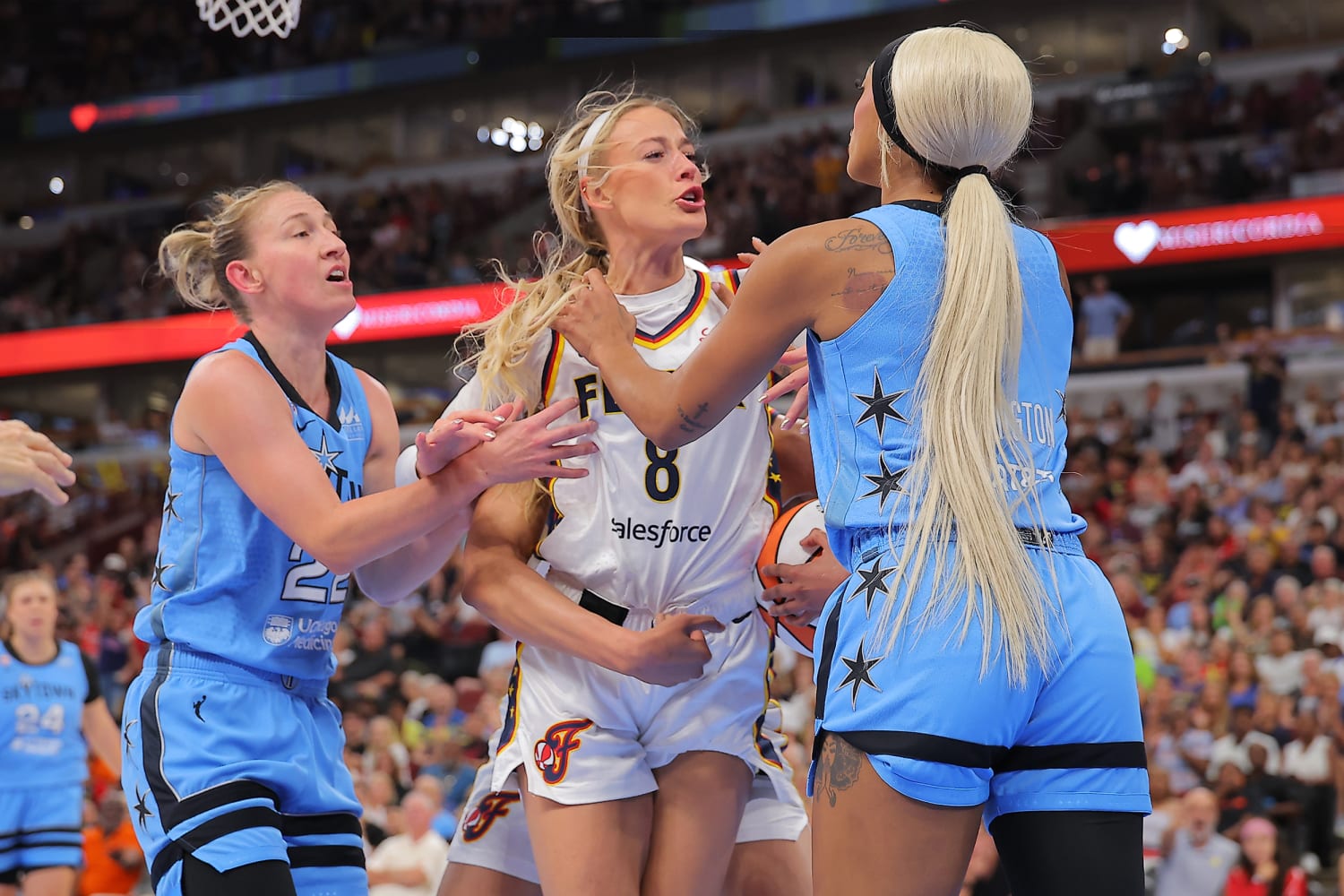
DiJonai Carrington has addressed the controversy surrounding her hard foul on Indiana Fever player Sophie Cunningham, an incident that quickly became one of the most talked-about moments in the WNBA. Carrington, who plays for the Chicago Sky, was ejected during the August 8 game after being assessed a Flagrant 2 foul for making contact with Cunningham around the head and neck area. Cunningham immediately reacted to the contact, and the incident sparked a heated exchange between the two players.
The decision to eject Carrington was widely discussed online, with fans and commentators debating whether the contact was intentional and whether similar incidents have been treated consistently across the league.
Carrington Says It Was Not Intentional
Following the controversy, Carrington clarified her position on the foul and said she did not deliberately attempt to injure Cunningham. She explained that the contact occurred during a basketball play and denied that she intentionally targeted Cunningham. Carrington also indicated that she understood why officials determined the play deserved a severe penalty, even though she disagreed with some of the reaction surrounding it. The situation became more complicated after Carrington posted the words “WHITE PRIVILEGE” on social media following her ejection. She tagged the Indiana Fever in the post, leading many people to interpret the message as a reference to Cunningham and the treatment of the incident.
Questions About the “White Privilege” Post
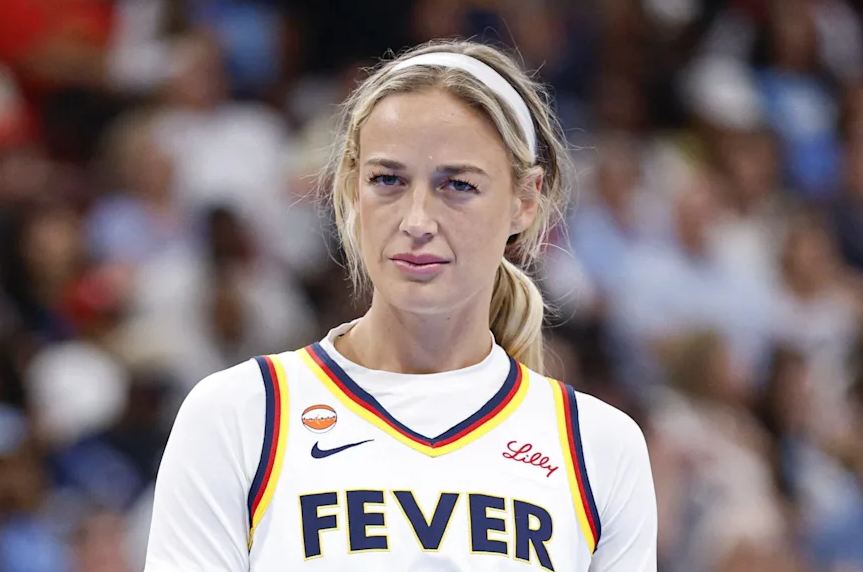
Carrington has since been asked directly about the meaning behind the social media post. Rather than providing a detailed explanation, she declined to elaborate on exactly what she meant. Her response has nevertheless kept the controversy alive, particularly because the post appeared shortly after the foul and ejection. The combination of the physical incident and the subsequent social media message caused the discussion to extend well beyond basketball. What might normally have remained a debate about an on-court foul quickly became part of a broader conversation involving race, media attention and perceptions of fairness within professional women’s basketball.
Cunningham Was Left at the Center of the Debate
Cunningham became the focus of the controversy after receiving the hard contact from Carrington. She was able to get back up immediately and confronted Carrington before teammates intervened. The Indiana player has developed a reputation for playing with considerable physical intensity, and the incident immediately generated comparisons with other hard fouls that have occurred during WNBA games. However, the focus soon moved away from simply determining whether the foul was legal or illegal. Social media users began arguing about whether players receive different treatment depending on their identity, reputation or the teams involved. That debate has become particularly sensitive given the increased attention surrounding the WNBA in recent seasons.
Stephanie White Defends Her Former Player
Indiana Fever head coach Stephanie White also found herself at the center of the controversy. White said after seeing the play that she believed the foul was serious and that the Flagrant 2 decision was appropriate. At the same time, she stated that she did not believe Carrington intentionally set out to strike Cunningham in the neck area. White previously coached Carrington, adding another layer to the situation. Her comments were criticized by some fans who believed she should have been more strongly condemning of the play. The criticism intensified before Indiana’s following game, when White delivered a passionate defense of her team and rejected what she described as divisive narratives surrounding the controversy. She emphasized unity and support for her players rather than allowing the incident to divide the team.
A Controversy Bigger Than One Foul
The Carrington-Cunningham incident has become another example of how quickly WNBA games can generate discussion far beyond the basketball court. The league has experienced unprecedented attention in recent years, with individual players attracting large and highly engaged fan bases. As a result, controversial moments can quickly become viral stories involving sports, social media and wider cultural debates. Carrington’s latest comments appear intended to clarify that she did not deliberately try to injure Cunningham, but her refusal to explain the “white privilege” post means questions about its meaning are likely to continue. For now, both players remain focused on the season. Yet the incident has already become one of the most debated moments of the WNBA’s 2026 campaign, demonstrating once again how a single play can ignite a much larger conversation.