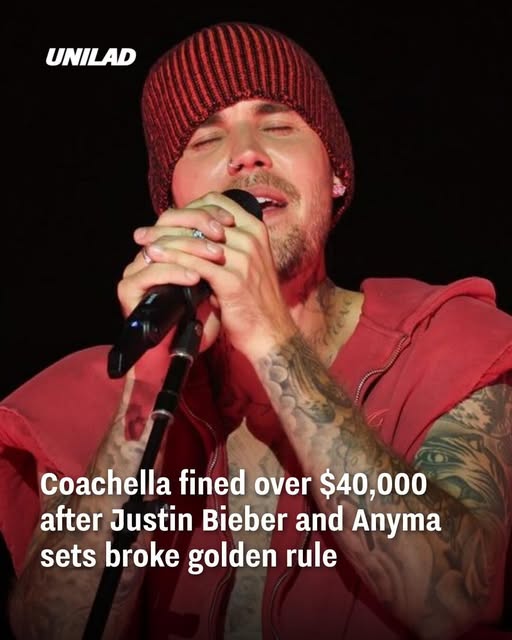
The 2026 edition of Coachella Valley Music and Arts Festival 2026 made headlines for more than just its star-studded performances. Organizers were hit with a significant financial penalty after two major acts, Justin Bieber and Anyma, exceeded the festival’s strict curfew rules during the second weekend. The total fine surpassed $40,000, highlighting how seriously local authorities enforce time restrictions on large-scale events.
Strict Rules Behind the Festival
Coachella takes place annually in Indio, California, where city regulations require performances to end by 1:00 a.m. on Fridays and Saturdays. These rules have been in place for years and are part of agreements between the festival’s promoter, Goldenvoice, and local authorities. If performances go beyond the allotted time, fines are issued immediately, starting at tens of thousands of dollars. While the first weekend of the 2026 festival reportedly stayed within the rules, the second weekend saw multiple delays that led to penalties. This demonstrates how even well-organized events can struggle to stay on schedule when dealing with complex live productions and high-profile artists.

What Exactly Happened?
The fines were triggered by two separate performances. Anyma’s set ran approximately nine minutes past the curfew, reaching about 1:09 a.m., which alone resulted in a large portion of the penalty. The following night, Justin Bieber’s highly anticipated performance also exceeded the limit, though only by a couple of minutes. Despite the shorter delay, it still contributed significantly to the total fine. Combined, these overruns resulted in fines totaling around $44,000. This figure reflects how quickly penalties can accumulate, even with relatively minor time extensions.
Not the First Time for Coachella
Although the fine may seem steep, it is not unusual for Coachella. The festival has faced similar penalties in the past when performances ran overtime. Over the years, several major artists have exceeded curfews, leading to fines that sometimes reached even higher amounts. This pattern suggests that while organizers aim to follow the rules, the unpredictable nature of live shows—especially those involving surprise guests or extended crowd interaction—can make strict timing difficult to maintain.
Impact on Artists and Organizers
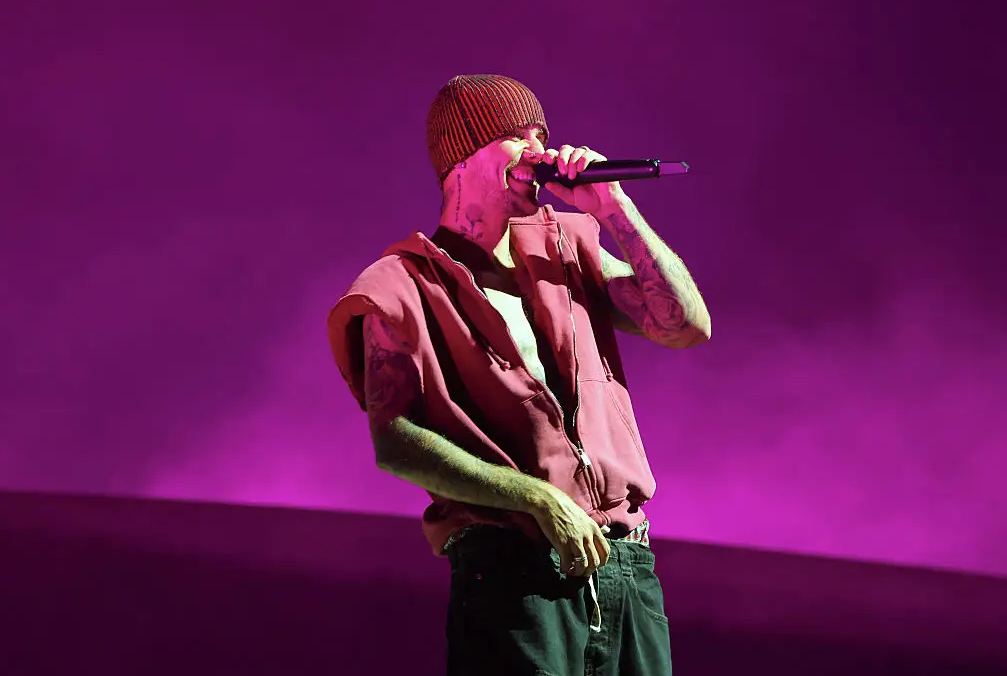
Interestingly, the fines are not paid by the performers themselves but by the event organizers. In this case, Goldenvoice is responsible for covering the costs. For artists like Justin Bieber, whose set included multiple guest appearances and high production value, going slightly over time may be seen as part of delivering an unforgettable experience. However, it also places additional pressure on organizers to balance entertainment with compliance.
A Reminder of Festival Logistics
This incident highlights the complexity behind major music festivals. Beyond the performances, there are strict legal agreements, logistical challenges, and financial risks involved. Even a few extra minutes on stage can translate into thousands of dollars in penalties. At the same time, fans often appreciate extended performances, especially when they include unexpected moments or collaborations. This creates a constant tension between artistic freedom and regulatory limits.
Conclusion
The fine issued after Justin Bieber and Anyma’s performances serves as a reminder that even the world’s biggest festivals must operate within strict boundaries. While the overrun may have enhanced the live experience for fans, it came at a measurable cost. Ultimately, Coachella continues to balance spectacle with structure, proving that behind every iconic performance lies a carefully managed operation where even minutes matter.