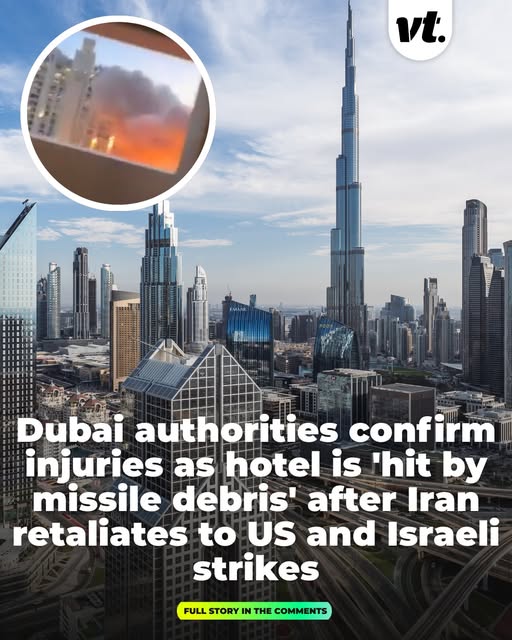
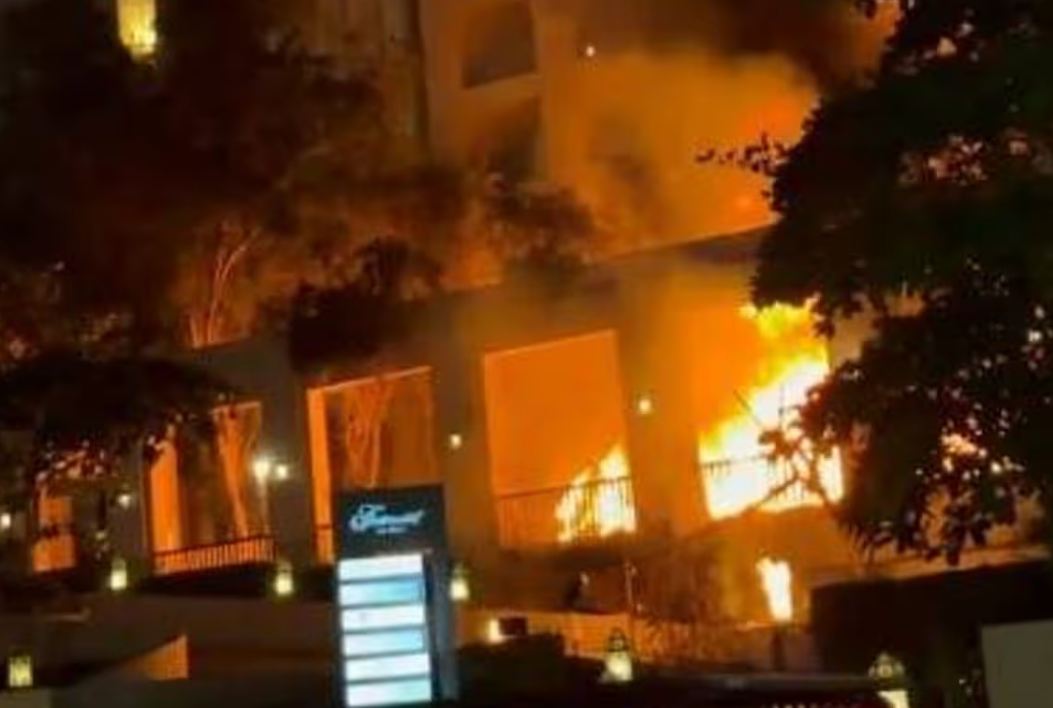
Authorities in Dubai have officially confirmed that an incident occurred in the Palm Jumeirah area, a high-profile luxury district of the city, amid a broader military escalation resulting from Iranian retaliation. Emergency teams responded swiftly to reports of a fire at a building in the area, and four people were injured and taken to hospitals for treatment. The Dubai Civil Defence said the situation at the site has since come under control.
While there was widespread speculation online and on social media that the five-star Fairmont The Palm hotel might have been directly struck by a missile, official authorities have not confirmed that a missile hit the structure. Instead, it remains unclear whether the fire and damage were caused by falling debris from interceptions or a direct impact from an aerial weapon. Investigations are ongoing, and the Dubai Media Office has urged the public to rely only on verified official information as the situation develops.
UAE Air Defence Response and Impact
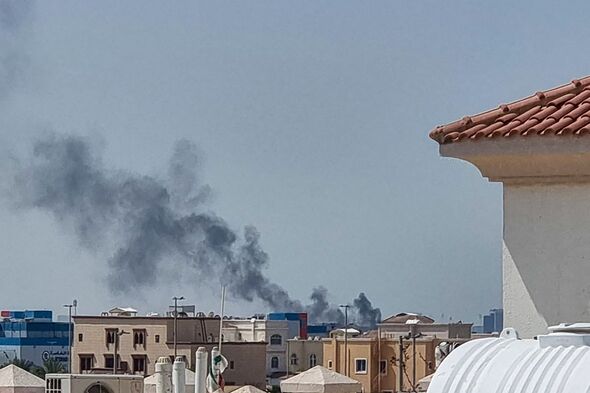
The United Arab Emirates’ Ministry of Defence stated that its air defence systems successfully intercepted multiple waves of incoming Iranian ballistic missiles and drones launched toward the UAE. The interceptions were described as highly efficient, and authorities say the security situation remains under close monitoring. Despite the interceptions, debris from downed missiles has fallen in various parts of Abu Dhabi and Dubai, causing material damage and, in at least one case, a fatality. According to official statements, a civilian of Asian nationality was killed by falling debris in a residential area of Abu Dhabi. Authorities strongly condemned the attacks, calling them a violation of national sovereignty and international law and reaffirming the UAE’s right to respond as necessary. Government agencies have urged the public to stay away from sites where shrapnel or unidentified objects have fallen and to avoid approaching or photographing them, allowing trained teams to secure and manage hazardous debris safely.
Major Travel Disruptions and Flight Suspensions
In response to the heightened security risks, the UAE’s General Civil Aviation Authority announced a temporary and complete suspension of flight operations at Dubai’s two major airports — Dubai International (DXB) and Dubai World Central – Al Maktoum International (DWC) until further notice. Passengers have been advised not to travel to airports at this time and to contact their airlines for the latest updates on schedules, cancellations, or rerouting. Across the broader region, hundreds of flights have already been cancelled and thousands of passengers left stranded as airlines adjust operations in response to airspace closures and safety concerns. The temporary closure of airspace affects not only flights to and from the UAE but also regional routes, leading to disruptions for global carriers and travelers.
Broader Middle East Context
The confirmed UAE incident comes amid a rapid escalation of tensions across the Middle East after the United States and Israel launched airstrikes on targets inside Iran. In retaliation, Iran fired ballistic missiles and drones toward multiple Gulf states and military installations in the region, prompting defensive responses from affected countries. Explosions and missile intercepts have been reported in several countries beyond the UAE. Across the region, governments have condemned the strikes and urged restraint, while also affirming their sovereign right to protect national security. Civilians and residents are being advised to remain vigilant and follow official updates as developments continue to unfold.
Official Messaging and Public Safety
UAE authorities have repeatedly stressed that public safety remains the top priority and that they are monitoring developments around the clock. Officials have called on residents, visitors, and media to avoid speculation and to depend on verified communications from government sources. They also emphasise that all necessary precautionary and defensive measures remain in place to protect civilians and infrastructure.