
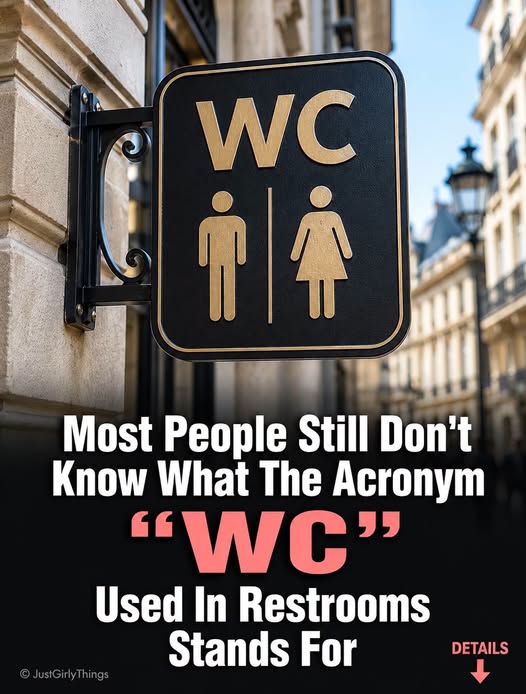
Most people have seen the letters “WC” on restroom doors in hotels, restaurants, airports, train stations, and public buildings around the world. Despite being a familiar sight, many people have no idea what those two letters actually stand for. While modern signs often use symbols or simple terms such as “Restroom,” “Bathroom,” or “Toilet,” the abbreviation “WC” has survived for more than a century and continues to appear in many countries today.
The story behind the term offers a fascinating glimpse into the history of indoor plumbing and how language evolves over time.
What Does WC Stand For?
WC stands for Water Closet, a term that dates back to the 19th century when indoor plumbing began transforming homes and public buildings. Before modern plumbing systems became common, most households relied on outdoor privies, chamber pots, or other basic sanitation methods. As new water-flushing toilets were introduced, they represented a major technological advancement. To distinguish these modern facilities from older forms of sanitation, the room containing the toilet became known as a “water closet.” The name referred specifically to a small enclosed room equipped with a flushing toilet connected to a water supply.
The Rise of Indoor Plumbing
During the Victorian era, indoor plumbing gradually became a symbol of comfort, hygiene, and social progress. As cities expanded and sanitation systems improved, homes increasingly incorporated dedicated spaces for personal hygiene. Early bathrooms often looked very different from those we know today. In many houses, the bathtub and sink were located in one room, while the toilet occupied a separate compartment known as the water closet. This arrangement helped improve privacy and allowed multiple family members to use different facilities at the same time. Because of this layout, the abbreviation “WC” became a practical way to identify the specific room containing the toilet.
Why the Full Name Disappeared
Over time, architectural designs changed and separate toilet rooms became less common. Bathrooms evolved into multifunctional spaces that combined the toilet, sink, bathtub, and eventually the shower into a single room. As a result, the phrase “water closet” gradually fell out of everyday conversation. However, the abbreviation remained. Many public buildings, hotels, railway stations, and international travel hubs continued using the familiar letters because they were short, recognizable, and easy for visitors from different language backgrounds to understand. Even as the full phrase became less widely known, “WC” survived as a universal symbol for restroom facilities.
Why Different Countries Use Different Terms
One reason the abbreviation can confuse travelers is that English-speaking countries use a variety of terms for the same facility.
In the United States, people commonly say:
Restroom
Bathroom
Ladies’ room
Men’s room
In the United Kingdom, common terms include:
Toilet
Loo
Gents
Ladies
Elsewhere, visitors may encounter signs reading:
Washroom
Lavatory
Comfort room
Powder room
WC
Although the terminology differs, the purpose remains exactly the same.
Why WC Remains Popular Worldwide
The abbreviation has several advantages that have helped it survive for generations. First, it is short and easy to display on signs where space is limited. Second, it is internationally recognizable. Travelers may not understand the local language, but many immediately recognize “WC” as an indication of restroom facilities. Finally, the letters have become part of global travel culture. Airports, train stations, museums, and tourist attractions continue to use the abbreviation because it communicates information quickly and effectively.
Modern Bathrooms and Historical Roots
Today’s bathrooms feature advanced plumbing, ventilation systems, automatic faucets, touchless flushing mechanisms, and numerous convenience features that would have seemed extraordinary when the term “water closet” first appeared. Yet the abbreviation remains as a reminder of an important period in history when indoor plumbing revolutionized daily life. The introduction of flushing toilets dramatically improved sanitation, reduced disease, and transformed living standards across much of the world. What began as a technical description eventually became one of the most widely recognized restroom labels ever created.
A Small Sign With a Big History
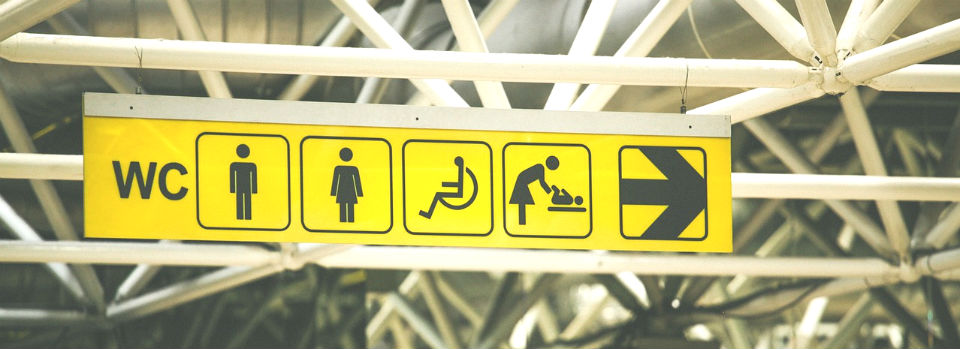
Most people walk past a WC sign without giving it a second thought. Yet those two simple letters tell a story that stretches back more than a century. They reflect the evolution of public health, architecture, and language, preserving a phrase that has largely disappeared from everyday conversation. So the next time you spot a “WC” sign while traveling or visiting a public building, you’ll know that it stands for “Water Closet” — a historical term that survived long after the original name faded from common use.