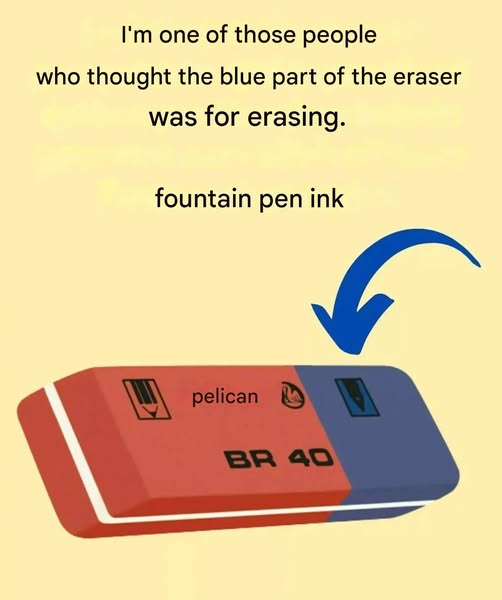
The blue section of a classic pink-and-blue school eraser is something many people used for years without ever really understanding. It often got labeled in school playground “facts” as the part that removes ink, but its actual function is more technical—and less magical—than that myth suggests.
A Two-in-One Erasing Design
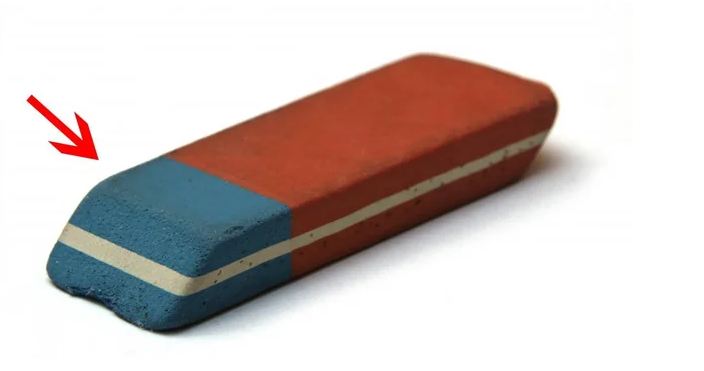
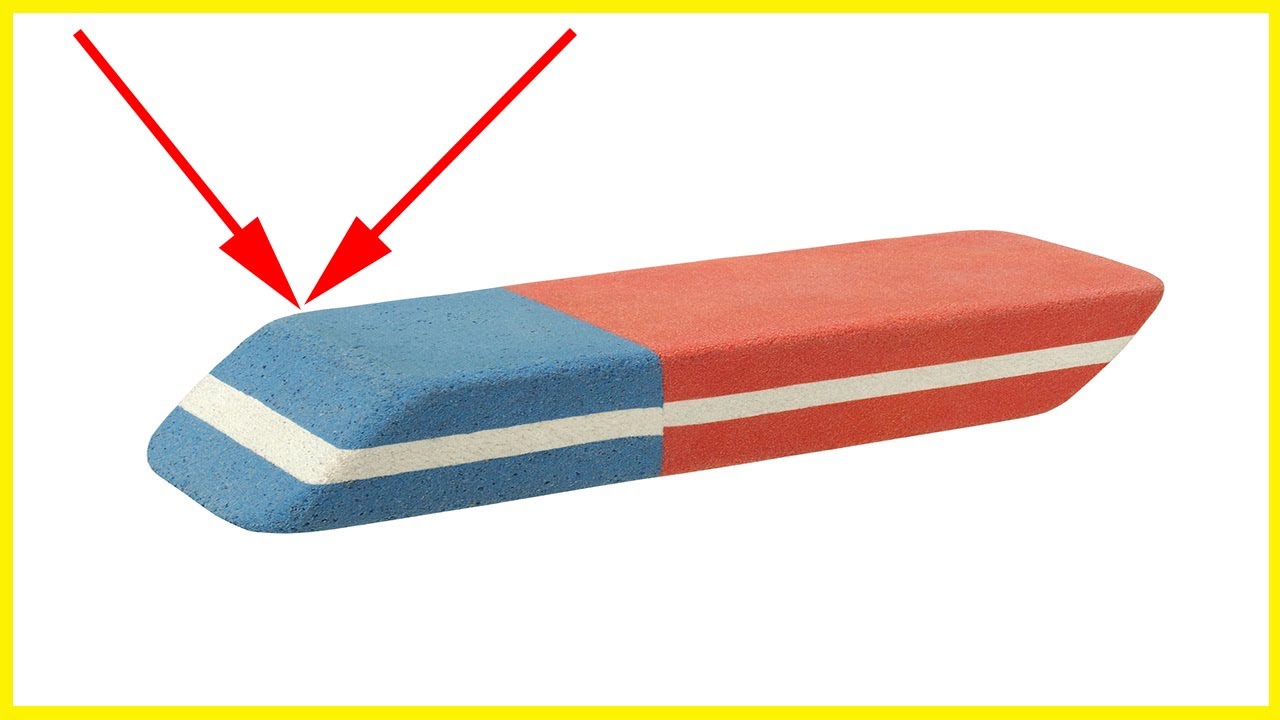
Traditional school erasers with two colours were designed as a dual-function tool. The soft pink (or white in some versions) is meant for everyday pencil corrections, while the blue side is a much more aggressive material intended for heavier erasing tasks. The key difference lies in the hardness and abrasiveness. The blue part contains more abrasive particles, making it stronger against graphite that has been pressed deeply into paper fibers.
How the Blue Side Actually Works
Instead of gently lifting pencil marks like a soft eraser, the blue section works more like a fine scraper. It removes graphite by physically wearing away the top layer of the paper surface.
This makes it effective for:
- very dark pencil marks
- heavy shading in drawings
- graphite that has been pressed into rough paper
Because it is more abrasive, it can reach pigment that softer erasers cannot remove easily.
Why It Can Damage Paper
The same feature that makes the blue side powerful also makes it risky. Since it removes part of the paper itself, it can easily cause:
- thinning of the page
- rough or fuzzy surfaces
- visible scratches
- small tears or holes in thin paper
- That is why it is generally not recommended for everyday schoolwork or writing on standard notebooks. It is simply too strong for delicate paper surfaces.
The Ink Eraser Myth
One of the most widespread misunderstandings is that the blue part is designed to erase pen ink. This idea has been passed around for decades, but it is not accurate. Ink is made of dyes or pigments that soak into paper fibers, making it chemically different from pencil graphite. The blue eraser does not dissolve or remove ink—it only scrapes the surface. If it appears to remove ink, it is actually stripping away the top layer of paper where the ink sits. This is why using it on pen marks often results in damaged paper rather than clean erasure.
Where It Is Actually Useful
The blue section is most effective in specific situations where strength matters more than precision. These include:
- sketching and art drawings
- thick drawing paper or cardstock
- rough or textured surfaces
- heavy pencil shading that standard erasers cannot lift
Artists sometimes use it carefully for highlighting or cleaning up dense graphite areas, but even then it must be used with caution.
Why Manufacturers Created It
The purpose behind combining two erasers in one tool was convenience. Students and artists often needed both a gentle eraser and a stronger one, so manufacturers merged them into a single product.
The idea was simple:
soft side = precision corrections
blue side = tough erasing jobs
This made the eraser more versatile without needing multiple tools.
Common Misuse in Schools
Many people remember using the blue side on regular notebook paper and quickly learning it caused damage. Because of its strength, it often left pages messy, especially when used with too much pressure. Despite this, it remained popular in classrooms because it could handle stubborn pencil marks better than standard erasers available at the time.
Conclusion
The blue part of an eraser is not a special ink remover or a mystery tool—it is simply a harder, more abrasive erasing surface designed for heavy-duty pencil removal. It works by scraping away graphite along with a thin layer of paper, which is why it can be both effective and destructive. While useful in art and on thick paper, it is not meant for everyday writing corrections. In short, the blue side is a power tool for erasing, not a delicate fix, and understanding that difference explains both its usefulness and its reputation in school memories.