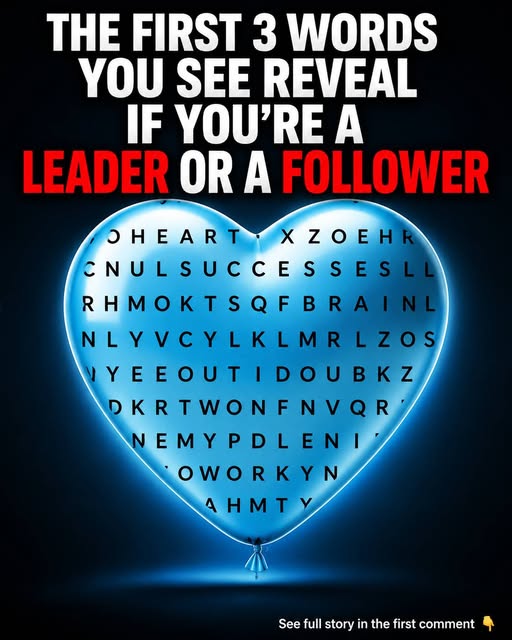
The puzzle itself appears simple. Participants stare at a chaotic mix of letters and quickly identify the first three words they can spot. According to the creators of the test, those words supposedly uncover hidden personality traits connected to confidence, leadership, independence, and communication style.
Why These Tests Become So Popular
Online personality quizzes and optical illusion challenges have exploded in popularity during recent years. Many people enjoy them because they are fast, entertaining, and easy to share with friends. Unlike lengthy psychological exams, these tests promise instant insight into someone’s personality within seconds. Experts say the appeal comes from human curiosity about identity and self-discovery. People naturally enjoy learning more about themselves, even through playful internet trends. Personality tests also encourage social interaction because users often compare answers and interpretations online.The “first three words” trend follows a long line of similar viral quizzes. Previous versions claimed to reveal hidden fears, romantic personality types, intelligence levels, or emotional strengths based on the first image, animal, or word someone noticed.

What the Words Supposedly Mean
In many versions of the test, words connected to power, courage, confidence, or ambition are interpreted as signs of leadership qualities. People who quickly spot words such as “strong,” “leader,” “focus,” or “power” are often described as confident individuals who naturally take control in difficult situations. Meanwhile, users who notice calmer or more emotional words first may be labeled as supportive, cooperative, or team-oriented personalities. Some tests describe these individuals as loyal followers who prefer stability over authority. Other versions go even further, suggesting the words reveal whether someone is independent, creative, empathetic, competitive, or emotionally sensitive. However, psychologists warn that these interpretations are usually very broad and not scientifically reliable.
The Psychology Behind Optical Illusion Tests
Although these viral quizzes are entertaining, experts explain that they should not be treated as real psychological evaluations. Many of them rely on something known as the Barnum Effect, where people accept vague personality descriptions as uniquely accurate even though the statements could apply to almost anyone. Researchers also note that what someone notices first in an image often depends on simple visual factors like color contrast, word placement, reading habits, or attention patterns rather than hidden personality traits. For example, larger words or words positioned near the top-left side of an image are usually spotted faster because the brain naturally scans visual information in predictable ways. This means the results may say more about visual perception than about leadership ability.

Why People Still Love Them
Even though scientists question the accuracy of these tests, millions of people continue sharing them online because they are fun and interactive. They create conversation, encourage self-reflection, and provide a quick form of entertainment during scrolling sessions on social media. Some users genuinely believe the tests describe them perfectly, while others simply enjoy seeing how different friends interpret the same image. In many cases, the discussions generated by the results become more entertaining than the quiz itself. Psychologists say there is nothing wrong with enjoying these trends for fun, as long as people understand they are not scientifically proven personality assessments. Real psychological evaluations require much deeper analysis than spotting a few hidden words in a puzzle.