
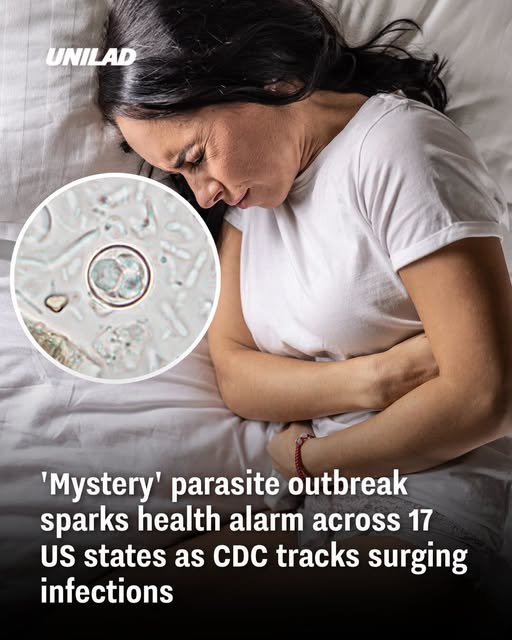
Health authorities across the United States are investigating a widespread outbreak of a microscopic parasite that has already infected at least 145 people in 17 states, with dozens of patients experiencing severe gastrointestinal illness. The outbreak has prompted a joint investigation by the Centers for Disease Control and Prevention (CDC) and the Food and Drug Administration (FDA), as officials work to identify the contaminated food responsible for the infections. At least 20 people have required hospitalization, although no deaths have been reported so far.
One of the most concerning aspects of the investigation is that none of the infected individuals had recently traveled outside the United States. This strongly suggests that the parasite was contracted through food or water consumed within the country rather than during international travel.
What Is Cyclospora?
The illness is caused by Cyclospora cayetanensis, a microscopic parasite that infects the small intestine. Unlike many bacteria that can spread through animals, Cyclospora is known to infect only humans. People become infected after consuming food or water contaminated with the parasite. Once inside the body, it can trigger an intestinal infection known as cyclosporiasis. Previous outbreaks in the United States have often been linked to fresh produce, including basil, cilantro, leafy greens, raspberries, and peas. However, investigators have not yet identified the specific food responsible for the current outbreak, and the investigation remains ongoing.

Symptoms Can Last for Weeks
Cyclospora infections typically develop about one week after exposure, although symptoms may appear anywhere from two days to two weeks later. The most common symptom is frequent watery diarrhea, which can become severe and persistent. Many patients also experience stomach cramps, bloating, nausea, excessive gas, fatigue, reduced appetite, and weight loss. Some people develop headaches, body aches, vomiting, or a mild fever. Without treatment, symptoms may continue for several weeks or even months. In many cases, patients begin to feel better before the illness suddenly returns, making the infection particularly frustrating to diagnose and manage.
Why Investigators Are Concerned
Finding the source of a Cyclospora outbreak is often difficult because the parasite cannot be seen without specialized laboratory testing, and many routine stool tests do not detect it. Health officials are interviewing infected patients about everything they ate before becoming ill, hoping to identify a common food item that may have been distributed across several states. Cases have been reported in numerous parts of the country, with New York recording the highest number of infections. Illinois and Texas have also reported significant numbers of patients, while several other states have confirmed smaller clusters.

Can You Protect Yourself?
Although thoroughly washing fruits and vegetables is always recommended, experts caution that it may not completely remove Cyclospora because the parasite can cling tightly to the surface of fresh produce. Good hand hygiene, careful food preparation, and avoiding contaminated water remain important ways to reduce the risk of infection. Anyone experiencing prolonged diarrhea or severe digestive symptoms should seek medical advice and ask about testing specifically for Cyclospora, as standard laboratory tests may not detect the parasite. Health officials continue to monitor the outbreak closely while working to trace the contaminated food source. Until investigators identify exactly where the parasite originated, consumers are being encouraged to remain alert for symptoms and practice safe food-handling habits throughout the summer months.