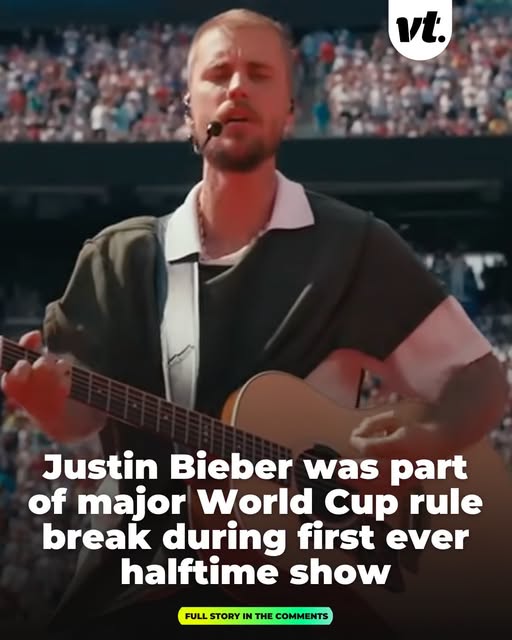
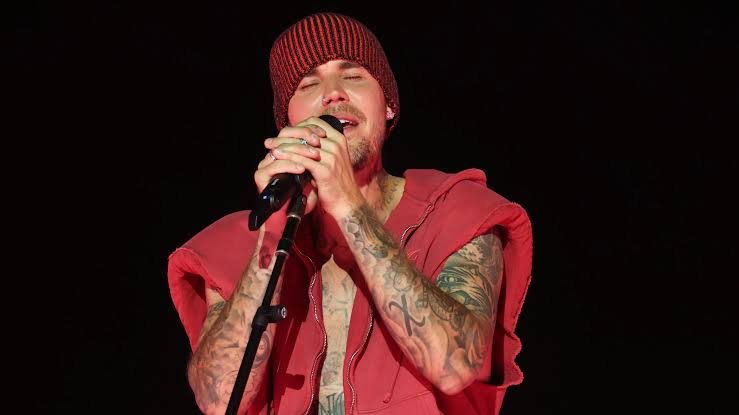
Justin Bieber made a highly anticipated return to the stage during the 2026 FIFA World Cup final, delivering a surprise halftime performance that quickly became one of the event’s biggest talking points. While millions of football fans tuned in to watch the championship match, many were equally excited to see Bieber perform after spending much of the past few years away from major live events.
The singer took to the stage as part of FIFA’s expanded halftime entertainment, joining a growing list of global superstars who have performed during international sporting events. His appearance generated enormous excitement online, with fans praising both his vocals and his stage presence. However, it wasn’t only Bieber’s performance that attracted attention. Shortly after the show ended, viewers noticed that he had reportedly broken one of FIFA’s long-standing traditions, sparking widespread discussion across social media.
The Rule That Was Broken
Unlike many previous performers at major sporting events, Bieber reportedly remained on the pitch longer than expected following the halftime show, creating debate among fans about whether he had broken protocol. Traditionally, halftime entertainment at football matches is carefully timed to ensure players can return to the field without unnecessary delays. Every minute is planned in advance, with stage crews working rapidly to assemble and dismantle equipment before the second half begins. According to reports, Bieber’s appearance slightly exceeded the planned schedule, making him one of the first halftime performers to disrupt the tightly controlled timeline. While the delay was brief, it immediately became a talking point among football supporters, many of whom questioned whether special treatment had been given because of his global celebrity status. Others argued that such a massive live production naturally comes with logistical challenges and that a few extra moments were understandable considering the scale of the event.
Fans React Online
As clips from the performance spread across social media, opinions were divided. Many fans praised Bieber for delivering an energetic performance and welcomed his return to live music after an extended break from touring. Supporters said the halftime show demonstrated that he remains one of the world’s biggest pop stars and appreciated seeing him back on a major international stage. Others focused less on the music and more on the scheduling controversy. Some football fans expressed frustration that any delay, however small, should be avoided during a tournament final watched by hundreds of millions of people around the world. Meanwhile, countless viewers joked about the incident, creating memes comparing the halftime schedule to other sporting events where performances regularly run longer than expected. Despite the online debate, the discussion remained largely lighthearted, with many agreeing that the performance itself was entertaining regardless of the timing issue.
A Major Moment in Bieber’s Career
The World Cup final marked another significant milestone for Bieber, whose recent years have included periods away from performing while focusing on his health and personal life. His appearance reminded fans why he remains one of the most recognizable artists in modern pop music. Throughout his career, Bieber has sold millions of records, topped charts across the globe, and built a loyal fan base spanning more than a decade. Performing during one of the world’s most-watched sporting events provided another opportunity to reconnect with audiences and showcase his music to an international television audience. Many viewers also praised the production value of the halftime show, highlighting the choreography, lighting effects, and overall atmosphere created inside the stadium.
Entertainment Continues to Transform the World Cup
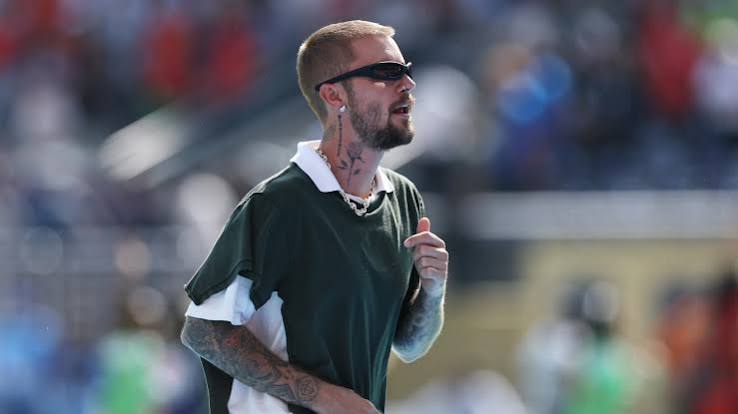
The discussion surrounding Bieber’s performance also reflects FIFA’s increasing focus on expanding entertainment around the World Cup. Inspired by other major sporting events, football’s governing body has introduced larger musical productions designed to attract viewers beyond traditional sports audiences. While some supporters welcome the added spectacle, others believe football itself should remain the primary focus. Even so, the halftime show succeeded in generating worldwide attention and extensive conversation across social media. Although Bieber’s reported breach of halftime protocol became part of the story, it ultimately did little to overshadow the excitement surrounding his return to the stage. For many fans, the performance served as another reminder of his enduring popularity and his ability to command attention wherever he performs. Whether people were discussing the music, the production, or the scheduling controversy, Justin Bieber once again proved that even a brief appearance can become one of the most memorable moments of a global event.