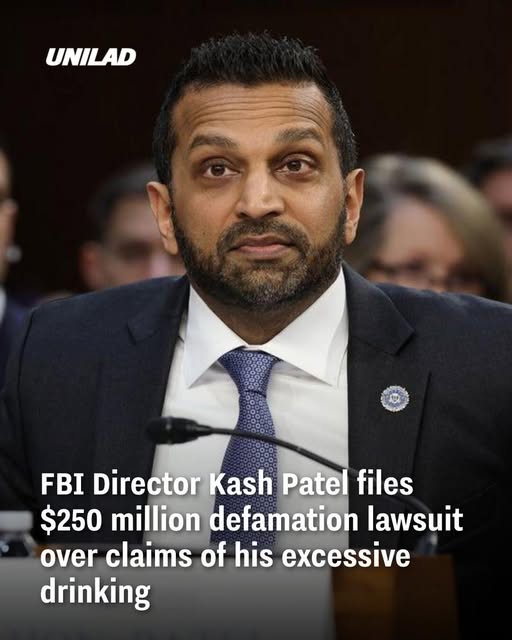
Kash Patel has filed a $250 million defamation lawsuit against The Atlantic following the publication of a controversial article that alleged misconduct during his tenure. The legal action marks a major escalation in tensions between a high-ranking U.S. official and the media.
The lawsuit was submitted in federal court and centers on claims that the magazine published false and damaging statements about Patel’s behavior, particularly accusations related to excessive alcohol use and job performance.
What the Allegations Claim
The article in question reportedly relied on more than two dozen anonymous sources, including current and former officials. According to these sources, Patel was accused of “excessive drinking,” unexplained absences, and erratic conduct that raised concerns within the FBI and the Department of Justice. Some claims suggested that his alleged behavior disrupted meetings and delayed important decisions. Others went further, describing situations where he was reportedly unreachable for extended periods, sparking concern about leadership stability and national security implications.

Patel Strongly Denies All Claims
Patel has firmly rejected the allegations, calling them completely false and defamatory. He argues that the article was deliberately designed to damage his reputation and push him out of his role. In public statements, he insisted the claims were fabricated and accused the publication of ignoring official responses provided before the article was released. His legal team claims the report crossed the legal threshold for defamation by acting with “actual malice,” which is required when suing as a public figure.
The Magazine Stands by Its Reporting
Despite the lawsuit, The Atlantic has defended its journalism and stated it will fight the case. Editors maintain that their reporting was based on credible sources and careful investigation. The publication has dismissed the lawsuit as meritless and signaled readiness for a legal battle, setting the stage for what could become a high-profile court case involving press freedom and accountability.
Political and Public Fallout
The controversy has quickly spread beyond the courtroom. Critics have pointed to the allegations as cause for concern, with some political figures even calling for Patel’s resignation. At the same time, supporters argue that the lawsuit reflects a broader issue of media bias and the risks of relying on anonymous sources for serious accusations. The situation highlights ongoing divisions in how the public and political leaders interpret such reports.
A Broader Debate About Media and Power
This case goes beyond one individual. It raises important questions about the balance between investigative journalism and the protection of personal reputation—especially for public officials. Defamation cases involving high-profile figures are notoriously difficult to win, as they require proof that false information was published knowingly or with reckless disregard for the truth. The outcome of this lawsuit could influence how similar cases are handled in the future.

Conclusion
The lawsuit filed by Kash Patel represents a significant legal and political moment. While the allegations have sparked widespread debate, the final outcome will depend on what can be proven in court. For now, the case stands as a reminder of the complex relationship between power, media, and accountability—where the line between scrutiny and defamation is often fiercely contested.