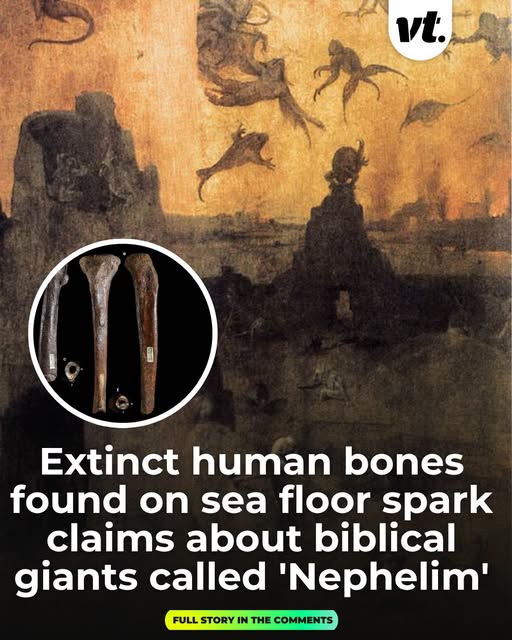
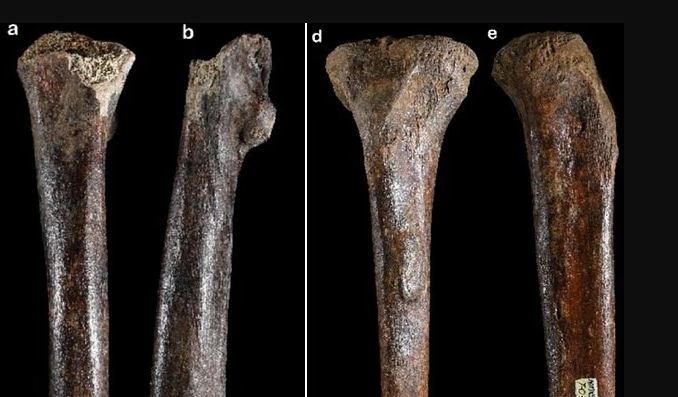
Ancient human remains recovered from the sea floor near Taiwan have sparked an unusual debate online, with some social media users suggesting that the fossils could be connected to the mysterious biblical figures known as the Nephilim. The discovery is genuinely fascinating, but the evidence tells a much more scientific story. Researchers have identified Denisovan remains from the Penghu Channel, an area between Taiwan and mainland China. Denisovans were an extinct group of ancient humans who lived across parts of Asia and interacted genetically with modern humans.
The newly studied remains provide valuable information about the physical characteristics of these mysterious relatives of ours.
Who Were the Denisovans?
Denisovans remained largely mysterious for years because scientists had very few fossil remains to study. Their existence was first established through genetic evidence from fossils discovered in Denisova Cave in Siberia. Later discoveries, including a Denisovan jaw from the Tibetan Plateau and the Penghu fossil from Taiwan, demonstrated that these ancient humans occupied a much wider area than initially believed. Genetic evidence also shows that Denisovan populations contributed DNA to some modern human populations in Asia and Oceania. The Taiwanese remains are especially important because they help researchers understand the physical characteristics of Denisovans rather than relying almost entirely on genetic evidence.
Why Were Human Bones Found Underwater?
The location of the fossils may sound mysterious, but there is a straightforward geological explanation. The Penghu Channel was not always covered by the sea. During periods when large amounts of Earth’s water were locked inside glaciers, global sea levels were substantially lower. Areas that are underwater today were once exposed landscapes where ancient humans and animals could live. As glaciers melted and sea levels rose, those landscapes became submerged. Consequently, fossils deposited on ancient land surfaces can now be found beneath the ocean. This does not provide evidence of a biblical flood or any supernatural event. Instead, it reflects major environmental changes that occurred during Earth’s ice ages.
Where Did the Nephilim Theory Come From?
The discovery nevertheless caught the attention of internet personalities who connected the unusually robust ancient humans with the Nephilim mentioned in the Bible. The Nephilim appear in the Book of Genesis and are also mentioned in Numbers. They have traditionally been associated with giants or exceptionally powerful beings, although interpretations of the biblical passages vary considerably. Some online commentators have argued that the large size of the Denisovan remains could represent evidence that ancient stories about giants were based on real creatures. However, there is an important distinction between an intriguing possibility and scientific evidence. Researchers studying the Taiwanese fossils have not identified them as Nephilim, and there is no archaeological or genetic evidence demonstrating that Denisovans were the supernatural beings described in biblical traditions.
Were Denisovans Actually Giants?
The answer is no—not in the supernatural sense suggested by some online theories. Individual Denisovans could apparently be quite large and robust. But being tall or heavily built does not make an individual a giant in the legendary sense. Modern humans can also reach heights considerably above the global average, and unusual physical size occurs naturally within populations. A particularly large ancient human therefore does not automatically indicate a separate race of gigantic beings. The important discovery is that Denisovans may have possessed robust bodies and substantial physical strength. Scientists still need additional fossils to determine how representative the largest individuals were of their wider population.
Could Ancient Fossils Have Inspired Giant Legends?
There is, however, a fascinating question hidden beneath the speculation. Ancient people occasionally encountered enormous fossil bones without having any scientific understanding of extinct animals or prehistoric humans. Finding a huge femur buried in the ground could easily inspire stories about extraordinary beings. That possibility is worth considering, but it remains different from claiming that a particular biblical story has been scientifically proven. The Denisovan discovery is remarkable enough on its own. These were real ancient humans whose remains and genetic legacy are helping researchers reconstruct a previously mysterious chapter of human evolution.
What the Discovery Really Tells Us
Rather than proving the existence of the Nephilim, the Taiwanese fossils provide another important piece of evidence about Denisovans and their distribution across Asia. The discovery demonstrates that these ancient humans lived across a surprisingly broad geographical range and possessed distinctive physical characteristics. It also reinforces how incomplete the fossil record remains. For now, there is no scientific evidence connecting Denisovans with biblical giants. The fossils tell us something far more concrete: thousands of years ago, members of an extinct human lineage lived across Asia, left traces of their DNA in modern populations, and eventually disappeared—leaving behind fragments that scientists are only now beginning to understand.