
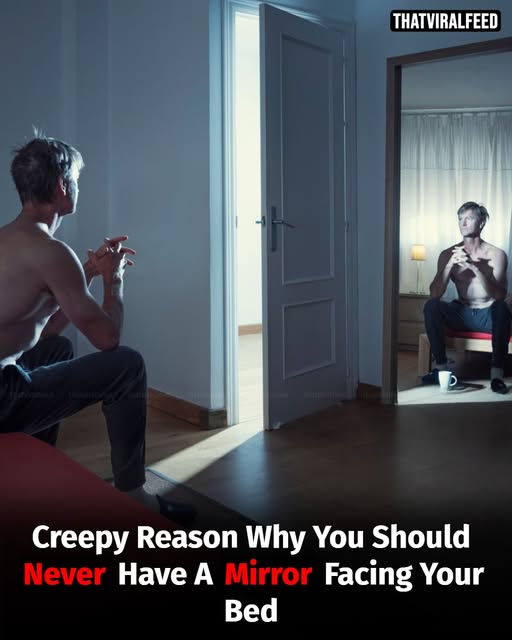
The idea that you shouldn’t sleep with a mirror facing your bed has been around for centuries. It appears in different cultures, but today it’s most commonly linked to Feng Shui, an ancient Chinese practice focused on energy and balance in living spaces. According to these beliefs, mirrors are not just decorative they are thought to reflect and amplify energy. When placed directly opposite a bed, they may disrupt the calm environment needed for sleep.
Feng Shui Explanation
In Feng Shui, a bedroom is meant to be a place of rest and low energy. A mirror, however, is considered an “active” object that bounces energy around the room.
When it faces the bed, it may:
Reflect energy back toward your body
Create restlessness or light sleep
Increase stress or anxiety at night
Because of this, experts often recommend avoiding mirrors that reflect the bed directly or covering them while sleeping.
The “Creepy” Psychological Effect
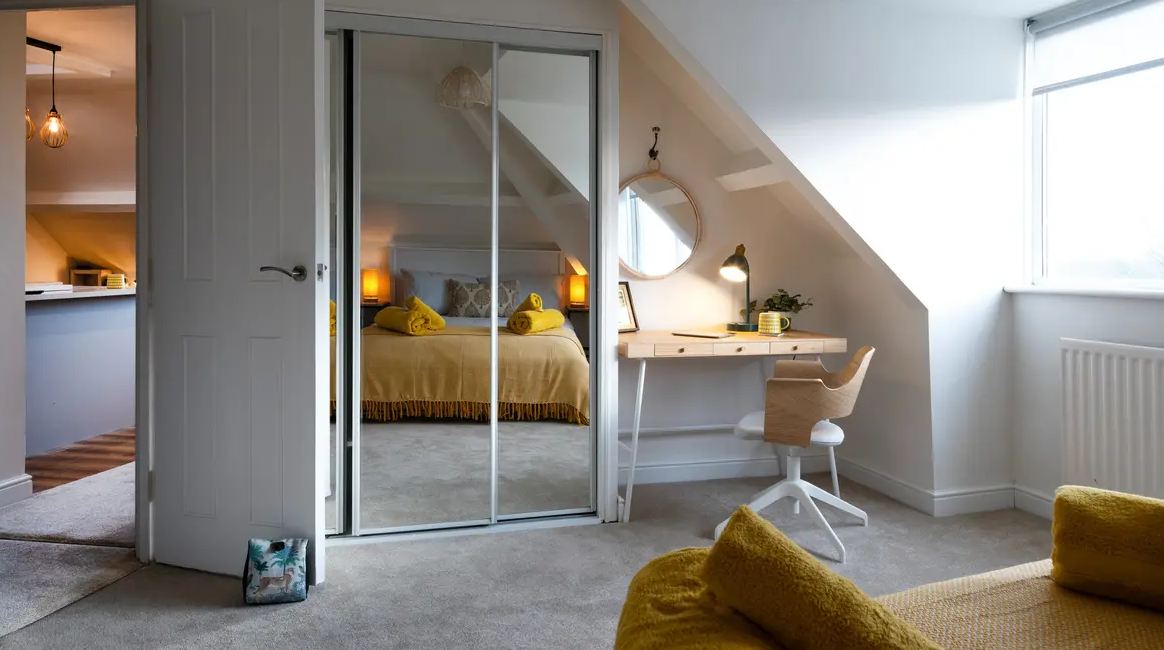
Even without spiritual beliefs, there’s a simple psychological reason many people find it unsettling. If you wake up in the middle of the night and see movement in a mirror, your brain may briefly interpret it as another person in the room. This can trigger a fear response or anxiety, especially in low light.
That’s why some people report:
Feeling watched
Startling awake
Trouble falling back asleep
Cultural and Superstitious Beliefs
In some traditions, mirrors are associated with deeper meanings. For example:
Some believe mirrors can “trap” or reflect the soul during sleep
Others think they invite negative energy or bad luck
There are even myths about mirrors acting as portals
While these ideas are not scientifically proven, they contribute to the widespread belief that mirrors in bedrooms can be unsettling.
What Science Actually Says
There’s no scientific evidence that mirrors cause harm, bad energy, or supernatural effects. However, science does support one thing: your environment affects your sleep. If a mirror makes you uncomfortable—even subconsciously—it can reduce sleep quality. So the issue isn’t the mirror itself, but how your brain reacts to it.
Where the Belief Comes From Historically
The idea of mirrors affecting sleep goes back hundreds of years and appears in multiple cultures, not just Feng Shui. In older European folklore, mirrors were sometimes seen as objects that could trap reflections of people or spirits. Because of this, they were treated with caution, especially at night. In some traditions, mirrors were even covered during important events like births or deaths, based on the belief that they could interact with the “spiritual energy” in the home. These customs helped build the long-standing association between mirrors and unease in bedrooms.
Simple Fixes If You Have a Mirror
If your mirror faces your bed and you don’t want to remove it, there are easy solutions:
Move it to a side wall
Angle it so it doesn’t reflect the bed
Cover it with a cloth or curtain at night
Use wardrobe mirrors that can be closed
These small changes can help create a calmer sleeping space.
Conclusion
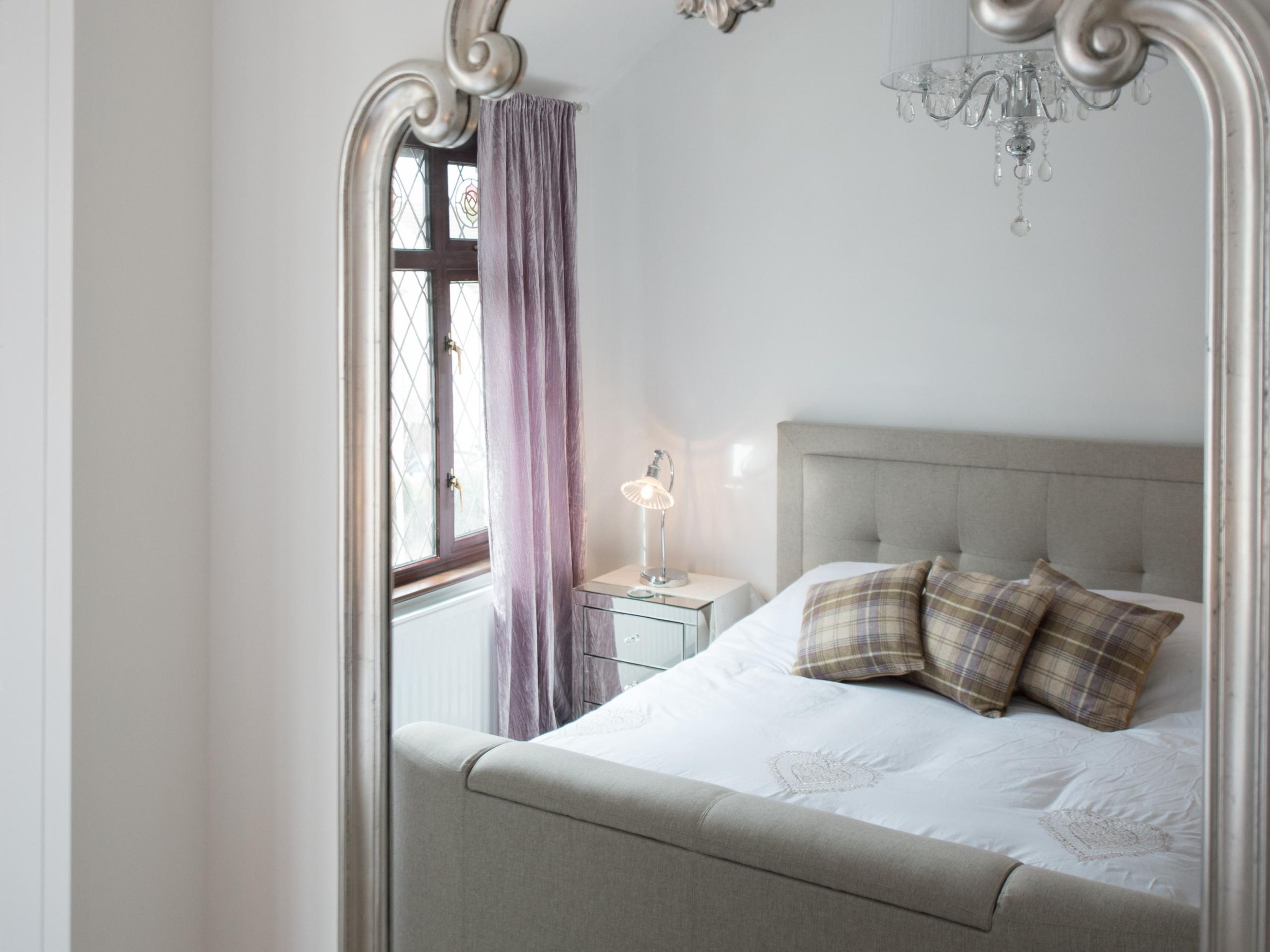
The warning about mirrors facing the bed isn’t really about danger—it’s a mix of tradition, psychology, and personal comfort. While there’s no proof it’s harmful, many people still find it disturbing or disruptive to sleep. If it bothers you even slightly, it’s worth adjusting your room—because good sleep matters more than perfect décor.