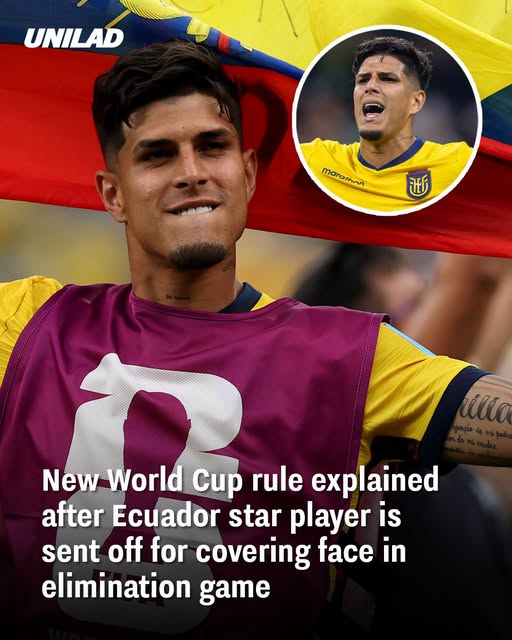
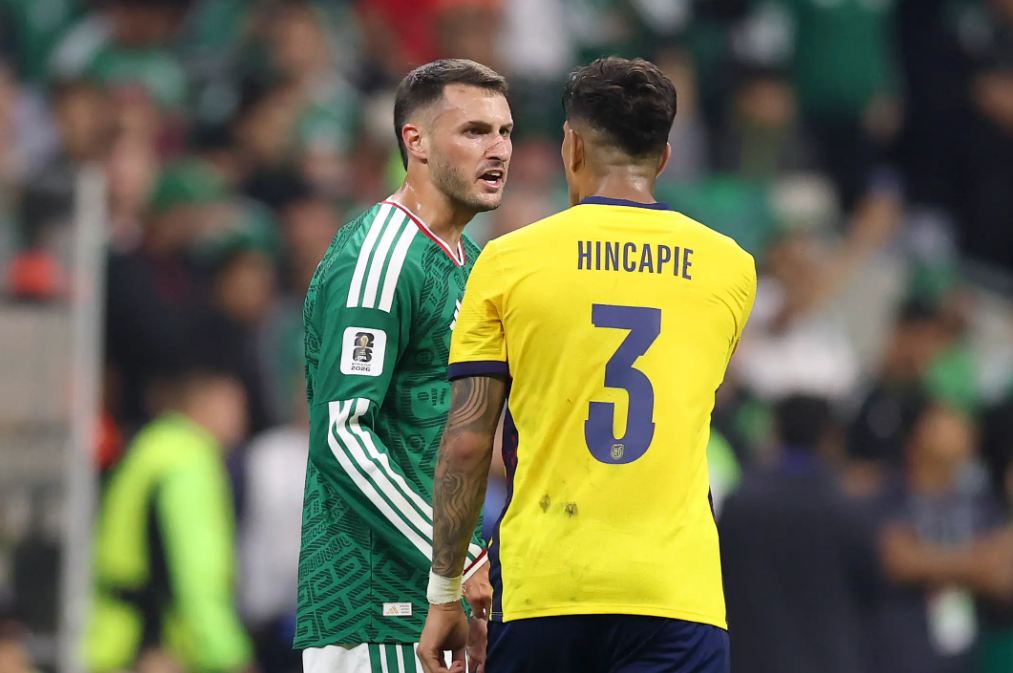
he FIFA World Cup has introduced several new rules in 2026, but one of the most talked-about changes has already produced major controversy after Ecuador defender Piero Hincapié was shown a straight red card during his team’s Round of 32 match against Mexico. The incident occurred late in the game when Hincapié covered his mouth while speaking to an opposing player during a heated exchange. Following a review by the Video Assistant Referee (VAR), the referee enforced the tournament’s new regulation and immediately sent the defender off.
Although many fans watching the match were left confused by the decision, tournament officials insist the rule is designed to discourage offensive and discriminatory behavior on the pitch rather than punish ordinary conversations between players.
Why Covering Your Mouth Can Now Lead to a Red Card
The regulation focuses specifically on confrontational situations. Players who deliberately use a hand, arm, or shirt to hide their mouths while arguing with an opponent can now receive an immediate red card. The reasoning behind the law is simple. Officials believe players who intentionally conceal their lips during hostile exchanges may be attempting to hide abusive, discriminatory, or offensive language from cameras and lip readers. FIFA referee chief Pierluigi Collina has explained that the rule does not apply to friendly conversations between teammates or opponents. Footballers are still free to speak privately during normal interactions. However, when emotions are running high and a player deliberately covers their mouth during an argument, referees are expected to take action. The law gives officials the authority to punish the act itself, even if the exact words spoken cannot be confirmed.
Second Player Punished Under the New Law
Hincapié is not the first footballer to be dismissed under the regulation. Earlier in the tournament, Paraguay’s Miguel Almirón became the first player to receive a red card for the same offense after covering his mouth while confronting a Turkish opponent. That incident also required a VAR review before the referee issued the dismissal. The two cases have highlighted how seriously FIFA intends to enforce the new regulation throughout the competition. Importantly, there has been no public suggestion that either player actually used racist, homophobic, or otherwise offensive language. Instead, both were punished because the rule considers the deliberate act of hiding the mouth during confrontational exchanges to be unacceptable.
Why FIFA Introduced the Rule
The new law was approved earlier this year after football’s lawmakers agreed stronger measures were needed to combat discriminatory behavior on the field. The decision followed a controversial club match in which a player covered his mouth while speaking to an opponent before later receiving a lengthy suspension for homophobic conduct. That incident prompted calls for a rule that would remove the possibility of players hiding abusive comments from television cameras. Officials believe the measure will encourage greater accountability while making it harder for players to conceal offensive remarks during matches.
Fans Remain Divided
Despite FIFA’s explanation, the rule has generated significant debate among football supporters. Some believe the tougher punishment sends a clear message that abusive language has no place in the sport and gives referees another tool to protect players. Others argue that the law may be too harsh because it allows red cards without proving exactly what was said. Critics also worry that normal football habits developed over many years could now result in players being sent off during crucial matches. With two red cards already issued under the regulation, the new rule is likely to remain one of the biggest talking points for the rest of the 2026 FIFA World Cup.