
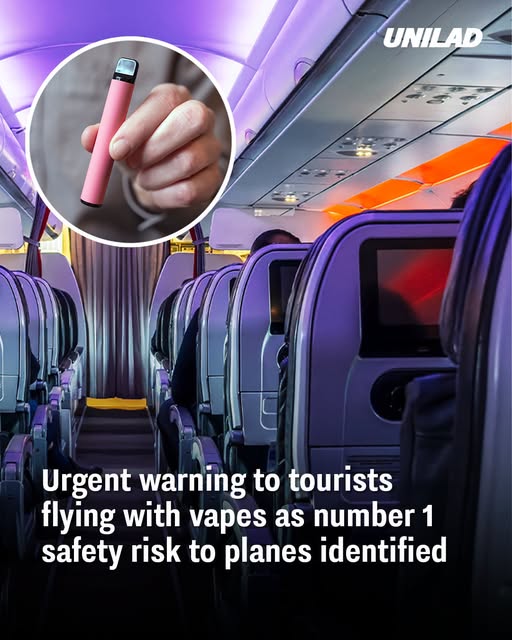
Air travelers are being urged to pay closer attention to how they pack vapes, power banks, and other battery-powered devices after aviation authorities highlighted the growing dangers posed by lithium batteries on flights. The warning comes as millions of people prepare for busy holiday travel periods, with experts stressing that a simple packing mistake could create a serious fire hazard onboard an aircraft.
The Hidden Risk Inside Everyday Devices
Many travelers do not realize that vapes contain rechargeable lithium-ion batteries. These same types of batteries are found in smartphones, laptops, tablets, and power banks. While generally safe when used correctly, lithium batteries can become dangerous if they are damaged, overheated, crushed, or improperly stored. In some situations, they can enter a process known as thermal runaway, where the battery rapidly heats up and may produce smoke, fire, or even an explosion. Because of these risks, aviation authorities around the world have introduced strict rules governing how battery-powered devices must be transported during flights.

More Than 100 Million Batteries Packed Incorrectly
Recent safety campaigns were launched after officials discovered that more than 100 million lithium batteries had reportedly been packed incorrectly in checked luggage. Authorities warned that batteries stored in an aircraft’s cargo hold present a particular concern because a fire in that area can be far more difficult to detect and control than one occurring inside the passenger cabin. As a result, travelers are being encouraged to carry battery-powered devices with them in the cabin rather than placing them in checked baggage.
Why Vapes Receive Special Attention
Experts say vapes deserve special attention because many contain small lithium batteries that may be more vulnerable to manufacturing defects or damage. Unlike major consumer electronics that often undergo extensive quality testing, some vaping devices may be produced with fewer safety protections. This can increase the chances of battery failure under certain conditions. Regulators have repeatedly emphasized that vapes should never be packed in checked luggage. Instead, they should remain in hand luggage or be carried on the traveler’s person throughout the journey.
Real Incidents Highlight the Danger
The warning is not purely theoretical. Several incidents involving vape batteries have already occurred on aircraft. Earlier this year, a domestic flight in Australia required emergency precautions after smoke was seen coming from a vape shortly before landing. Crew members quickly contained the situation, and firefighters met the aircraft after it arrived safely. Investigators pointed to the vape’s lithium battery as the likely source of the problem. Aviation authorities have also recorded numerous battery-related incidents involving smoke, fire, and extreme heat on aircraft over recent years, reinforcing concerns about improper battery storage.
Important Rules for Travelers
Safety experts recommend several simple precautions when flying with vapes and other lithium-powered devices:
Keep all vapes and spare batteries in carry-on luggage.
Never place vaping devices in checked baggage.
Protect spare batteries from accidental contact with metal objects.
Switch devices off before boarding.
Do not charge vapes during the flight.
Immediately inform cabin crew if a device becomes hot, produces smoke, or appears damaged.

A Reminder Before Your Next Flight
As more people travel with electronic devices than ever before, aviation experts say awareness is the best form of prevention. A vape may seem like a harmless travel accessory, but the lithium battery inside can become a significant safety threat if packed incorrectly. The message from aviation authorities is straightforward: keep vapes in the cabin, follow airline rules, and treat lithium-powered devices with care. Doing so can help reduce the risk of onboard fires and make air travel safer for everyone.