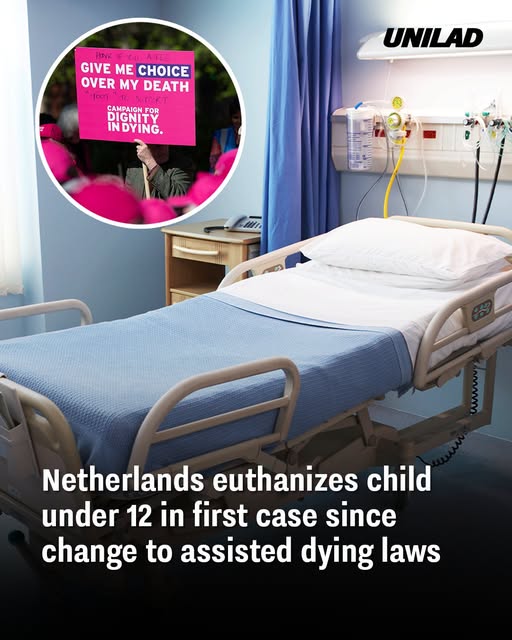
The Netherlands has confirmed that a child under the age of 12 was euthanized for the first time since new regulations expanded access to assisted dying for younger children. The case, which took place in late 2025, was revealed by Dutch Health Minister Sophie Hermans in a report to parliament and has quickly become the focus of international debate.
While authorities have not disclosed the child’s age, medical condition, or personal details, officials confirmed that the child suffered from a severe and terminal illness. The case is currently being reviewed by prosecutors and oversight committees to ensure that all legal requirements were followed correctly. The announcement has reignited ethical discussions about assisted dying, particularly when it involves young children who are unable to make fully independent medical decisions.
How Dutch Law Changed
The Netherlands became the first country in the world to legalize euthanasia under strict conditions in 2002. For many years, the law applied to adults and children aged 12 and older, with parental involvement required for younger teenagers. In 2024, Dutch authorities introduced new regulations covering children between the ages of one and 12 who are terminally ill and experiencing unbearable suffering with no prospect of recovery. The change was designed to address rare situations in which young patients face extreme pain that cannot be relieved through available medical treatments. Government officials estimated that only a small number of children each year would potentially qualify under the new framework. The recently confirmed case is the first known use of the regulation since it came into effect.

Strict Conditions Must Be Met
Dutch regulations contain multiple safeguards before euthanasia can be considered for a child. According to government guidance, the child must be terminally ill, suffering unbearably, and have no realistic chance of improvement. Doctors must determine that no reasonable medical alternatives exist to relieve the suffering. The decision must involve the parents and medical specialists, and whenever possible, the child is also included in discussions regarding treatment and care. Independent medical experts review the circumstances before and after the procedure. Following the death, a special review committee examines whether doctors complied with all legal and medical requirements. The findings are then forwarded to prosecutors, who decide whether the law was followed appropriately.
Supporters And Critics Remain Divided
Supporters of the Dutch policy argue that it provides compassionate options for families facing unimaginable circumstances. They believe terminally ill children experiencing extreme suffering should have access to the same considerations already available to older patients under carefully regulated conditions. Critics, however, raise concerns about whether children can meaningfully participate in such life-ending decisions and worry about the broader ethical implications of expanding euthanasia laws. The issue has generated strong reactions from religious groups, medical ethicists, and political organizations both within the Netherlands and abroad. The debate is not limited to the Netherlands. Assisted-dying laws continue to be discussed in many countries, with governments closely watching how existing systems operate and whether safeguards are effective.
A Case That Will Be Closely Examined
Although only limited information has been released about the child involved, the case represents a significant moment in the ongoing global conversation surrounding euthanasia and end-of-life care. Dutch authorities stress that the regulation applies only in exceptional circumstances involving terminal illness and unbearable suffering. As legal reviews continue, the case is expected to remain the subject of intense discussion among medical professionals, lawmakers, ethicists, and families affected by severe childhood illnesses. For supporters, it highlights compassion in the face of suffering. For critics, it raises profound questions about the limits of medical decision-making. Either way, the first reported euthanasia of a child under 12 under the Netherlands’ new rules has become a landmark event with implications far beyond the country’s borders.