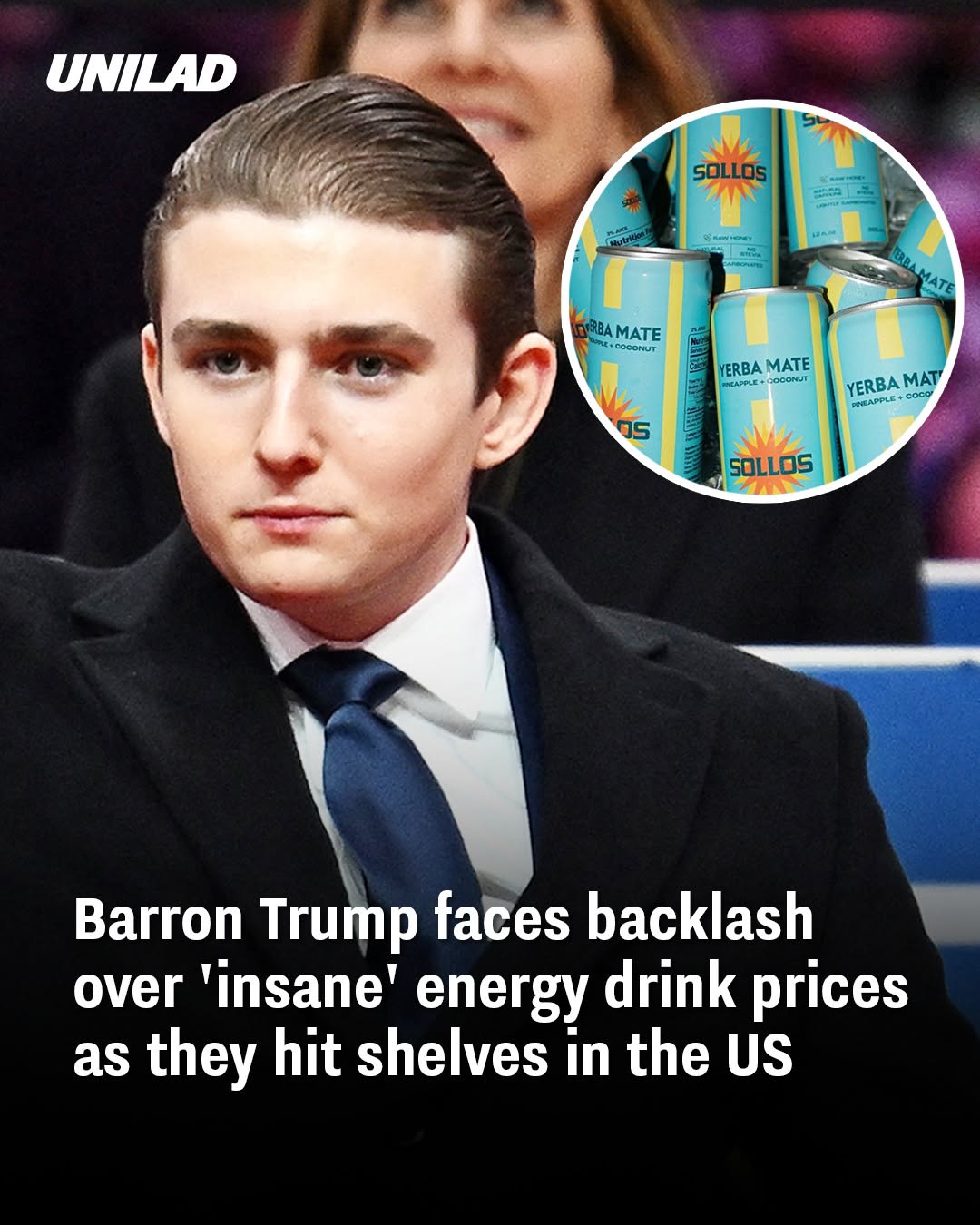
A beverage brand associated with Barron Trump has found itself facing criticism online after consumers discovered the steep price attached to one of its products.
The controversy erupted after social media users began discussing the cost of Sollos, a luxury wellness drink that has recently attracted public attention due to its reported connection to the youngest son of President Donald Trump. As details about the product spread online, reactions ranged from curiosity to outright disbelief.
Why People Are Talking About Sollos
Sollos markets itself as a premium health and wellness beverage aimed at consumers seeking high-end nutritional products. The drink is promoted as containing carefully selected ingredients designed to support overall well-being. Its branding focuses on exclusivity, quality, and a luxury lifestyle image. However, it wasn’t the drink’s ingredients that captured headlines. Instead, it was the price. Reports revealed that a package of the beverage could cost hundreds of dollars, prompting many social media users to question whether any drink could justify such an expense.
The Price That Shocked Consumers
After learning how much customers may need to spend, critics quickly voiced their opinions online. Many described the product as wildly overpriced, arguing that the average consumer simply could not afford such a purchase. Others joked that they would rather spend the same amount of money on groceries, utility bills, or a weekend getaway than on a wellness beverage. Some users defended the pricing strategy, noting that luxury products exist in nearly every industry and are designed for a specific market rather than mass appeal. Still, the overwhelming response appeared to focus on disbelief at the premium cost.
Barron Trump’s Reported Connection
Part of the intense interest surrounding Sollos stems from its reported association with Barron Trump. Although Barron has largely remained out of the political spotlight compared with other members of the Trump family, any business venture linked to his name tends to attract significant public attention. Supporters viewed the attention as another example of heightened scrutiny directed toward the Trump family, while critics argued that public figures should expect questions about products tied to their reputation. The discussion quickly expanded beyond the drink itself and became part of broader debates surrounding celebrity influence and luxury marketing.
Luxury Wellness Industry Under the Microscope
Sollos is far from the first wellness brand to face criticism over expensive products. The health and beauty industry has increasingly embraced premium pricing, with companies promoting exclusivity through high-end supplements, skincare products, and specialty beverages. Supporters of these products often point to ingredient quality, research, and branding as factors behind the elevated prices. Skeptics, however, argue that marketing sometimes plays a larger role than proven benefits, encouraging consumers to pay significantly more for products that may offer limited advantages over cheaper alternatives. As a result, conversations about affordability and value frequently emerge whenever a luxury wellness item gains mainstream attention.
Social Media Fuels the Debate
The controversy demonstrates how quickly consumer reactions can spread in the digital age. A single screenshot or price listing can generate thousands of comments within hours, transforming a niche product into a viral talking point. For Sollos, the debate has become less about taste or ingredients and more about whether consumers believe the asking price represents genuine value.
Will the Backlash Matter?
Whether the criticism affects sales remains to be seen. Luxury brands often thrive despite backlash because their target audience values exclusivity as much as the product itself. In some cases, public controversy can even increase awareness and curiosity. For now, Sollos has succeeded in capturing widespread attention, but the conversation surrounding the beverage highlights a familiar question facing premium wellness products: how much are people truly willing to pay for the promise of a healthier lifestyle?