

Headlines about newly discovered planets often spark excitement, especially when they suggest humanity may one day find another world capable of supporting life. Recently, attention has focused on a distant exoplanet that some reports claim could allow humans to live for thousands of years.
While the discovery itself is fascinating, the reality behind the extraordinary lifespan claim is more complicated than it first appears.
The Search for Habitable Worlds
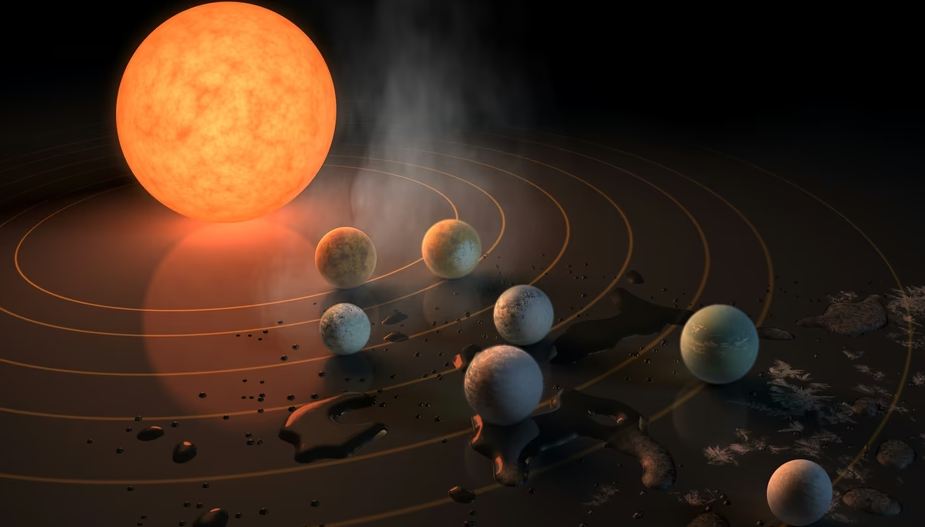
For decades, astronomers have searched for planets beyond our solar system that might possess conditions suitable for life. These worlds, known as exoplanets, orbit stars other than the Sun and vary enormously in size, composition, and climate. Scientists are particularly interested in planets located within a star’s “habitable zone”—the region where temperatures may allow liquid water to exist on the surface. Since water is considered essential for life as we know it, these planets are viewed as promising candidates for future study. Advances in telescope technology have enabled researchers to identify thousands of exoplanets, with a growing number believed to have characteristics that could potentially support life.
Why This Planet Attracted Attention
The planet highlighted in recent reports gained interest because it appears to orbit within a potentially habitable region around its host star. Initial observations suggest conditions may be more favorable than those found on many previously discovered exoplanets. Scientists continue to analyze factors such as atmospheric composition, surface temperatures, radiation levels, and planetary mass to determine whether the world could truly support life. However, even when a planet is described as potentially habitable, that does not mean humans could immediately survive there. Many unknowns remain until more detailed observations become available.
Where the 3,158-Year Lifespan Claim Comes From
The sensational claim that humans could live for 3,158 years on the planet is not based on biology or medical science. Instead, it stems from the effects of time dilation, a concept explained by Albert Einstein’s theory of relativity. According to relativity, time can pass at different rates depending on factors such as gravity and velocity. In environments with extremely strong gravitational fields, time moves more slowly relative to regions experiencing weaker gravity. This means that under very specific theoretical conditions, a person could experience less passage of time than observers elsewhere. The idea has been popularized in science fiction and was famously illustrated in the film Interstellar, where astronauts visiting a planet near a massive black hole experienced time differently than people back on Earth.
What Scientists Actually Mean
The claim does not suggest that human bodies would suddenly become capable of surviving for thousands of years. Aging, biological processes, and lifespan limits would still apply to the individuals experiencing time locally. Instead, the concept refers to differences in how much time passes for observers in separate locations. If extreme relativistic conditions existed, a person might experience a relatively short period while far more time passed elsewhere. In practical terms, someone would not gain immortality or dramatically extend their biological lifespan simply by living on another planet.
The Challenges of Reaching Such Worlds
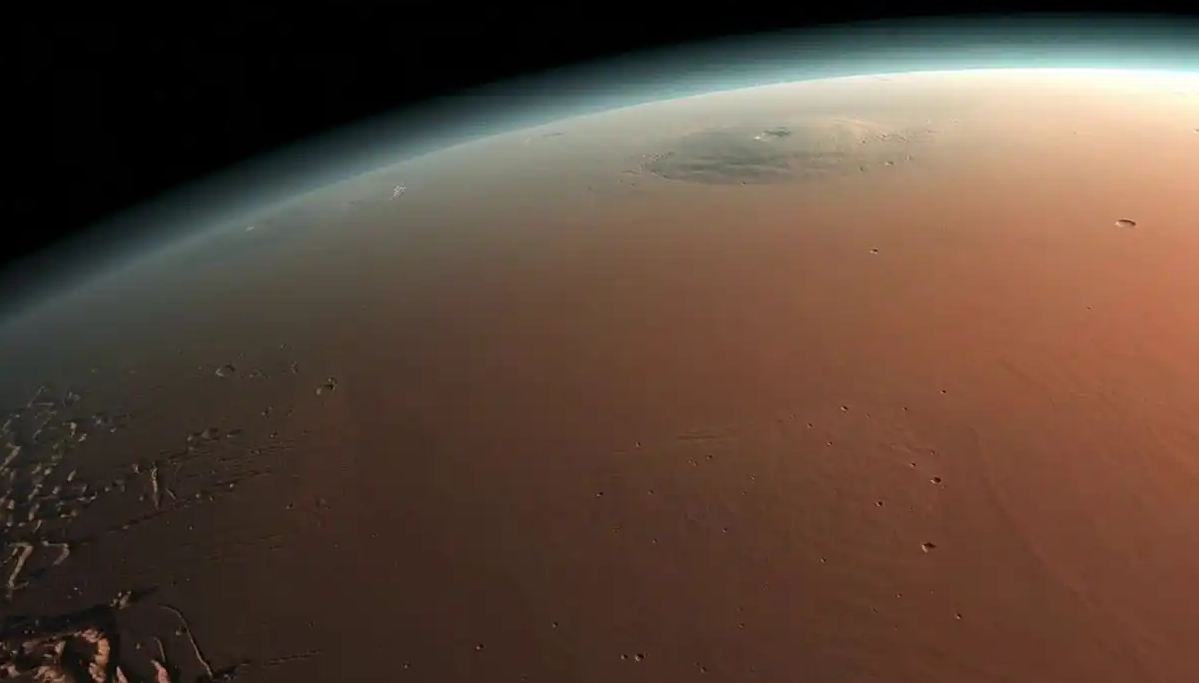
Even if a planet appears potentially habitable, reaching it presents enormous challenges. Most known exoplanets are located many light-years away from Earth, distances far beyond the capabilities of current human spaceflight technology. Traveling to these worlds would require breakthroughs in propulsion systems, life-support technology, and long-duration space exploration. For now, astronomers study these planets remotely using advanced telescopes and observational techniques.
Why Discoveries Like This Matter
Although humans are unlikely to visit distant exoplanets anytime soon, each new discovery helps scientists better understand how planetary systems form and evolve. By studying potentially habitable worlds, researchers gain valuable insights into the conditions that may allow life to emerge elsewhere in the universe. These discoveries also improve our understanding of Earth’s place among countless planetary systems scattered throughout the cosmos.
Separating Science from Sensational Headlines
The discovery of another potentially habitable planet is undoubtedly exciting. However, claims that humans could live for more than 3,000 years there should be viewed carefully. The planet has not been proven capable of supporting human life, and no scientific evidence suggests that people would physically live for millennia. The headline is based on theoretical interpretations of relativity and time dilation rather than actual biological longevity. Even so, the discovery highlights one of humanity’s most compelling scientific pursuits: the search for worlds beyond Earth that may one day deepen our understanding of life, space, and the universe itself.