
A simple hand movement has recently gone viral online after people discovered that some individuals have a visible tendon appear in their wrist when they touch their pinky finger to their thumb. While it may seem unusual, the explanation is actually linked to human evolution and anatomy.
The tendon involved is called the palmaris longus tendon, and not everyone has one. Experts say its presence or absence usually has little effect on everyday life, which is why many people are surprised to learn about it.
How to Try the Wrist Test
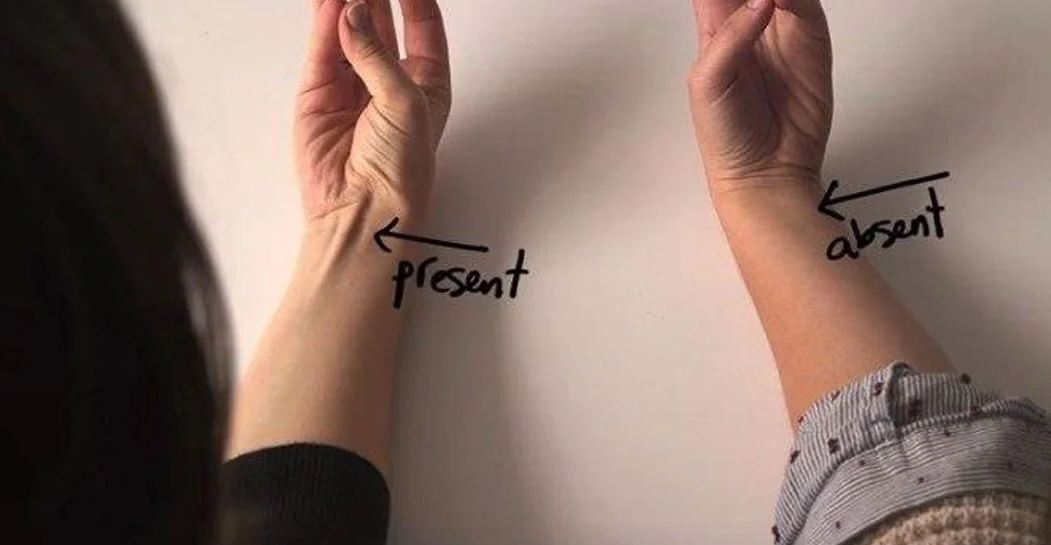
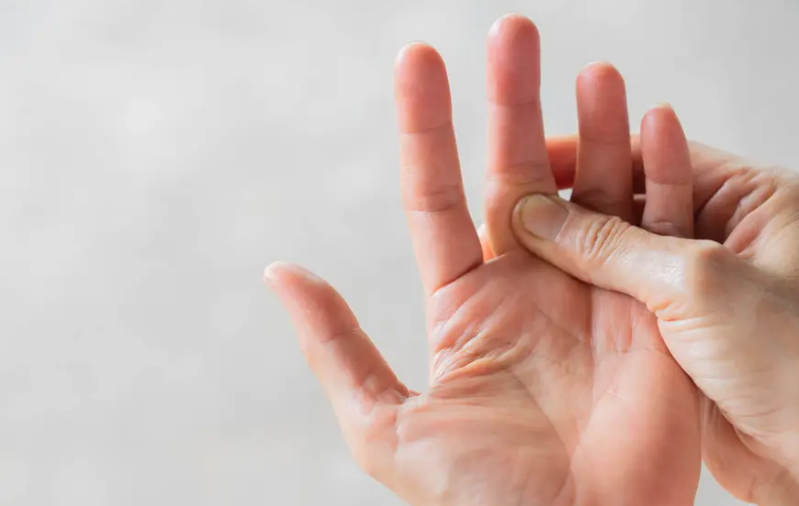
The test is extremely simple. To check for the tendon, place your arm palm-side up, then touch your pinky finger to your thumb while slightly bending your wrist upward. For many people, a thin tendon will visibly rise in the center of the wrist. Others may notice nothing at all. The reason for the difference is that some people are born without the palmaris longus muscle and tendon entirely. Studies suggest around 10 to 20 percent of the population may not have it in one or both arms. In some regions of the world, the percentage is believed to be even higher.
A Leftover From Human Evolution
Scientists consider the palmaris longus to be a vestigial structure, meaning it is a body part that once served a more important purpose during evolution but is no longer essential today. Experts believe the muscle was more useful for early primates and human ancestors who relied heavily on climbing, gripping, and swinging using their upper limbs. Animals such as monkeys and lemurs still use similar muscles extensively because they spend much more time climbing and hanging from trees. As humans evolved and our movement patterns changed, the muscle gradually became less necessary. Over generations, some people simply stopped inheriting it altogether.
Most People Never Notice It
One reason the tendon attracts attention online is because many people reach adulthood without realizing their body may differ slightly from others. Doctors say the absence of the tendon usually causes no weakness or medical problems. In fact, surgeons often remove the tendon for reconstructive procedures because the body can function normally without it. The tendon is commonly used in graft surgeries involving the hand, elbow, or other areas since removing it generally does not affect grip strength in a meaningful way. Because of this, physicians sometimes even check for the tendon before surgery to determine whether it can be used in medical procedures.
Social Media Fascination Grows
The wrist test has become a popular topic online because it offers a quick and surprising way for people to compare their anatomy with friends and family. Many social media users expressed shock after discovering they either lacked the tendon completely or only had it on one arm. Others joked that learning about the palmaris longus tendon made them feel like part of a secret evolutionary experiment. Medical professionals, however, say the variation is perfectly normal and simply reflects the diversity of the human body.
Small Differences Make Humans Unique
Although the tendon itself serves little purpose for most modern humans, it remains an interesting example of how the body changes over time through evolution. Scientists continue studying vestigial features because they offer clues about how humans adapted over thousands of years. Structures that once played major roles in survival can slowly become unnecessary as lifestyles and environments evolve. So if you notice a tendon appearing in your wrist during the finger test, there is no need for concern. And if you do not see one at all, that is equally normal. The tiny difference is simply another reminder that human anatomy still carries traces of our evolutionary past.