
Investigators are continuing to examine the devastating scuba diving accident in the Maldives that claimed the lives of five Italian tourists. As recovery operations and official inquiries move forward, diving experts believe two critical factors may have contributed to the fatal disaster deep beneath the Indian Ocean.
The victims were exploring underwater caves near Vaavu Atoll, one of the Maldives’ most famous diving regions, when they disappeared during the excursion. Authorities later confirmed that the divers had entered cave systems at depths of around 50 meters, or roughly 160 feet below the surface. The incident has already been described as one of the worst diving tragedies in the history of the Maldives.
Victims Included Scientists and Diving Professionals
The five victims were identified as Monica Montefalcone, her daughter Giorgia Sommacal, Muriel Oddenino, Gianluca Benedetti, and Federico Gualtieri. Several members of the group were connected to marine biology and environmental research in Italy, while Benedetti reportedly worked as an experienced diving instructor. The group entered the water from a liveaboard vessel before failing to resurface. Rescue crews later recovered bodies near the underwater cave system after difficult searches complicated by rough sea conditions and limited visibility.
Oxygen Toxicity Emerges as Possible Cause
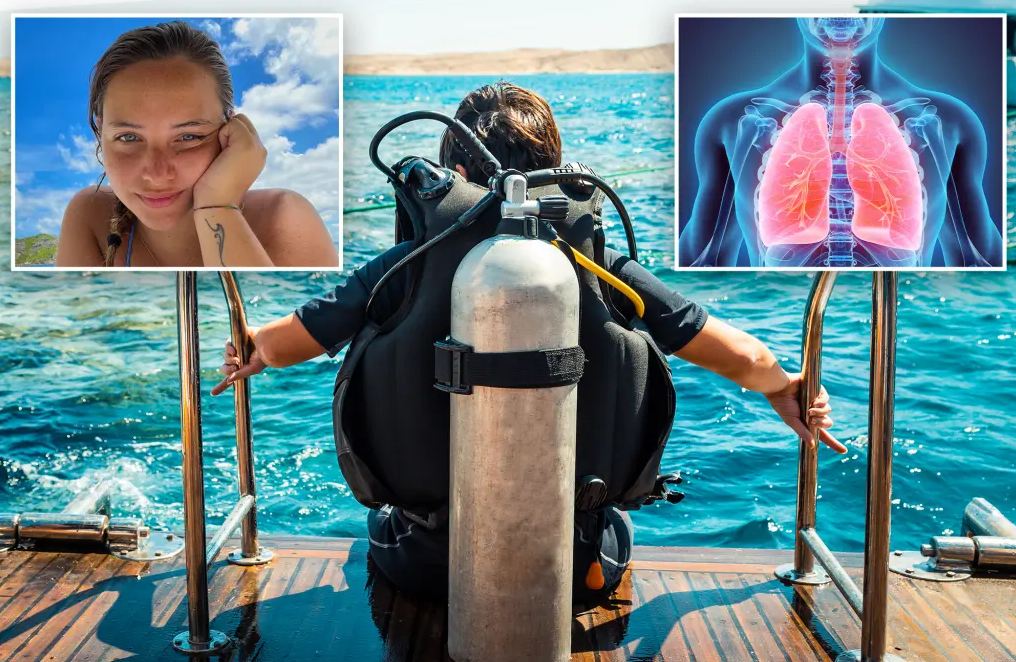
One theory being examined by experts is oxygen toxicity, also known as hyperoxia. Specialists explained that scuba divers using incorrect gas mixtures at extreme depths can experience severe and rapid physical reactions. At deep underwater levels, oxygen can become dangerous if tanks contain improperly balanced gas mixtures. Experts suggested that if something malfunctioned with the divers’ equipment or breathing systems, the group may have inhaled oxygen levels that became toxic under pressure. Medical experts explained that oxygen toxicity can trigger dizziness, confusion, loss of awareness, convulsions, and disorientation. Underwater, those symptoms become even more dangerous because divers may lose their sense of direction or become unable to safely return to the surface. One pulmonologist described hyperoxia as one of the most terrifying fatal situations that can happen during a dive.
Panic and Poor Visibility Could Have Worsened the Situation
Another factor experts believe may have contributed to the tragedy is panic inside the underwater cave system. Deep cave dives are already considered highly dangerous because divers must navigate confined spaces while managing air supply, depth pressure, and visibility. If one diver experienced distress or confusion, panic could have quickly spread through the group. Experts noted that underwater caves can become filled with disturbed sediment, dramatically reducing visibility within seconds. Once visibility disappears, divers may struggle to locate exits, equipment, or even each other. Strong underwater currents and unstable weather conditions were also reported in the area at the time of the expedition. Officials confirmed that warnings had been issued because of rough seas and powerful winds reaching around 30 miles per hour.
Survivor Avoided Joining the Dive
Reports also revealed that a sixth member of the expedition narrowly escaped the tragedy after deciding to remain aboard the group’s yacht before the dive began. The unnamed woman reportedly stayed behind while the others entered the water. Authorities have not explained why she chose not to participate, but the decision may have saved her life.

Investigation Still Ongoing
Officials in the Maldives and Italy continue investigating the exact sequence of events that led to the deaths. Authorities are examining dive plans, weather reports, tank equipment, and underwater conditions to determine what went wrong. While experts have proposed oxygen toxicity and panic as possible explanations, investigators stressed that no final conclusion has been reached. The tragedy has nevertheless sparked renewed discussion within the diving community about the dangers of deep cave exploration and the importance of proper equipment calibration during technical dives.