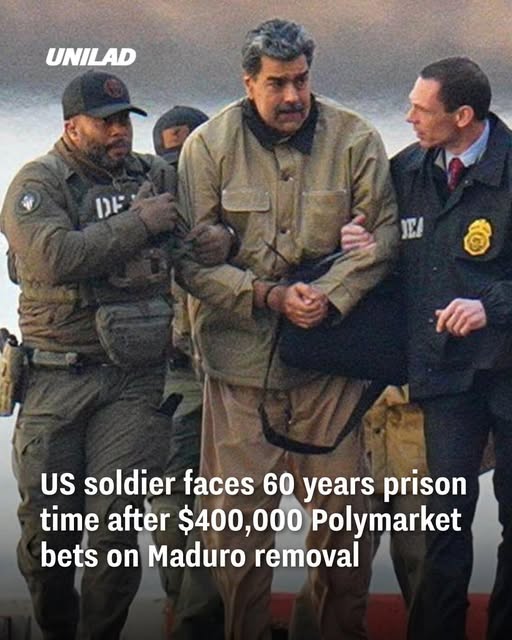
A major controversy has emerged involving a U.S. Special Forces soldier accused of exploiting classified military information for personal profit. The case centers on bets placed on a high-stakes geopolitical event involving Nicolás Maduro, and it is raising serious legal and ethical concerns.
What Happened
According to prosecutors, the soldier—identified as Master Sergeant Gannon Ken Van Dyke—used inside knowledge about a secret U.S. military operation targeting Maduro. He allegedly placed a series of bets on the online prediction platform Polymarket, wagering over $30,000 on outcomes related to the operation. Because he had access to classified information, his bets were unusually accurate. Once the operation took place, those bets paid off massively—earning him more than $400,000 in profit.

The Military Operation Behind It
The bets were tied to a real event: a U.S. military mission carried out in January 2026. During this operation, American forces captured Maduro in Venezuela and transferred him to the United States to face criminal charges. This operation had been highly classified, meaning any prior knowledge of it gave a significant advantage—especially in a betting market where outcomes depend on uncertain future events.
How He Was Caught
Authorities became suspicious after noticing unusually precise betting activity before the operation became public. Investigators later traced the activity back to the soldier. Reports suggest he tried to cover his tracks by using a VPN and moving money through cryptocurrency accounts. He also allegedly attempted to delete his betting account after the profits were secured.
Charges and Possible Consequences
The soldier now faces multiple serious charges, including fraud, misuse of government information, and unlawful financial transactions. If convicted, he could face decades in prison. This case is particularly notable because it may be one of the first major examples of insider trading applied to prediction markets—platforms where users bet on real-world events rather than stocks.
Why This Case Matters
The incident has sparked wider debate about the risks of prediction platforms like Polymarket. While they are designed to reflect public expectations about future events, they can be vulnerable to manipulation—especially when users have access to privileged or classified information. It also raises concerns about national security. Individuals entrusted with sensitive information are expected to protect it, not use it for personal gain. This breach of trust could have had far-reaching consequences beyond financial profit.
Wider Legal Implications
The case involving Gannon Ken Van Dyke could set an important legal precedent. Traditionally, insider trading laws have been applied to stock markets, where individuals profit from non-public corporate information. However, prediction platforms like Polymarket operate in a newer, less clearly regulated space. Prosecutors may use this case to expand how insider trading is defined, arguing that exploiting classified government intelligence for betting purposes should fall under similar legal principles. If courts agree, it could reshape how financial crimes are prosecuted in the digital age.

Conclusion
This case highlights the dangerous intersection of classified information, financial incentives, and emerging online platforms. While prediction markets are growing in popularity, they also present new legal challenges that governments are still learning to manage. Ultimately, the situation serves as a reminder that access to sensitive information carries serious responsibility—and that abusing it, even indirectly through betting, can lead to severe consequences.