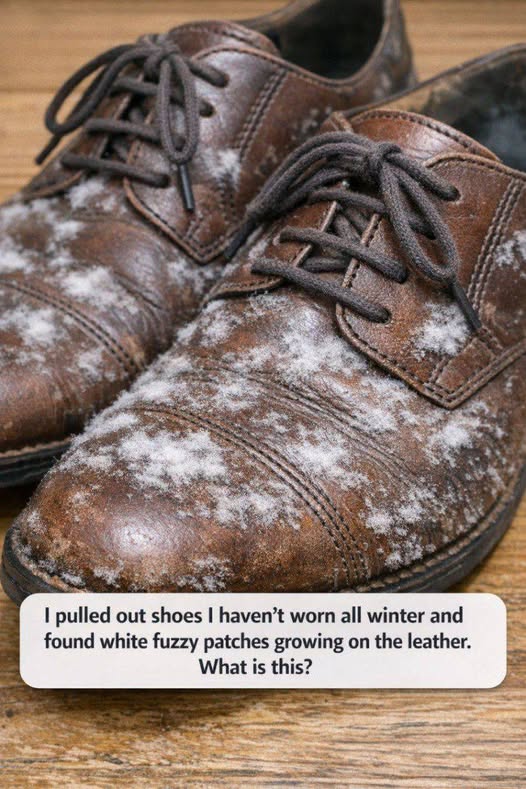
If you pull out leather shoes after months of storage and notice white fuzzy patches on the surface, the most common culprit is mold or mildew. This issue often appears on shoes that have been stored during the winter months in a place with poor ventilation or slightly damp conditions. While it may seem alarming, the problem is usually manageable if addressed promptly.
Leather is a natural, porous material that absorbs moisture from the surrounding air. Even in homes with moderate humidity, leather can slowly accumulate moisture over weeks or months. If mold spores are present in the environment, they can settle on the leather surface and begin to grow. This growth is often noticeable as white, gray, or sometimes green fuzzy patches. Left unchecked, mold can damage the leather, causing discoloration, stiffness, and a musty odor.

Common Causes of Mold on Leather Shoes
Several factors contribute to mold growth on leather shoes:
- High Humidity: Mold thrives in humid conditions, particularly when moisture levels rise above 60%. This is especially common during damp winters or in poorly insulated storage areas.
- Poor Air Circulation: Shoes stored in boxes, plastic bags, or tight closets may trap moisture, creating the perfect environment for mold spores.
- Long Storage Periods: Shoes that are not worn for several months are more likely to develop mold because any residual moisture remains trapped.
- Residual Oils or Dirt: Sweat, natural leather oils, and dirt left on the shoes provide nutrients for mold, encouraging growth.
- Sometimes, the white patches on leather are not mold, but other harmless phenomena. Salt stains from winter roads, residue from shoe creams, or a “fatty bloom” (where natural leather oils rise to the surface) can appear as a white coating. However, if the spots are fuzzy and accompanied by a musty smell, mold is the likely culprit.
Health Concerns
While surface mold on shoes is rarely dangerous, it can irritate individuals with allergies or asthma. Mold spores may become airborne when the shoes are handled, potentially causing respiratory discomfort. Therefore, it’s best to clean affected shoes carefully and avoid inhaling spores.
How to Clean Moldy Leather Shoes
Cleaning leather shoes affected by mold can often save them:
- Take the shoes outside to prevent spreading spores indoors.
- Brush off loose mold using a soft brush or dry cloth.
- Wipe the leather with a cloth dampened in a solution of mild soap or diluted vinegar to kill remaining spores.
- Allow the shoes to dry completely in a well-ventilated area, away from direct heat sources that could damage the leather.
- Condition the leather afterward to restore moisture and flexibility.
- If mold has penetrated deep into the leather or returns repeatedly, professional cleaning might be required to restore the shoes fully.

Preventing Mold in the Future
Proper storage is key to preventing mold growth:
- Store shoes in a dry, ventilated area rather than sealed boxes or plastic bags.
- Ensure shoes are completely dry before storing.
- Use silica gel packets or moisture absorbers in closets to reduce humidity.
- Check stored shoes occasionally during winter or other long-term storage periods.
In summary, white fuzzy patches on leather shoes are typically mold caused by moisture and poor ventilation. While alarming, most cases can be cleaned effectively, and careful storage will prevent recurrence. Addressing the issue quickly preserves the leather’s appearance and ensures your shoes remain safe to wear. If desired, I can provide a visual guide showing the difference between mold, salt stains, and leather bloom, which can make identification much easier.