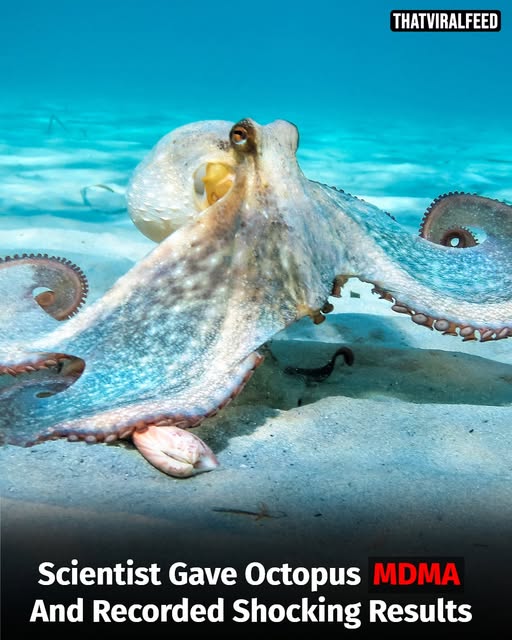
In an unusual scientific experiment, researchers gave the psychoactive drug MDMA — the active ingredient in ecstasy to several octopuses to see how it would affect their behaviour. This might sound like a bizarre idea, but the study had a serious purpose: to understand how social behaviour may be coded in the brain and how ancient evolutionary pathways shared across very different species can produce similar responses to chemical signals.
The experiment was led by neuroscientists including Gül Dölen, a researcher known for studying how serotonin and other brain chemicals influence social interaction. Instead of humans, this team turned to octopuses — marine animals normally known for being highly solitary and anti-social outside of mating contexts.
Why Use MDMA?
MDMA is a recreational drug that doses the brain with serotonin, a neurotransmitter involved in mood regulation, empathy, and social bonding in humans. In people, it tends to increase feelings of trust and social connection. Researchers wanted to know whether that same chemical effect could influence social behaviour in an animal that usually avoids others. The idea was that if MDMA’s effects on serotonin systems could make a normally lonesome octopus behave differently around other octopuses, that might reveal deep biological roots of social behaviour that go far back in evolutionary history. Humans and octopuses last shared a common ancestor more than 500 million years ago, so any similarities would hint at ancient, conserved brain chemistry.
What the Study Found
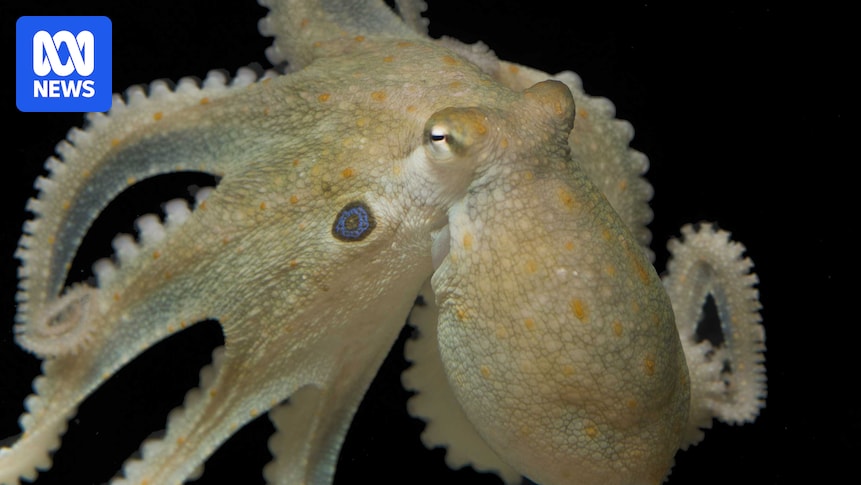
When the researchers introduced MDMA into the water that the octopuses were in, the animals showed striking behavioural changes:
- Normally, octopuses avoid each other and may even be aggressive toward other octopuses.
- Under the influence of MDMA, the octopuses became much more tolerant and socially interactive.
- They spent more time near one another, touched each other’s bodies with their arms, and behaved in ways that looked less defensive and more exploratory.
- Scientists described this change as resembling social behaviour seen in humans and other mammals under the same drug — even though octopus brains are structured very differently.
- The findings support the idea that serotonin systems related to social behaviour are deeply preserved across evolutionary time, even in animals as distantly related to humans as octopuses.
What This Means for Science
This experiment wasn’t about giving octopuses a “party high” or seeing them behave like humans for fun; it was a controlled scientific investigation into how brain chemicals shape social behaviour in different species. By observing that MDMA can trigger social behaviours in an animal that’s normally solitary, researchers hope to learn more about:
- The role of serotonin and other neurotransmitters in social interaction.
- How social behaviour evolved in different branches of the animal kingdom.
- Whether similar neural mechanisms exist in humans and invertebrates.
- Because these findings point to a shared neurochemical basis for social behaviours, they could have implications for understanding how social cognition developed over hundreds of millions of years, and why serotonin plays such a central role in bonding and communication across many animals.
Caveats and Ethical Considerations
Researchers caution that these results are preliminary and based on a small number of animals. Octopuses are not natural social animals, and scientists stressed the need for more studies to confirm results and explore long-term effects. There are also ethical issues when using psychoactive drugs in animal research, especially on intelligent and sensitive species like octopuses. Scientists involved in the work monitored the animals carefully to ensure they were not in distress.