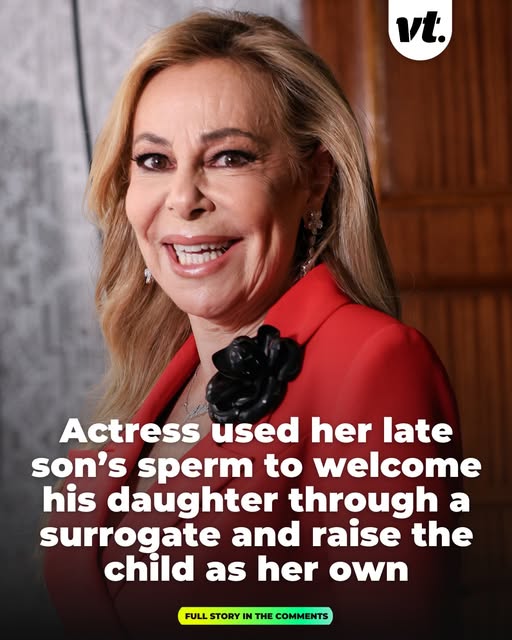
Spanish actress Ana Obregón, widely known for her long career on television and in film, sparked intense discussion when she revealed a deeply personal decision related to her family. The 68-year-old has openly shared that she used her deceased son’s frozen sperm to have a baby through surrogacy in the United States a choice that has attracted both emotional support and public criticism. The baby girl, named Ana Sandra, was born in March 2023. Although Obregón initially referred to the child as her daughter, she later clarified that the child is biologically her son’s daughter and therefore her granddaughter a distinction she has emphasised in interviews.
A Son’s Last Wish
This complex and emotional story traces back to the tragic death of Obregón’s only child, her son Aless Lequio García, who passed away in May 2020 at age 27 after a battle with cancer. Before beginning treatment, Aless froze samples of his sperm, acting on medical advice and expressing a desire to become a father someday. According to Obregón, fulfilling her son’s dream of having a child was a way of keeping his memory alive and honoring his last wishes. In interviews she has repeatedly stressed that this was not her idea alone — using the preserved sperm was a decision made in line with what her son had hoped for before his death.

Legal and Ethical DebateThe situation quickly ignited debate in Spain, where surrogacy is illegal under national law. While children conceived this way in other countries can be registered in Spain, having a surrogate pregnancy within the country remains banned. As a result, Obregón had the process carried out legally in the United States, where surrogacy is permitted and regulated in certain states. Her choice has mobilised voices from across the political spectrum. Some Spanish politicians and commentators have criticised the act as ethically problematic, with strong language used to describe the practice of hiring wombs in other countries. Critics have labelled surrogate pregnancy “womb renting” and have expressed concerns about whether such methods respect women’s rights and the dignity of the child. Others in Spain have taken a more measured view, suggesting that personal decisions about family and reproduction should be respected even if they challenge traditional norms. There are ongoing discussions about whether legal frameworks in Spain should change to better reflect reproductive technologies and desires — particularly as international cases like Obregón’s bring these issues into public focus.
Personal Reflections and Public Reaction
Obregón has spoken emotionally about how her granddaughter transformed her life after years of grief. She describes the presence of the child as a source of healing and joy, bringing renewed purpose after the loss of her only son. Despite her age and the challenges of raising a young child later in life, she insists that she has no regrets about fulfilling her son’s wish and cherishing his legacy through his daughter. Public reactions have been mixed. Some have praised Obregón for her devotion to her son’s memory and her willingness to navigate legal and medical hurdles to bring a new life into the world. Others have raised ethical questions about consent after death, the rights of the child, and the implications of such reproductive choices. Social media discussions and online comments reflect a wide range of opinions, from support to outright discomfort.
A Broader Conversation
This case has contributed to a broader global conversation about modern reproductive technologies, family structures, and the emotional lengths people will go to in order to honour loved ones. As scientific possibilities expand, societies continue to grapple with how best to balance innovation, ethics, law, and deeply personal human experience.