
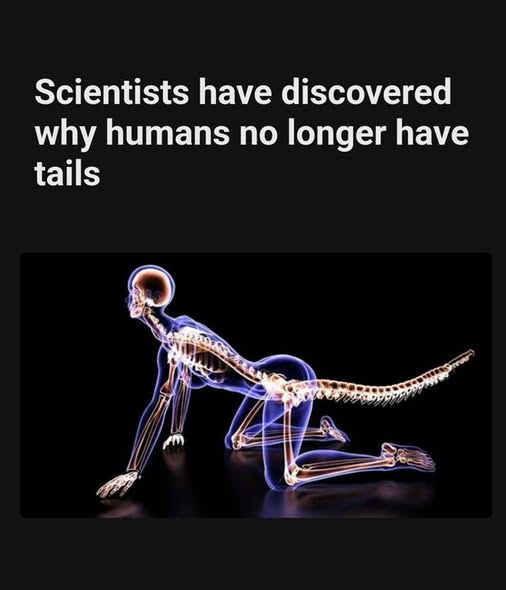
Humans and most other apes don’t have tails, but if you look farther back in the mammal family tree, many ancestors did possess them. For a long time, scientists have been curious about the exact reasons behind this evolutionary change. Recent research has brought new clarity to this question and helped explain not only when humans lost their tails, but why this loss may have been beneficial.
Tails are useful for many animals — balancing, signaling, swatting insects, or aiding in movement — but somewhere along the evolutionary path leading to modern humans, tails disappeared. Understanding this transformation gives insight into how early human ancestors adapted to their environments and developed into the species we are today.
The Tail’s Role in Other Animals
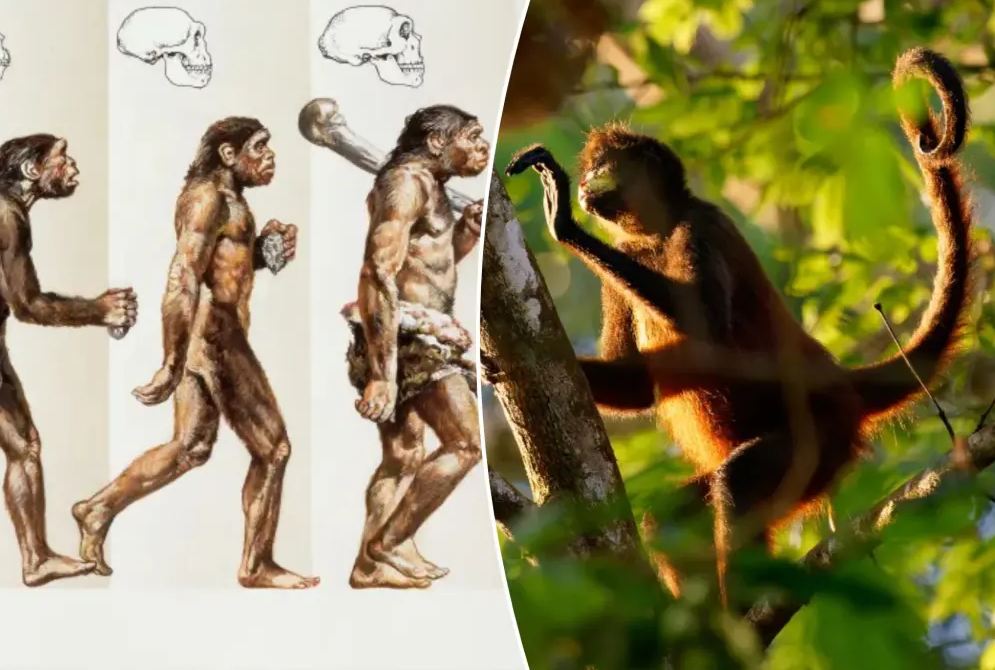
In many mammals, tails serve important functions. Tree-dwelling animals like monkeys often use tails as a fifth limb for balance and gripping branches. Cats use their tails to maintain balance while running or making sharp turns, and kangaroos use them for support while hopping. Even in animals that are mostly ground-based, tails help with communication and body signaling. Because tails are so common across mammals, scientists have long assumed that early primates — the group of mammals that includes monkeys, apes, and humans — also had tails at some point. The question was: Why did humans and other great apes lose them, while many smaller primates kept them?
Changes in Early Ancestors
Recent studies in genetics, fossil evidence, and comparative anatomy suggest the tail began to disappear in our ancestors millions of years ago — likely long before the emergence of Homo sapiens. Early apes that lived in trees started evolving in ways that made traditional tails less necessary. One key idea is that as certain ancestors began spending more time moving upright and balancing on their hind legs, especially on branches or uneven surfaces, a tail became less useful and ultimately was phased out. Without the selective pressure to maintain a tail, mutations that reduced tail structures were not disadvantageous, so they persisted and spread over generations. Researchers think this transition may have begun around 20-25 million years ago, when early apes were diversifying and adapting to a mix of arboreal (tree) and terrestrial (ground) environments. Their shoulder and hip anatomy evolved to allow more freedom of movement, making balancing with a tail less critical.
Genetic Clues Behind Tail Loss
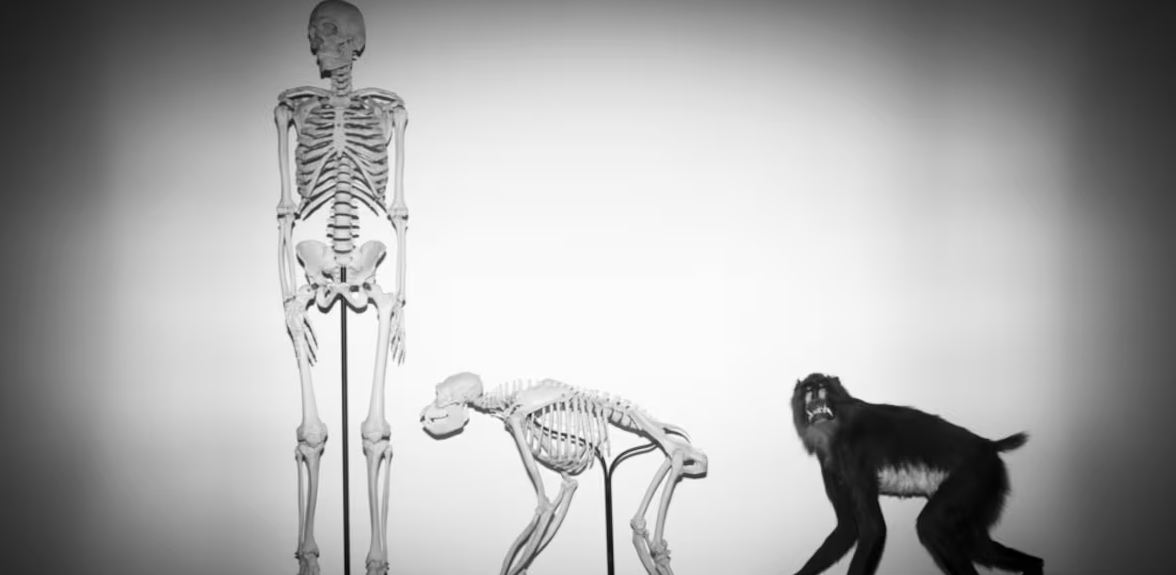
Genetic evidence now provides some of the strongest clues about why the tail vanished. Scientists have identified changes in specific genes that are responsible for tail development in mammals. In humans and other tailless primates, these genes either stopped functioning normally or were altered in ways that suppressed tail growth. This means that the change wasn’t random but had a genetic basis that became fixed in populations over many generations. Essentially, the genes responsible for producing a prominent tail were “switched off” or modified, and over millions of years, the visible tail gradually disappeared. Surprisingly, humans still retain a tiny remnant of a tail in the form of the coccyx (tailbone) — a small set of fused vertebrae at the base of the spine. The coccyx doesn’t function like a tail, but it provides attachment points for muscles and ligaments in the pelvic region.
Evolutionary Advantages of Losing a Tail
Why would losing a tail be beneficial? Scientists propose several possibilities:
- Upright Posture: As early ancestors began spending more time walking on two legs or reaching in new ways, a long tail may have become more of a hindrance than a help.
- Body Balance for New Movement Styles: Without a tail, the spine and hips may have had more freedom to evolve in ways that supported bipedal motion and complex climbing behavior.
- Energetic Efficiency: A tail takes energy to grow and maintain. If it no longer provided a significant evolutionary advantage, natural selection could favor individuals without it.
- Taken together, these ideas suggest that a changing environment and shifting behaviors favored taillessness over time.
What This Tells Us About Human Evolution
The loss of the tail in human evolution wasn’t a single moment — it was a long, gradual process shaped by changing needs as our ancestors adapted to new ways of moving and living. It reflects how evolution doesn’t work toward a predetermined design, but rather favors changes that improve survival and flexibility over many generations. Understanding why humans no longer have tails helps paint a clearer picture of the journey from early primates to modern humans — a story of adaptation, innovation, and remarkable biological change.