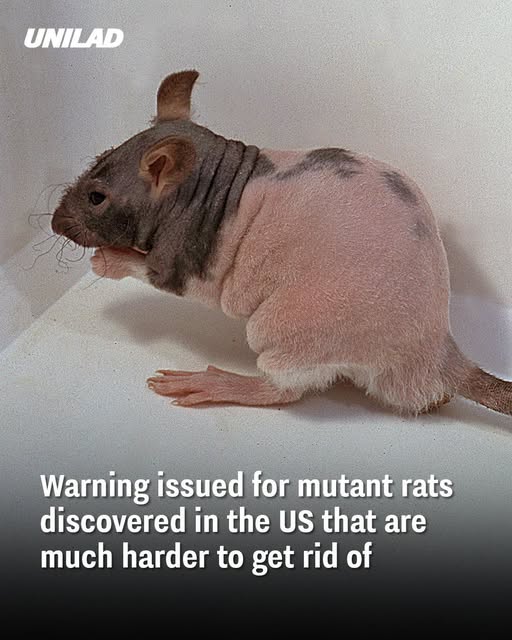
Experts are raising concerns about growing populations of rats in parts of the United States that are becoming increasingly difficult to eliminate. While the term “mutant rats” has attracted attention online, it does not refer to science-fiction-style creatures. Instead, it describes rats that have developed resistance to some of the poisons traditionally used for pest control.
Researchers say these changes are making rodent management more challenging, particularly in densely populated urban areas where rats have access to food, shelter, and places to breed.
What Makes These Rats Different?
Over time, some rat populations have developed genetic mutations that make them less vulnerable to common anticoagulant rodenticides. These poisons have been widely used for decades to control rodents by preventing blood from clotting. As resistant rats survive exposure to these products, they pass the resistant genes on to future generations. Over many years, this natural selection has led to populations that are increasingly difficult to manage using traditional methods. Scientists emphasize that these are still ordinary rats—they have not grown unusually large or acquired extraordinary abilities. The primary concern is their increased resistance to certain control measures.

Why Rat Populations Are Growing
Several factors have contributed to rising rat numbers in many cities. Warmer temperatures can extend breeding seasons, allowing rats to reproduce more frequently throughout the year. Urban environments also provide abundant food sources through overflowing garbage bins, food waste, and poorly stored refuse. Construction projects, aging infrastructure, and expanding sewer systems can create additional nesting sites, helping rat populations thrive even in heavily populated areas. Together, these conditions make it easier for rodents to survive and spread.
The Challenges for Pest Control
Because some rats are becoming resistant to commonly used poisons, pest control professionals are increasingly relying on integrated pest management strategies rather than a single solution. These approaches combine multiple methods, including improving sanitation, sealing entry points into buildings, reducing food sources, using traps, and applying rodenticides only when appropriate. Experts say that relying solely on poison is becoming less effective in areas where resistant rat populations are well established.
Potential Health Risks
Rats are known to carry bacteria, viruses, and parasites that can pose health risks to humans. They may contaminate food supplies, damage buildings by gnawing on electrical wiring and pipes, and contribute to the spread of disease through their urine and droppings. While the presence of resistant rats does not necessarily increase the diseases they carry, larger rodent populations can create greater opportunities for human exposure if infestations are not properly managed. For this reason, public health officials continue to encourage communities to address rodent problems promptly.
What Homeowners Can Do
Experts recommend several practical steps to reduce the likelihood of attracting rats:
Keep garbage in tightly sealed containers.
Store food securely and clean up spills promptly.
Eliminate standing water where possible.
Seal cracks, holes, and other entry points around homes.
Trim vegetation that provides shelter close to buildings.
Contact professional pest control services if signs of infestation appear.
Preventing access to food and shelter remains one of the most effective ways to discourage rats from settling in residential areas.
Looking Ahead
Researchers continue to study rodent populations to better understand how genetic resistance develops and how pest management strategies can adapt. New approaches, improved monitoring, and integrated control methods are expected to play an increasingly important role in managing urban rat populations. Although headlines describing “mutant rats” may sound alarming, experts stress that the real issue is evolving resistance to certain poisons rather than the emergence of a new species. Understanding this distinction can help communities respond with effective prevention measures instead of unnecessary fear.
Conclusion
The rise of poison-resistant rats highlights the need for smarter and more comprehensive pest control strategies. By combining good sanitation, proper waste management, building maintenance, and targeted pest control methods, communities can reduce infestations and limit the impact of these increasingly resilient rodents.