

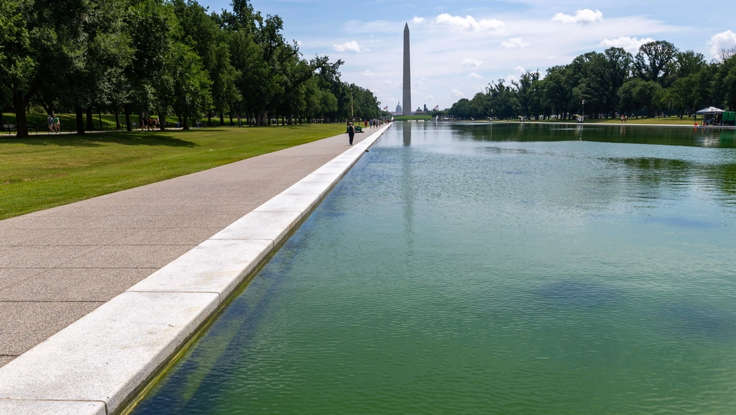
Just days after a multimillion-dollar renovation intended to transform Washington’s famous Lincoln Memorial Reflecting Pool into what President Donald Trump described as an “American flag blue” landmark, visitors were surprised to find the water taking on a very different appearance.
Instead of crystal-clear blue reflections, patches of bright green algae spread across the iconic pool, reigniting debate about the expensive restoration project and raising questions about what went wrong.
A Project Designed to Transform an American Landmark
The renovation was part of a larger effort to prepare the nation’s capital for celebrations marking America’s 250th anniversary. Trump had repeatedly criticized the condition of the Reflecting Pool, describing it as dirty, outdated, and plagued by persistent leaks. His administration launched a project aimed at improving both the appearance and functionality of the nearly century-old attraction. The work included draining the pool, repairing damaged sections, sealing the concrete basin, and applying a dark blue coating intended to create a richer reflection of the Washington Monument. Officials also installed upgraded filtration technology designed to combat one of the pool’s oldest problems: algae growth. The project ultimately cost more than $14 million and was promoted as a long-term solution.
Why Did the Water Turn Green?
The short answer is algae. Only days after the renovated pool reopened, visitors noticed green patches forming in the shallow water. Photos and videos quickly spread online, with many questioning how such a costly project could experience problems so quickly. According to officials from the Department of the Interior, the algae originated from supply lines that had remained unused during the renovation process. They explained that residual algae became active again once water began circulating through the system and into the newly refilled pool. Authorities insisted the development was part of the startup phase and not evidence that the renovation had failed.
The Challenge of Controlling Algae
Experts note that algae has been a recurring issue for the Reflecting Pool for decades. The pool’s design makes maintenance difficult. Its shallow depth, exposure to sunlight, warm temperatures, and constant contact with natural elements create ideal conditions for algae to thrive. Even previous restoration efforts struggled with the same problem. Environmental specialists have pointed out that completely eliminating algae in an outdoor body of water this large is extremely challenging. Continuous maintenance, filtration, and treatment are usually required to keep growth under control. Some experts also suggested that the darker blue surface may absorb additional heat, potentially encouraging algae growth during warmer weather.
Workers Quickly Responded
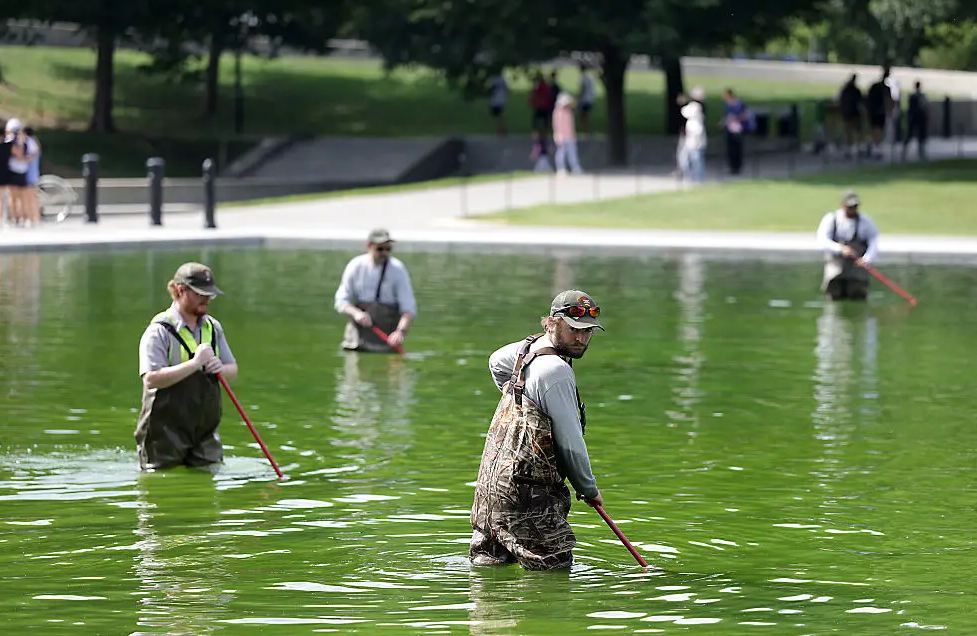
Maintenance crews were soon seen working inside the pool to remove visible algae. Officials stated that advanced nanobubbler technology had been deployed to destroy the bloom and improve water quality. The dead algae was reportedly being vacuumed from the pool as cleanup efforts continued. The administration maintained that the upgraded system would provide better long-term results than previous approaches. However, critics questioned whether the project delivered on its promises, particularly given its price tag and the speed with which the green discoloration returned.
A Debate Bigger Than the Pool
The situation quickly evolved into a political talking point. Supporters argued that algae outbreaks have affected the Reflecting Pool for generations and that judging the renovation after only a few days was unfair. Critics countered that a project presented as a permanent fix should not encounter the same highly visible problem immediately after reopening. Regardless of political perspective, the episode illustrates how even routine maintenance of historic landmarks can become the center of national attention. For many visitors, the Reflecting Pool remains an important symbol of American history. Yet its latest transformation serves as a reminder that nature often proves difficult to control, no matter how ambitious the renovation plans may be.