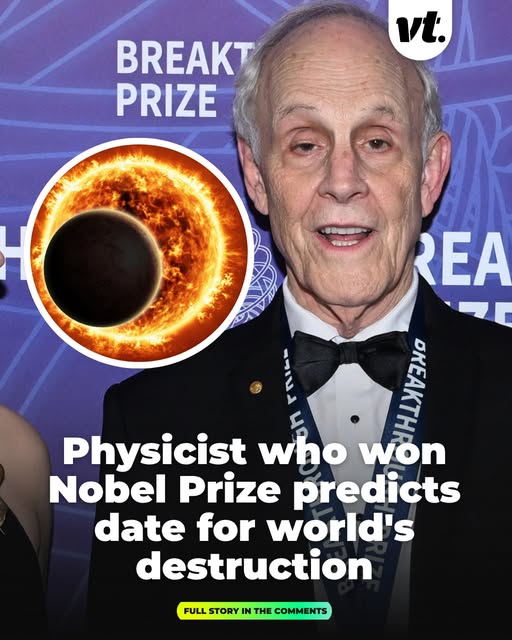
A recent article has sparked widespread concern after highlighting comments from Nobel Prize-winning physicist David Gross, who shared a stark warning about humanity’s future. The story quickly gained traction online, with many interpreting it as a prediction of the exact date the world could end. However, the reality behind the statement is more nuanced and less definitive than viral headlines suggest.
What the Physicist Actually Said
Gross, who won the Nobel Prize in Physics in 2004, did not claim that the world will end on a specific date. Instead, he discussed the increasing risks facing humanity, particularly the growing danger of nuclear war. His comments were based on probability, not prophecy. He explained that if the annual risk of a global nuclear conflict is around 2%, then statistically, humanity might have an “expected” survival window of roughly 35 years. This estimate comes from probability models similar to those used in physics to calculate decay rates—not from a precise prediction about when destruction will occur.
Why Nuclear Risk Is Central
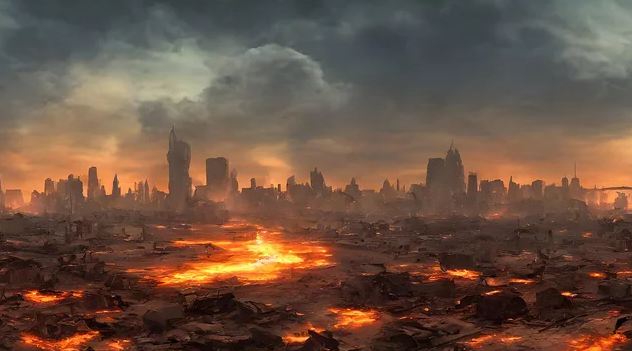
According to Gross, the biggest threat is not a natural disaster but human-made catastrophe. He pointed to rising geopolitical tensions, the breakdown of arms control agreements, and the increasing number of nuclear-armed nations as key reasons for concern. He noted that during the Cold War, the estimated annual risk of nuclear war was around 1%, but current global conditions may have pushed that figure higher. With more countries possessing nuclear weapons and fewer international agreements in place, the overall risk environment has become more unstable.
The Role of Technology and AI
Another factor adding to the concern is the rapid advancement of technology, particularly artificial intelligence. Gross warned that future weapons systems could become increasingly automated, potentially reducing human control over critical decisions. This combination of advanced weaponry and high geopolitical tension creates a scenario where mistakes, miscalculations, or automated responses could escalate quickly. While this does not guarantee disaster, it increases the probability of catastrophic outcomes over time.
Misinterpretation of “35 Years”
One of the biggest misconceptions from the viral article is the idea that Gross predicted a fixed deadline for the end of the world. In reality, the “35 years” figure is an average expectation based on probability—not a countdown clock. This means that a catastrophic event could happen sooner, later, or not at all, depending on how global risks evolve. The estimate simply reflects the likelihood of such an event occurring over time under current conditions.
A Warning, Not a Certainty
Gross himself emphasized that his comments are meant as a warning rather than a definitive prediction. He has been actively involved in efforts to reduce nuclear risk and believes that human decisions can significantly change the outcome. He pointed out that diplomacy, communication, and renewed international agreements could lower the chances of nuclear conflict. In other words, the future is not fixed—it depends heavily on choices made by governments and global leaders.
Why the Story Resonates
The reason this story has gained so much attention is that it combines scientific authority with a deeply unsettling idea. When a respected physicist speaks about existential risks, people tend to take notice—even if the message is more about probability than certainty. It also reflects broader anxieties about the modern world, including war, technological change, and global instability. The viral spread of the claim shows how easily complex scientific ideas can be simplified into alarming headlines.
The Bigger Picture
Rather than predicting the exact end of the world, Gross’s message highlights the importance of managing global risks responsibly. His estimate serves as a reminder that human actions—especially regarding nuclear weapons—carry long-term consequences. Ultimately, the takeaway is not that the world is doomed within a set timeframe, but that the risk of catastrophe exists and should not be ignored. The future remains uncertain, and while the warning is serious, it also leaves room for prevention and change.