
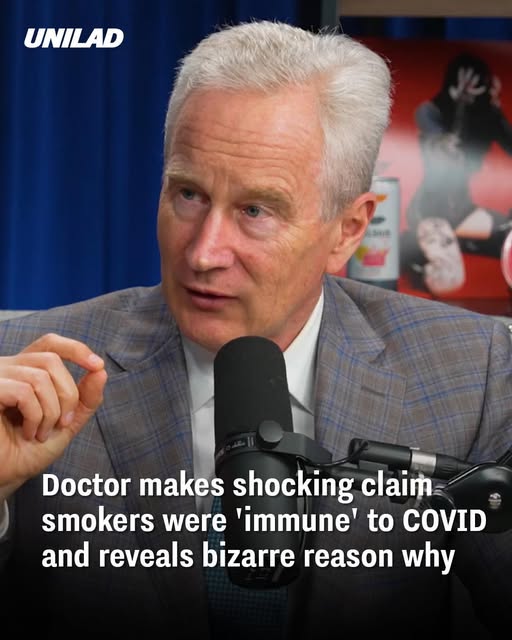
A doctor has generated widespread discussion online after making controversial comments about smoking and COVID-19 during a podcast appearance, with health experts and social media users debating the interpretation of scientific research surrounding the pandemic.
The remarks attracted significant attention because they touched on a topic that has puzzled researchers since the early stages of the COVID-19 outbreak: whether smoking affected a person’s likelihood of contracting the virus and how it influenced disease outcomes. According to the discussion, some early studies appeared to suggest that smokers were underrepresented among hospitalized COVID-19 patients, leading to speculation about a possible protective effect. However, the issue remains highly controversial and far from settled.
The Claim That Started the Conversation
During the podcast, the doctor referenced research that had examined smoking rates among people diagnosed with COVID-19. The comments quickly spread online, with some viewers interpreting them as suggesting that smoking could offer protection against coronavirus infection. The discussion reignited a debate that first emerged during the pandemic when researchers noticed unexpected patterns in some datasets. While a number of studies investigated whether nicotine might interact with biological pathways involved in COVID-19 infection, experts repeatedly warned that such findings should not be interpreted as evidence that smoking is beneficial.

What Scientists Actually Found
Throughout the pandemic, researchers examined numerous factors that could influence COVID-19 risk, including age, pre-existing medical conditions, lifestyle habits, and tobacco use. Although some early observations produced surprising results, later research generally found that smokers who became infected often faced worse outcomes, including higher risks of severe illness, hospitalization, respiratory complications, and death. Scientists emphasized that differences in reporting methods, demographic factors, and study limitations may have contributed to conflicting findings seen in earlier research. As a result, major public health organizations never recommended smoking as a protective measure against COVID-19.
Health Authorities Remain Clear on Smoking Risks
Medical organizations around the world continue to state that smoking poses serious health dangers regardless of any discussions surrounding coronavirus research. The World Health Organization says tobacco use remains one of the world’s leading preventable causes of death and disease. Smoking is linked to numerous health conditions, including lung cancer, heart disease, stroke, chronic respiratory illnesses, and other potentially life-threatening complications. Health experts also note that smoking damages the lungs and respiratory system, making it more difficult for the body to cope with infections and other illnesses.
Why Context Matters
Many scientists argue that complex medical studies can easily be misunderstood when reduced to short clips, headlines, or social media posts. Research findings often come with important limitations and caveats that may not be obvious to the general public. A single observation rarely proves a cause-and-effect relationship, which is why scientists rely on multiple studies and large bodies of evidence before reaching conclusions. Experts say this is especially important when discussing health topics that affect millions of people and carry significant public health implications.

The Broader Lesson
The renewed attention surrounding the podcast highlights how discussions about COVID-19 continue to generate strong reactions years after the pandemic began. While scientific research frequently evolves as new evidence becomes available, the overwhelming medical consensus regarding tobacco has remained consistent. Health authorities continue to encourage smokers to quit and emphasize that there is no safe level of tobacco use. As debate over the podcast comments continues, experts stress that individual studies should be viewed within the context of the broader scientific evidence rather than as standalone proof of a health benefit or risk.