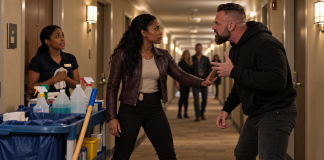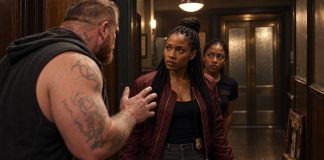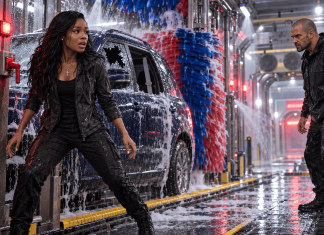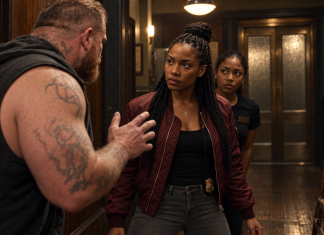
The young woman had barely left the hotel when the driver opened the rear door of a gray sedan and called her by name.
She hesitated.
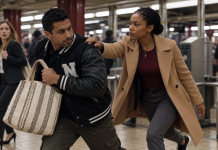
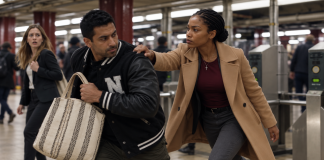
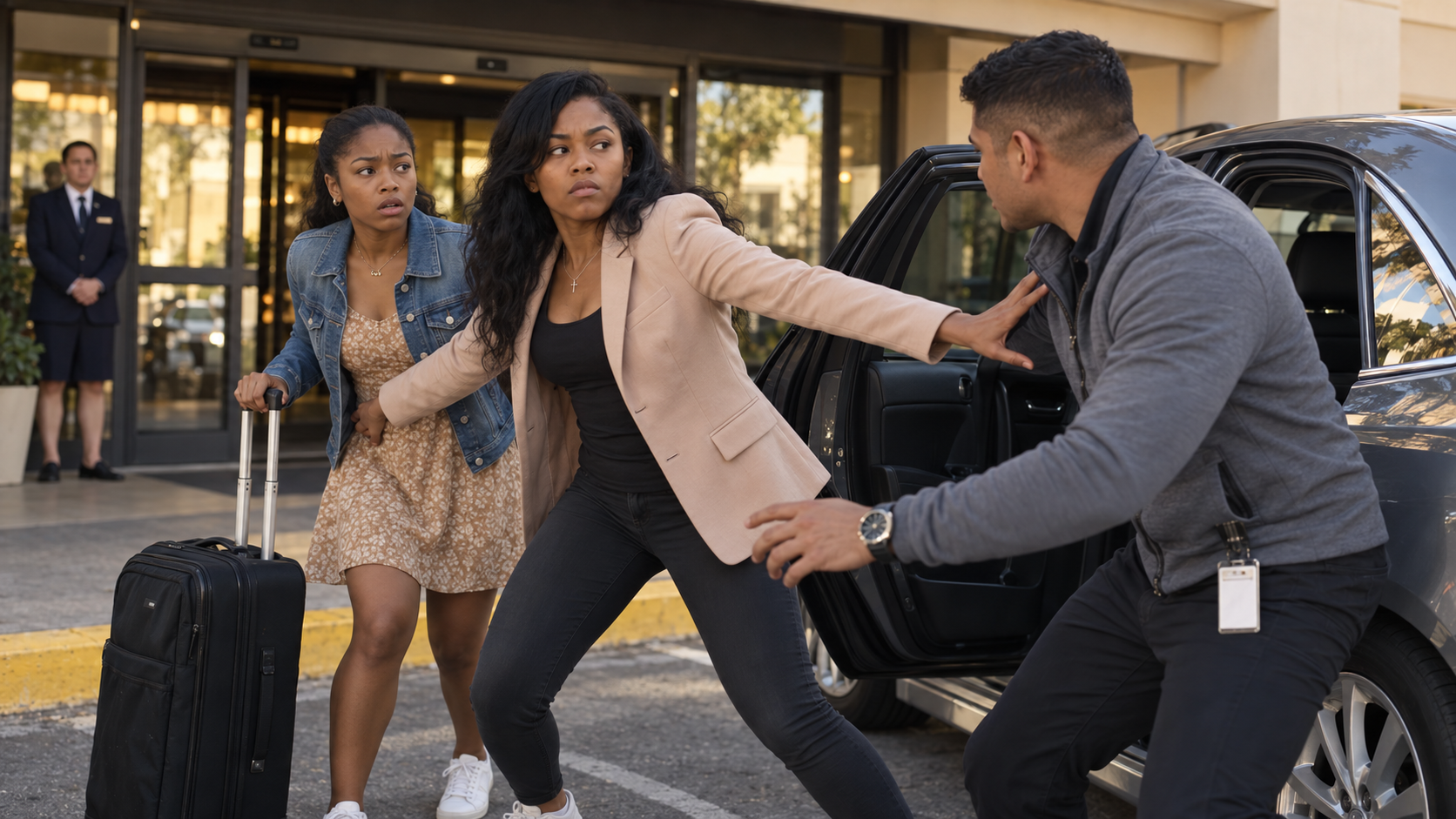
She had ordered a car to the airport, but the license plate did not match the one displayed on her phone. When she tried to step away, the driver grabbed the handle of her suitcase and pulled it toward the open door.
That was when Sienna intervened.
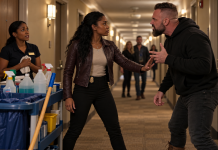
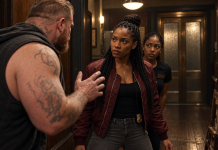
She moved the traveler behind her and ordered the man to release the suitcase. Instead of acting confused, he looked directly at Sienna and smiled.
“You’re earlier than expected, Agent Williams.”
Sienna had never shown him her badge.
The man attacked without warning, striking hard enough to knock her onto the pavement. He rushed forward, but Sienna recovered, blocked his next punch and drove him against the car.
The fight continued around the open door. He tried to overpower her, but she swept his legs, twisted his arm and threw him onto his back. Seconds later, she had him pinned to the ground.
The identification clipped to his jacket was fake.
Beneath the driver’s seat, Sienna found a passenger manifest containing photographs of twelve women traveling alone. Eleven profiles had already been marked as collected.
The frightened traveler was listed as:
“BAIT.”
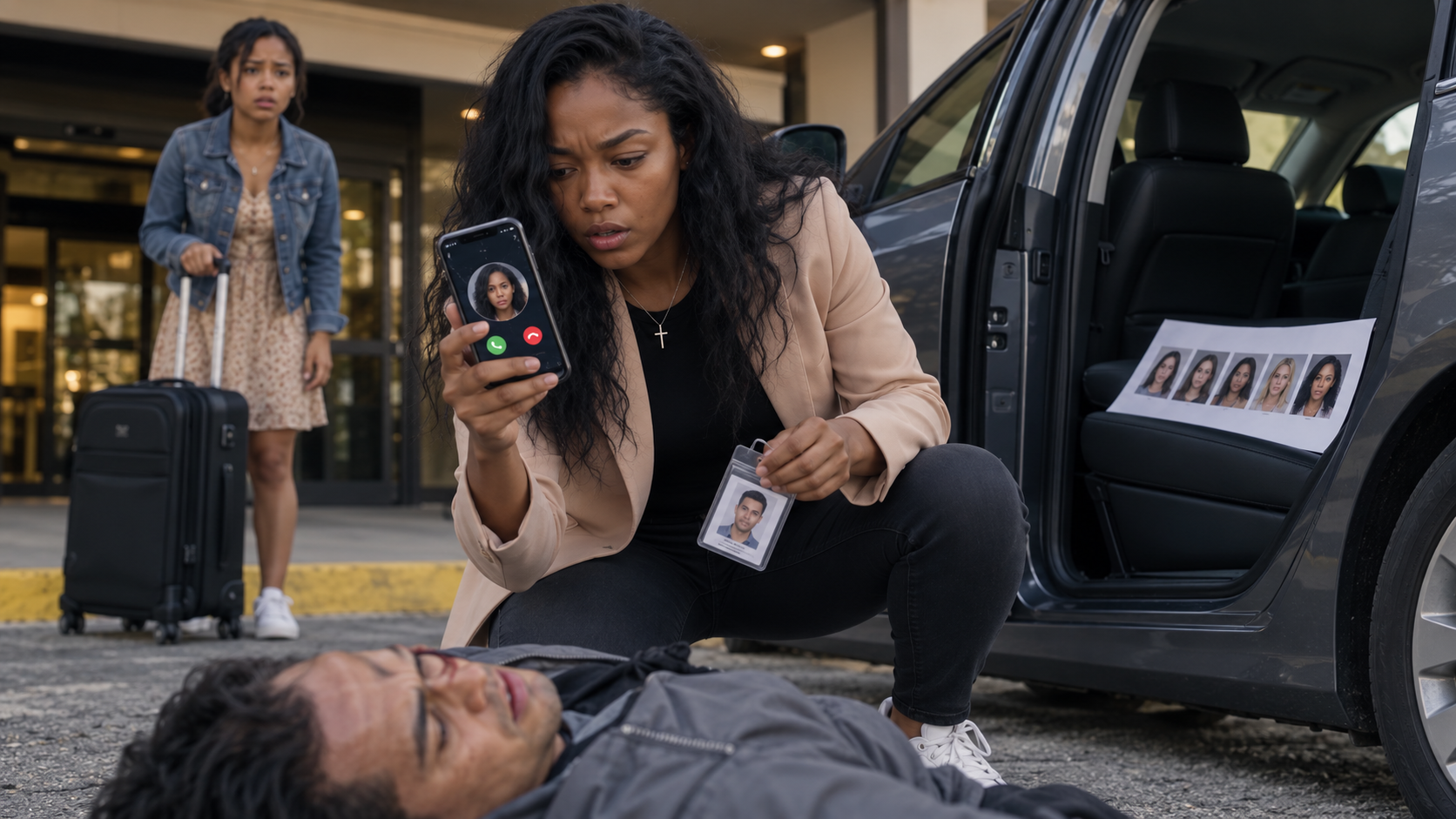
The final photograph belonged to Sienna.
Beside it was a single word:
“PRIMARY.”
Sienna looked toward the hotel entrance. A uniformed employee had watched the entire confrontation without calling for help. Now he had disappeared.
The hotel manager later confirmed that nobody matching his description worked there.
Then the attacker’s phone began ringing.
Sienna froze when she saw the caller’s photograph and number.
It was her.
Her government phone was still inside her jacket, and it showed no outgoing call. Sienna answered the attacker’s device without speaking.
Her own voice came through the speaker:
“You responded in 7.4 seconds. Faster than predicted.”
A second voice followed.
“This was never an abduction. It was a calibration.”
Sienna searched the sedan and discovered a tiny camera concealed inside the open passenger door. It had recorded her movements from the moment she stepped outside—the position of her hands, the direction of her attacks and the exact technique she used to take the man down.
The traveler had unknowingly been used to lure Sienna into a controlled fight.
The attacker laughed from the ground.
“You thought you saved her,” he whispered. “She delivered you to us.”
Before Sienna could force another answer from him, the phone displayed a live video feed.
It showed the inside of Sienna’s house.
A dark figure was standing in her hallway, holding a silver cross identical to the one around her neck.
Then the screen went black.
Investigators later discovered that the sedan had been registered to a classified federal evidence unit. According to official records, the vehicle had been destroyed four years earlier.
Someone had known where Sienna would be. They had copied her number, cloned her voice and studied the way she fought.
They did not want to kill her.
Not yet.
They were preparing someone else to become her.